Enhanced credentialing pathway
RCPharm
Enhanced credentialing toolkit and resources
Published: 7 September 2026
The implementation toolkit provides information to help learners, educational supervisors, collaborators and employers use the enhanced curriculum. It includes short, tailored resources for each group, covering how to get started, build evidence and create a portfolio.
The toolkit will continue to develop after the enhanced curriculum is launched.
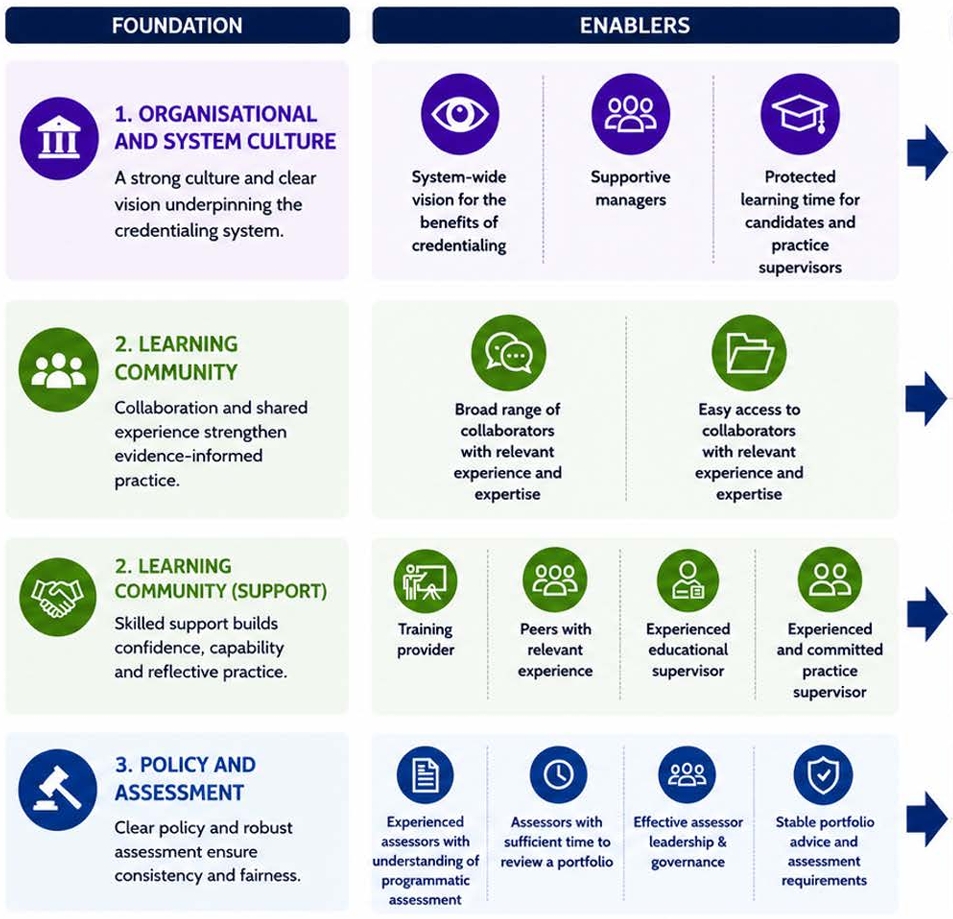
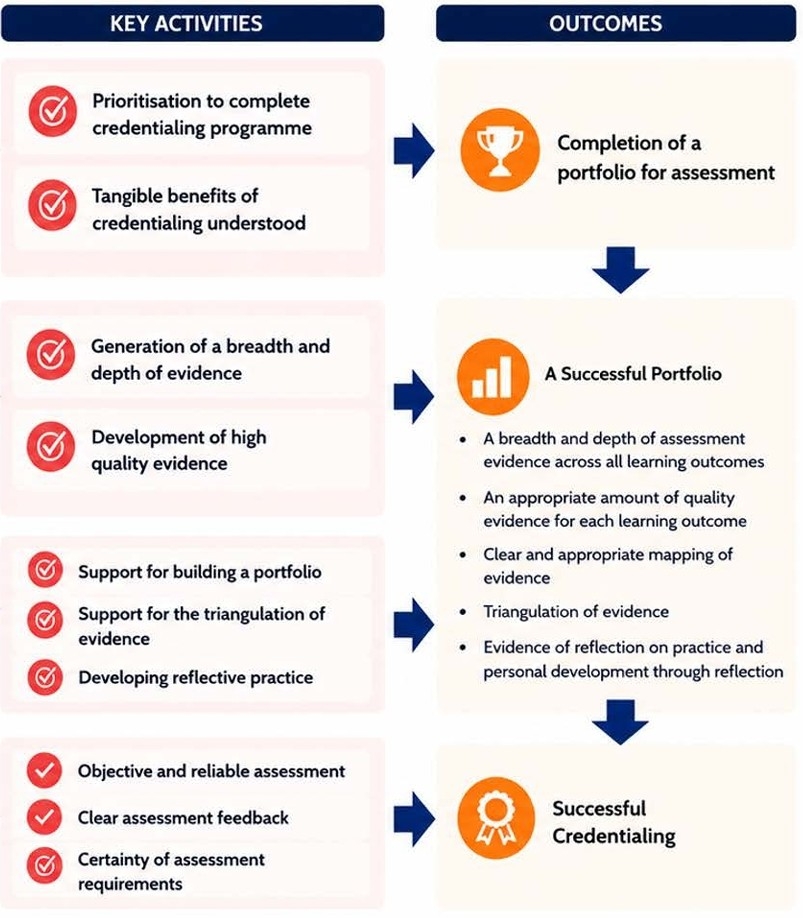
The credentialing eco-system
Learners
Frequently asked questions
How can I undertake the pathway?
You should apply to join the formal commissioned pathway in your country of practice. Further details on these programmes / pathways are on the enhanced credentialing homepage.
How do I get started?
The table below shows how the enhanced pathway and credentialing works in 5 steps. Complete steps 1 and 2 to get started.
| Step | |
|---|---|
| 1: Choose your route | • Register with a training provider to access the e-Portfolio. • Decide if you are working towards the full credential, clinical module (domains 1 and 2) or non-clinical module (domains 3-5). • Look at the outcomes framework section of the curriculum. • Read each outcome carefully. Each word is there for a reason. • Read the indicators for each outcome to understand the level of performance required to meet each outcome. |
| 2: Plan development | • Complete a Learning Needs Analysis (LNA) using the LNA tool in your e-Portfolio to help you self-assess your current ability and confidence against each outcome. • Meet with your educational supervisor (ES) to discuss the results of your LNA, come up with an action plan and identify development opportunities. • Consider what your identified development needs are and which areas you want to focus on first. |
| 3: Learn in practice | • Practice supervisors and collaborators support observation and provide actionable feedback to learners using supervised learning events (SLEs). • Post-graduate academic study outputs can also be used as evidence when learning is applied in practice and reflected upon. • APCL may be available for some academic courses. |
| 4: Build and review e-Portfolio | • Gather a variety of evidence, reflect and review progress with ES. • The suggested number of good quality pieces of evidence for each low, medium, or high-stakes outcome is provided in the enhanced curriculum document. • The mandatory evidence requirements for the credentialing assessment are outlined in detail within the assessment blueprint. • Details regarding what counts as piece of evidence are provided in the enhanced curriculum document. |
| 5: Submit for credentialing | • Portfolio is assessed by a trained Royal College assessor. |
Do I need to be a prescriber to start the enhanced pathway?
No. You can begin using the curriculum and building evidence before annotation as a prescriber, but you must be a registered prescriber with evidence of active prescribing as part of your clinical evidence when you submit for enhanced credentialing. You must have commissioned access to the e-Portfolio through a national provider to start.
Do I need to be a RCPharm member to access the curriculum and credentialing?
No. The curriculum and credentialing pathway are open to all pharmacists. Membership provides access to the wider Royal College offer for newly qualified pharmacist prescribers, but it is not an eligibility condition.
Do I need to submit all five domains at the same time?
No, modular options are available and you can submit for credentialing in bitesize chunks. Pharmacists undertaking enhanced credentialing pathways can work towards one of the following options:
- Full enhanced credential (all domains)
- Enhanced clinical modular credential (domains 1 & 2)
- Enhanced non-clinical modular credential (domains 3, 4 & 5)
To be credentialled at entry level enhanced a pharmacist must successfully meet the standard against all five domains.
What is a supervised learning event (SLE)?
Supervised Learning Events (SLEs) are forms that help structure observation, feedback and reflection – SLE’s are not pass/fail tests. These are used to build evidence of practice in the e-Portfolio, supported by uploads of other relevant evidence. Pharmacists are not expected to use all available tools in the assessment blueprint. The choice of SLE tools should be guided by the practice setting, learning needs, and context, recognising that some tools are more suited to particular environments or modes of working, including remote practice.
What do successful portfolios contain?
| Evidence element | What it shows |
|---|---|
| A variety of practice outputs | A variety of practice outputs – the work completed or activity undertaken in practice. |
| Diverse portfolio collaborators | Independent confirmation by collaborators of the activity and standard achieved. |
| High-quality reflection | High-quality reflection – what was learned, what went well and how future practice will change. |
What types of SLEs are there?
Details of the types of SLEs available are found in section 5.5 of the curriculum. The assessment blueprint outlines potential methods of assessment for each curriculum outcome. It is not expected that all assessment tools will be used for every outcome, and additional forms of evidence may also be used where appropriate.
How much evidence is required for each outcome?
Each curriculum outcome is assigned a stakes rating of High, Medium, or Low. This reflects the potential level of risk associated with the curriculum outcome, particularly in relation to patient safety.
As a general guide, the number of pieces of evidence which clearly demonstrate the required standard mapped to each of the curriculum outcomes should be:
| Curriculum outcome stakes rating | Indicative number of pieces of evidence mapped demonstrating the required standard |
|---|---|
| Low | 1-3 |
| Medium | 3-5 |
| High | 5-7 |
These ranges are indicative and should not be interpreted as prescriptive minimums. Greater emphasis is placed on the quality, relevance, and consistency of evidence than on the quantity alone.
What counts as a single piece of evidence?
A piece of evidence is the collection of material used to demonstrate that an activity completed in practice demonstrates a curriculum outcome. It may consist of a single upload or multiple uploads where needed.
What is triangulation or a triad of evidence?
As a general guide, each piece of evidence should demonstrate evidence triangulation, which includes three elements which may be comprised of one or more uploads:
- Output – The work you completed or the activity you undertook (for example, the plan and materials you used to deliver a teaching session, a medicines governance document like an SOP or protocol etc.).
- Corroboration – Independent confirmation that the activity took place and was completed to the appropriate standard (such as a supervisor’s corroboration as part of an Education Supervisor Report (ESR), a collaborator’s testimonial or judgment as part of a completed SLE).
- Reflection – Your own evaluation of the experience, including what you learned, what went well, and how it will influence your future practice.
In some cases, all three elements may be contained within a single SLE form. In other cases, more than one upload may be required to provide the complete evidence triad and create a single full piece of evidence. The focus is on ensuring that the evidence collectively demonstrates the activity performed, independent verification, and reflective learning.
What might an SLE or reflection look like?
There are examples of supervised learning events (SLEs) covering different scenarios and using different forms available here along with a short narrative that explains areas of good practice and how some SLEs could be improved.
Click here to see examples and incorporated narratives.
What sort of activities can be used to evidence each outcome?
The indicators of expected level of performance in the outcomes framework provide clarifying statements or examples of the expected level and breadth of performance required to demonstrate each outcome. Further examples of activities to support each domain are available here.
Is there a tool to help me plan my evidence?
RCPharm have produced an evidence planning tool which can be used to help you plan your evidence.
How should I map evidence?
When completing any SLE within the portfolio there will be an opportunity to map the evidence to specific outcomes. Consider carefully which outcome(s) each piece of evidence should be mapped to. You will need to demonstrate a ‘does level’ of practice for most outcomes. Be explicit why the evidence maps to the outcome.
Who should support my learning?
There are three complementary support roles:
Educational Supervisor (ES) – a named pharmacist overseeing progress, planning, reflection and the overall quality of the portfolio.
Practice Supervisor – an experienced professional supporting safe day-to-day learning and feedback in practice.
Collaborator – an appropriate person who observes, gives structured feedback or corroborates evidence; this may include colleagues or patients.
What if my educational supervisor doesn’t work with me?
This role may be delivered remotely and does not require the individual to be based within the same organisation. Educational supervisors do not need to be members of the Royal College of Pharmacy.
What guidance is there to support undertaking SLEs remotely?
Guidance for Pharmacists Undertaking Remote Supervised Learning Events (SLEs) for Credentialing
This guidance supports pharmacists to meaningfully engage in remote, or asynchronous supervised learning events (SLEs) as part of enhanced credentialing curriculum. It outlines expectations, practical steps, and quality indicators to ensure SLEs are robust, reflective, in line with organisational governance requirements, and aligned with learning outcomes. Remote technology can be useful to help facilitate work-based learning opportunities for learners, especially for individuals working in more isolated roles. This could include for example the use of Teams, or other video or audio platforms, or the observation of online presentations.
1. Purpose of Remote SLEs
Remote SLEs enable pharmacists to:
- Demonstrate applied, workplace-based competence when in person observation is not feasible.
- Engage supervisors across sectors, regions, or specialisms.
- Evidence progression towards enhanced level practice.
Remote SLEs should be equivalent in rigour and developmental value to face-to-face SLEs.
2. Preparing for a Remote SLE
Pharmacists should:
A: Select an appropriate learning event
Choose examples that support you to demonstrate specific outcomes in the enhanced curriculum.
B: Provide documentation to support remote discussions in advance
Common examples might include:
- Consultation notes
- Care plans
- Medicines optimisation records
- Reflective notes
- Audit or quality improvement project outputs
- Protocols or guidelines used
- Training plans or presentation slides
C: Identify learning objectives and confirm collaborator’s role
Be explicit about:
- What you want feedback on
- How the SLE topic relates to enhanced practice outcomes and indicators
- What you hope to demonstrate
Check that the collaborator is:
- Familiar with the SLE tool/form
- Appropriate for the planned SLE
D: Confirm logistics in line with organisational governance requirements to:
- Agree remote platform (eg Teams/Zoom/NHS platform)
- Ensure secure document sharing
- Clarify expected duration of SLE
3. Documenting the SLE for credentialing
The record should include:
Essential elements
- Type of SLE (e.g. CbD, DOPs, mini-CEX)
- Date and method of delivery (remote)
- Case summary where appropriate maintaining patient confidentiality
- Mapped enhanced practice outcomes
- Supervisor’s/collaborators feedback
- Pharmacist’s reflections and learning actions
- Remember to demonstrate triangulation of evidence: triangulation = real examples + reflection + collaborator feedback
4. Quality and governance requirements
A: Confidentiality and data protection
- Only use secure digital platforms approved by your organisation.
- Share anonymised materials only.
- Store documents according to local governance policies
- Do not upload videos for example of case-based discussions or consultations to the enhanced e-Portfolio platform.
B: Supervisor/collaborator requirements
- Should understand credentialing expectations.
- Should be an appropriate person to support the planned SLE and be able to provide constructive, actionable feedback.
Can I choose to upload assessment documentation and supporting evidence as files rather than completing directly online in the portfolio?
File uploads functionality is available for each SLE type as well as the general file upload functionality. Learners and ES’s should ensure that any uploads are clear and easily navigated by assessors who do not know the candidate. Uploads should have full explanation of how each upload maps to the learning outcomes. Avoid uploading multiple documents in one file upload. File uploads alone with no narrative regarding what the candidate did, output, impact, reflection and feedback from collaborators will not make strong evidence.
Can academic study e.g. a postgraduate diploma also count?
Yes, where the Royal College has an APCL agreement with the university or education provider and certified completion is evidenced, then the pharmacist will be awarded exemptions. RCPharm are currently engaging with universities developing aligned qualifications and modules to agree exemptions for enhanced. Current and future exemptions are listed on the APCL directory. Even if exemptions are not agreed or you cannot get an exemption because it is a high-stakes outcome, you can still reuse your evidence from your formal study for credentialing if it clearly demonstrates the curriculum outcomes.
Are there any assessments that must be completed within the online portfolio only for credentialing purposes?
The following do not have word templates and can only be completed in the portfolio:
My professional context*
Domain summaries*
Learning Needs Analysis
Action tracker
*You could file upload external writeups for these using the general file upload and titled clearly to signpost assessors to identify. However, file uploads will not pull across directly to the assessor view on first logging in. Assessors will need to find them within the full portfolio access under general file uploads. Assessors do like to read the ‘My professional context’ and ‘domain summaries’ before going in and undertaking the assessment.
Does Enhanced replace Post-Registration Foundation?
Enhanced is the revised and renamed curriculum and will ultimately replace the legacy Post-Registration Foundation curriculum. Transition arrangements will be communicated next year to give pharmacists on current post-registration Foundation pathways plenty of notice and opportunity to submit prior to the pathway closing. If you have started your Post-registration Foundation programme or journey, we recommend you continue on this path and complete the pathway. We will be offering credentialing for post-registration Foundation until at least 2028 so there will be plenty of time to complete your portfolio prior to the pathway closing.
What will happen If I submit all five domains for assessment but only meet domains 1, 2 and 4?
If you meet all outcomes for domains 1 and 2 you will be awarded a clinical modular credential. Where a domain has not been evidenced, specific feedback will be provided on which outcome(s) were not evidenced and what action the pharmacist needs to take to meet the outcome on resubmission.
Can I call myself an enhanced-level pharmacist if I only have one of the modular credentials?
No. You are required to successfully meet all five domains of the full credential to be awarded the ‘Enhanced’ credential.
Is the credentialing assessment fee covered by the national commissioning bodies?
Not necessarily.
NHSE has funded e-Portfolio access only for the Pharmacist Enhanced Practice Pathway – any pharmacist wishing to credential will have to pay the relevant credentialing fee on submission. Scotland and Wales are funding credentialing assessment fees as part of their commissioned programmes. Pharmacists should ask the relevant commissioning body what their policy is regarding funding of assessment fees for further details.
How much does credentialing assessment cost if it is not covered by my national commissioning body?
| Credentialing product | Recommended fee |
|---|---|
| Full enhanced credential / full resit (4 to 5 domains) | £425 |
| Clinical or non-clinical module / partial resit (1 to 3 domains) | £350 |
What is the RCPharm guidance to support leaners?
Please read the learners guidance for further information.
How will undertaking the enhanced curriculum and credentialing pathway help me to develop as a pharmacist?
The examples below describe early career pharmacists experiences of undertaking the post-registration foundation pathway.
Resources
Useful resources for members
- A model for successful credentialing in pharmacy – an article from The Pharmaceutical Journal.
- For newly qualified pharmacists
- RCPharm Learn
Recording sessions
Session 1
Introduction to Enhanced Curriculum and Credentialing.
Session 2
Supportive role of Education supervisors and workplace collaborators.
Session 3a
Supporting a learner with their development.
Session 3b
Building and reviewing good quality evidence and portfolios.
Educational supervisors/collaborators
Frequently asked questions
What is the role of an educational supervisor?
Educational supervision provides holistic, longitudinal support across the pharmacist’s learning journey on the enhanced credentialing pathway. Pharmacists undertaking enhanced credentialing should have a named pharmacist who is responsible for the overall supervision and management of their educational progress during the pathway.
The educational supervisor supports the pharmacist to:
- Plan and manage their overall progression through the pathway.
- Develop and maintain a portfolio of evidence for credentialing.
- Reflect on learning and professional development.
- Identify learning needs and access appropriate opportunities.
Educational supervisors provide continuity throughout the pathway and support the pharmacist to integrate learning from a range of experiences. This role may be delivered remotely and does not require the individual to be based within the same organisation. Educational supervisors do not need to be members of the Royal College of Pharmacy.
Who can be a collaborator and what is their role?
Collaborators are individuals who support the generation of evidence from practice through observation, feedback, and professional judgement.
They contribute to learning by:
- Undertaking Supervised Learning Events (SLEs) in practice.
- Observing performance in real or simulated settings.
- Providing structured feedback to support development.
- Contributing to the evidence in the candidate’s e-Portfolio for credentialing.
Collaborators may:
- Work within or outside the pharmacist’s organisation, including remotely.
- Come from a range of professional backgrounds, including healthcare professionals, non-clinical colleagues, or patients.
- Also be the pharmacist’s educational supervisor.
- Also provide practice supervision.
- Undertake this role on a one-off or repeated basis.
Collaborators do not need to be pharmacists or members of the Royal College of Pharmacy and may contribute alongside supervisory roles depending on their experience.
What is the RCPharm educational supervisor guidance?
Detailed guidance for educational supervisors can be found here.
What is the RCPharm collaborator guidance?
Detailed guidance for collaborators can be found here, or you can read our quick guide here.
What is the RCPharm guidance for patients/carers to complete the patient/carer feedback form?
Guidance for patients giving feedback about their pharmacist can be found here.
How can an educational supervisor support learners to get started with the enhanced pathway?
The table below shows how the enhanced pathway and credentialing works in five steps. Learners should complete steps 1 and 2 to get started with ES support.
| Step | |
|---|---|
| 1: Choose your route | • Register with a training provider to access the e-Portfolio. • Decide if you are working towards the full credential, clinical module (domains 1 and 2) or non-clinical module (domains 3-5). • Look at the outcomes framework section of the curriculum. • Read each outcome carefully. Each word is there for a reason. • Read the indicators for each outcome to understand the level of performance required to meet each outcome. |
| 2: Plan development | • Complete a Learning Needs Analysis (LNA) using the LNA tool in your e-Portfolio to help you self-assess your current ability and confidence against each outcome. • Meet with your educational supervisor (ES) to discuss the results of your LNA, come up with an action plan and identify development opportunities. • Consider what your identified development needs are and which areas you want to focus on first. |
| 3: Learn in practice | • Practice supervisors and collaborators support observation and provide actionable feedback to learners using supervised learning events (SLEs). • Post-graduate academic study outputs can also be used as evidence when learning is applied in practice and reflected upon. • APCL may be available for some academic courses. |
| 4: Build and review e-Portfolio | • Gather a variety of evidence, reflect and review progress with ES. • The suggested number of good quality pieces of evidence for each low, medium, or high-stakes outcome is provided in the enhanced curriculum document. • The mandatory evidence requirements for the credentialing assessment are outlined in detail within the assessment blueprint. • Details regarding what counts as piece of evidence are provided in the enhanced curriculum document. |
| 5: Submit for credentialing | • Portfolio is assessed by a trained Royal College assessor. |
What is a supervised learning event (SLE)?
Supervised Learning Events (SLEs) are forms that help structure observation, feedback and reflection – SLE’s are not pass/fail tests. These are used to build evidence of practice in the e-Portfolio, supported by uploads of other relevant evidence. Pharmacists are not expected to use all available tools in the assessment blueprint. The choice of SLE tools should be guided by the practice setting, learning needs, and context, recognising that some tools are more suited to particular environments or modes of working, including remote practice.
Successful portfolios contain:
| Evidence element | What it shows |
|---|---|
| A variety of practice outputs | A variety of practice outputs – the work completed or activity undertaken in practice. |
| Diverse portfolio collaborators | Independent confirmation by collaborators of the activity and standard achieved. |
| High-quality reflection | High-quality reflection – what was learned, what went well and how future practice will change. |
What types of SLEs are there?
Details of the types of SLEs available is found in section 5.5 of the curriculum. The assessment blueprint outlines potential methods of assessment for each curriculum outcome. It is not expected that all assessment tools will be used for every outcome, and additional forms of evidence may also be used where appropriate.
What is the guidance around undertaking SLEs remotely?
Guidance for Pharmacists Undertaking Remote Supervised Learning Events (SLEs) for Credentialing
This guidance supports pharmacists to meaningfully engage in remote, or asynchronous supervised learning events (SLEs) as part of enhanced credentialing curriculum. It outlines expectations, practical steps, and quality indicators to ensure SLEs are robust, reflective, in line with organisational governance requirements, and aligned with learning outcomes. Remote technology can be useful to help facilitate work-based learning opportunities for learners, especially for individuals working in more isolated roles. This could include for example the use of Teams, or other video or audio platforms, or the observation of online presentations.
1. Purpose of Remote SLEs
Remote SLEs enable pharmacists to:
- Demonstrate applied, workplace-based competence when in person observation is not feasible.
- Engage supervisors across sectors, regions, or specialisms.
- Evidence progression towards enhanced level practice.
Remote SLEs should be equivalent in rigour and developmental value to face-to-face SLEs.
2. Preparing for a Remote SLE
Pharmacists should:
A: Select an appropriate learning event
Choose examples that support you to demonstrate specific outcomes in the enhanced curriculum.
B: Provide documentation to support remote discussions in advance
Common examples might include:
- Consultation notes
- Care plans
- Medicines optimisation records
- Reflective notes
- Audit or quality improvement project outputs
- Protocols or guidelines used
- Training plans or presentation slides
C: Identify learning objectives and confirm collaborator’s role
Be explicit about:
- What you want feedback on
- How the SLE topic relates to enhanced practice outcomes and indicators
- What you hope to demonstrate
Check that the collaborator is:
- Familiar with the SLE tool/form
- Appropriate for the planned SLE
D: Confirm logistics in line with organisational governance requirements to:
- Agree remote platform (eg Teams/Zoom/NHS platform)
- Ensure secure document sharing
- Clarify expected duration of SLE
3. Documenting the SLE for credentialing
The record should include:
Essential elements
- Type of SLE (e.g. CbD, DOPs, mini-CEX)
- Date and method of delivery (remote)
- Case summary where appropriate maintaining patient confidentiality
- Mapped enhanced practice outcomes
- Supervisor’s/collaborators feedback
- Pharmacist’s reflections and learning actions
- Remember to demonstrate triangulation of evidence: triangulation = real examples + reflection + collaborator feedback
4. Quality and governance requirements
A: Confidentiality and data protection
- Only use secure digital platforms approved by your organisation.
- Share anonymised materials only.
- Store documents according to local governance policies.
- Do not upload videos for example of case-based discussions or consultations to the enhanced e-Portfolio platform.
B: Supervisor/collaborator requirements
- Should understand credentialing expectations.
- Should be an appropriate person to support the planned SLE and be able to provide constructive, actionable feedback.
What counts as a single piece of evidence?
A piece of evidence is the collection of material used to demonstrate that an activity completed in practice demonstrates a curriculum outcome. It may consist of a single upload or multiple uploads where needed.
What is triangulation or a triad of evidence?
As a general guide, each piece of evidence should demonstrate evidence triangulation, which includes three elements which may be comprised of one or more uploads:
- Output – The work you completed or the activity you undertook (for example, the plan and materials you used to deliver a teaching session, a medicines governance document like an SOP or protocol etc.).
- Corroboration – Independent confirmation that the activity took place and was completed to the appropriate standard (such as a supervisor’s corroboration as part of an Education Supervisor Report (ESR), a collaborator’s testimonial or judgment as part of a completed SLE).
- Reflection – Your own evaluation of the experience, including what you learned, what went well, and how it will influence your future practice.
In some cases, all three elements may be contained within a single SLE form. In other cases, more than one upload may be required to provide the complete evidence triad and create a single full piece of evidence. The focus is on ensuring that the evidence collectively demonstrates the activity performed, independent verification, and reflective learning.
What might an SLE look like?
There are examples of supervised learning events (SLEs) covering different scenarios and using different forms available here along with a short narrative that explains areas of good practice and how some SLEs could be improved.
Click here to see examples and incorporated narratives.
How much evidence do learners need for each outcome?
Each curriculum outcome is assigned a stakes rating of High, Medium, or Low. This reflects the potential level of risk associated with the curriculum outcome, particularly in relation to patient safety.
As a general guide, the number of pieces of evidence which clearly demonstrate the required standard mapped to each of the curriculum outcomes should be:
| Curriculum outcome stakes rating | Indicative number of pieces of evidence mapped demonstrating the required standard |
|---|---|
| Low | 1-3 |
| Medium | 3-5 |
| High | 5-7 |
These ranges are indicative and should not be interpreted as prescriptive minimums. Greater emphasis is placed on the quality, relevance, and consistency of evidence than on the quantity alone.
Can academic study e.g. a postgraduate diploma also count?
Yes, where the Royal College has an APCL agreement with the university or education provider and certified completion is evidenced, then the pharmacist will be awarded exemptions. We are currently engaging with universities developing aligned qualifications and modules to agree exemptions for enhanced. Current and future exemptions are listed on our APCL directory. Even if exemptions are not agreed or you cannot get an exemption because it is a high-stakes outcome, you can still reuse your evidence from your formal study for credentialing if it clearly demonstrates the curriculum outcomes.
Can learners choose to upload assessment documentation and supporting evidence as files rather than completing directly online in the portfolio?
File uploads functionality is available for each SLE type as well as the general file upload functionality. Learners and ES’s should ensure that any uploads are clear and easily navigated by assessors who do not know the candidate. Uploads should have full explanation of how each upload maps to the learning outcomes. Avoid uploading multiple documents in one file upload. File uploads alone with no narrative regarding what the candidate did, output, impact, reflection and feedback from collaborators will not make strong evidence.
Do learners need to undertake all five domains to credential?
No, modular options are available and learners can undertake credentialing in bitesize chunks. Pharmacists are required to successfully meet all five domains of the full credential to be awarded the ‘Enhanced’ credential.
Pharmacists undertaking enhanced credentialing pathways can work towards one of the following options:
- Full enhanced credential (all domains)
- Enhanced clinical modular credential (domains 1 & 2)
- Enhanced non-clinical modular credential (domains 3, 4 & 5)
What will happen if learners submit all five domains for assessment but only meet domains 1, 2 and 4?
If they meet all outcomes for domains 1 and 2 they will be awarded a clinical modular credential. Where a domain has not been evidenced, specific feedback will be provided on which outcome(s) were not evidenced and what action the pharmacist needs to take to meet the outcome on resubmission.
Is the credentialing assessment fee covered by the national commissioning bodies?
Not necessarily.
NHSE has funded e-Portfolio access only for the Pharmacist Enhanced Practice Pathway – any pharmacist wishing to credential will have to pay the relevant credentialing fee on submission. Scotland and Wales are funding credentialing assessment fees as part of their commissioned programmes. Pharmacists should ask the relevant commissioning body what their policy is regarding funding of assessment fees for further details.
How much does credentialing assessment cost if it is not covered by my national commissioning body?
| Credentialing product | Recommended fee |
|---|---|
| Full enhanced credential / full resit (4 to 5 domains) | £425 |
| Clinical or non-clinical module / partial resit (1 to 3 domains) | £350 |
Resources
Useful resources for members
- A model for successful credentialing in pharmacy – an article from The Pharmaceutical Journal.
- For newly qualified pharmacists
- RCPharm Learn
Recording sessions
Session 1
Introduction to Enhanced Curriculum and Credentialing.
Session 2
Supportive role of Education supervisors and workplace collaborators.
Session 3a
Supporting a learner with their development.
Session 3b
Building and reviewing good quality evidence and portfolios.
Employers
Frequently asked questions
Who is the enhanced curriculum designed for?
The enhanced curriculum provides a structured framework to support pharmacists working in patient-focussed roles to develop towards enhanced level practice.
This means it is designed for pharmacists:
- Practising at a pre-advanced level.
- Working in roles involving direct clinical care to individual patients and/or patient populations.
- Actively make prescribing decisions as part of their practice.
The curriculum is designed to support new pharmacist prescribers in their transition to practising without the direct support of a Designated Supervisor (DS) and/or Designated Prescribing Practitioner (DPP).
For clarity:
- Pharmacists do not need to be prescribers to begin engaging with the enhanced curriculum or building evidence.
- Pharmacists must be registered prescribers, with evidence of prescribing-related clinical activity, at the point of enhanced credentialing.
How can employers use the enhanced curriculum?
Employers will be able to use the curriculum to support professional and personal development plans for employees’ development as well as to understand the level of practice for enhanced pharmacists. They can also use achievement of the credential as objective assurance of the capability of individuals and employees to practise at an enhanced level.
What are the roles of employers outlined in the curriculum?
The expected roles and responsibilities of different stakeholders is outlined in section 1.3 of the curriculum document. Employers should:
- Implement work-based learning at a local level.
- Provide educational and/or practice supervision to learners in practice.
- Provide workplace collaborators to undertake SLEs in the workplace.
- Provide protected learning time for candidates and supervisors.
- Provide quality control and participate in quality management of education and training.
What is the RCPharm guidance for employers?
Full RCPharm guidance for employers is available here.
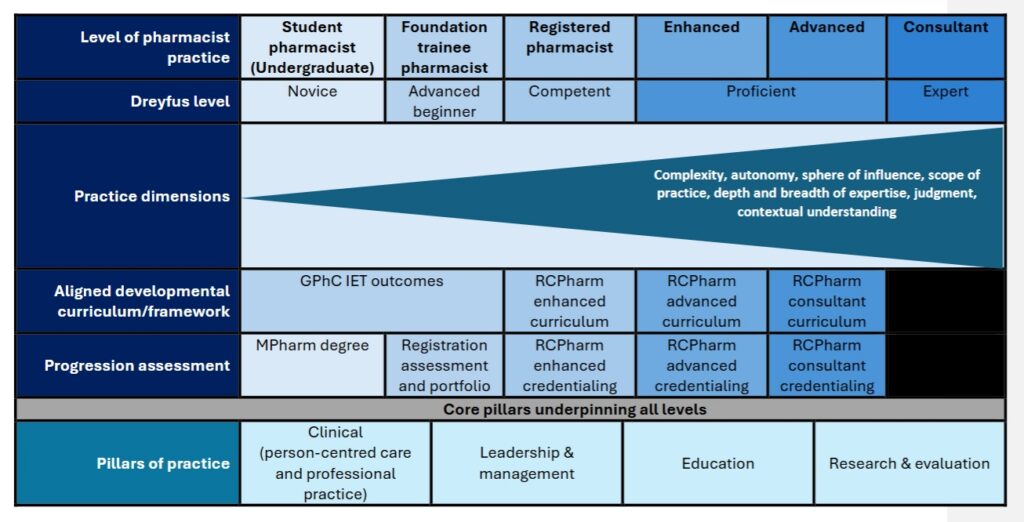
Where does enhanced credentialing fit within the pharmacist development pathway?
The enhanced curriculum mirrors the five-domain structure of the advanced and consultant curricula. This creates a coherent post-registration career pathway and aligns pharmacy with the four-pillar multi-professional workforce model used across UK healthcare professions.
See Figure 2 – Patient-focussed pharmacist development pathway in the curriculum.
What is the value of the enhanced curriculum and credentialing?
The enhanced curriculum and the enhanced credential are designed to deliver the following value for system stakeholders:
| Pharmacists Developing confident and reflective professionals | · Provides scaffolding for pharmacists to safely develop their clinical scope of practice, including prescribing, and practise with confidence. · Supports development of non-clinical capabilities to build future pharmacists who are leaders, educators, and researchers. · Builds ability to compile a high-quality professional portfolio of practice and develop effective reflective skills. · Allows pharmacists to demonstrate their real-life practice using workplace-based learning and/or credit-bearing academic approaches. · Offers flexible approaches to validating their enhanced level of practice, with modular micro-credentials in the clinical and non-clinical domains as well as a full enhanced credential. |
| Employers Supporting employers to develop and assure their new prescribing pharmacist workforce | · Provides a structure for employers to support and develop the early (prescribing) practice of their employees, including clinical and non-clinical capabilities, offering a clear career pathway. · Supports employers to demonstrate meeting pharmacy regulator standards for Chief Pharmacists and Superintendent Pharmacists by providing a robust workforce development and assurance model. · Gives access to an e-Portfolio for recording pharmacists’ (prescribing) practice for audit and assurance purposes. · Offers assurance of employee capability against a national benchmark, with flexible modular credentials in the clinical and non-clinical domains as well as a full enhanced credential. |
| Multi-disciplinary team (MDT) & wider healthcare system Integrating new pharmacist prescribers into the wider healthcare team | · Aligns pharmacy to the multidisciplinary team; the curriculum is structured against the four-pillar model of advanced practice and the standard aligns with the multi-professional definition of enhanced practice in England. · Ensures all pharmacists working at an enhanced level, regardless of sector, share a common set of capabilities across five core domains of practice, promoting workforce mobility and mutual recognition across different healthcare settings. · Encourages pharmacists to engage with other healthcare professionals and patients to gain feedback and corroborate their practice through their portfolio evidence. |
| Patients & the public Building confidence in the profession | · Provides patients and the public with the assurance that pharmacists are expanding their scope of practice in a safe and structured way, giving them confidence in the ability of the profession to deliver more complex care as they develop professionally. |
How will pharmacists undertaking the enhanced pathway and credentialing benefit the workplace?
The case studies below from employers across different sectors articulate the value of early career level (PRF) credentialing and development pathways to the employing organisation.
Click on the links to open examples.
Hospital examples:
See also the Scotland case studies, which include examples from hospital, GP practice/primary care, and community pharmacy practice.
Will pharmacists need time to complete the pathway?
Yes pharmacists will need time to undertake learning and both learners and their supervisors will need allocated time to meet, review and discuss progress. RCPharm guidance on protected learning time is available here.
Does a pharmacist need to be a prescriber to start the enhanced pathway?
No. They can begin using the curriculum and building evidence before annotation as a prescriber, but must be a registered prescriber with evidence of active prescribing as part of their clinical evidence when they submit for enhanced credentialing. However, they must have commissioned access to the e-Portfolio through a national provider to start.
Can anyone start an enhanced e-Portfolio as you can for advanced or consultant?
No. To start an enhanced e-Portfolio, you will need an e-Portfolio license code from a commissioned training provider (either NHSE in England, HEIW in Wales or PSD in Scotland). This is because access to enhanced is currently available to those on supported national commissioned pathways who fund access to the enhanced e-Portfolio.
How can a pharmacist undertake the pathway?
They should apply to join the formal commissioned programme in their country of practice. Further details on these programmes/pathways are on our enhanced homepage.
Is RCPharm membership required?
No. The curriculum and credentialing pathway are open to all pharmacists.
What if an experienced pharmacist wants to do the pathway but is not able to be part of the commissioned pathway in their country?
They should first contact the relevant national commissioning body (NHS England, HEIW in Wales or PSD in Scotland) to ask whether they can access the e-Portfolio through a commissioned programme.
At present, pharmacists who are not eligible for a commissioned place cannot access the Enhanced pathway because individual e-Portfolio licences are not yet available. The royal college is committed to wider roll-out of the e-portfolio with further phases planned, including the opportunity for pharmacists to purchase their own licences. Experienced pharmacist prescribers may also wish to consider Core Advanced credentialing. This is open access and may be more appropriate for their stage of practice.
Is the credentialing assessment fee covered by the national commissioning bodies?
Not necessarily. NHSE has funded e-Portfolio access only for the Pharmacist Enhanced Practice Pathway – any pharmacist wishing to credential will have to pay the relevant credentialing fee on submission. Scotland and Wales are funding credentialing assessment fees as part of their commissioned programmes. Pharmacists should ask the relevant commissioning body what their policy is regarding funding of assessment fees for further details.
How much does credentialing assessment cost if it is not covered by my national commissioning body?
| Credentialing product | Recommended fee |
|---|---|
| Full enhanced credential / full resit (4 to 5 domains) | £425 |
| Clinical or non-clinical module / partial resit (1 to 3 domains) | £350 |
Does Enhanced replace Post-registration Foundation?
Enhanced is the revised and renamed curriculum and will ultimately replace the legacy Post-registration Foundation curriculum from 2028. Transition arrangements will be communicated in 2027 to give pharmacists on current Post-registration Foundation pathways plenty of notice and opportunity to submit prior to the pathway closing.
If a pharmacist is already on a Post-registration Foundation programme and building an e-Portfolio, what should they do?
If you have started your Post-registration Foundation programme or journey, it is recommended that they continue on this path and complete the pathway. RCPharm will be offering credentialing for Post-registration Foundation until at least 2028 so there will be plenty of time to complete their portfolio prior to the pathway closing.
If a pharmacist has successfully completed Post-registration Foundation credentialing – does this mean they now need to do enhanced credentialing?
No. To continue their professional development journey, they should now engage with Core Advanced credentialing.
Can a pharmacist be an enhanced-level pharmacist if they only have one of the modular credentials?
No. It is a requirement to successfully meet all five domains of the full credential to be awarded the ‘Enhanced’ credential.
Can academic study e.g. a postgraduate diploma also count?
Yes, where the Royal College has an APCL agreement with the university or education provider and certified completion is evidenced, then the pharmacist will be awarded exemptions. We are currently engaging with universities developing aligned qualifications and modules to agree exemptions for enhanced. Current and future exemptions are listed on the APCL directory. Even if exemptions are not agreed or learners cannot get an exemption because it is a high-stakes outcome, they can still reuse evidence from formal study for credentialing if it clearly demonstrates the curriculum outcomes.
Resources
Useful resources for members
- A model for successful credentialing in pharmacy – an article from The Pharmaceutical Journal.
- For newly qualified pharmacists
- RCPharm Learn
Recording sessions
Session 1
Introduction to Enhanced Curriculum and Credentialing.
Examples
RCPharm
Reflections
RA Enhanced managing confidentiality – good
Reflective account (RA)
Title of RA: Managing confidentiality and MDT communication in a complex HIV-related medicines reconciliation case.
*Specific title which will aid mapping process and orientate assessors.
Description
Briefly outline the experience. This should be a factual account of what happened.
While conducting medicines reconciliation on a surgical ward, I supported a pharmacy technician who was unfamiliar with an antiretroviral medicine prescribed for a patient with HIV.
The event took place during a weekday ward round in a busy surgical environment. The individuals involved included myself, a pharmacy technician, a junior doctor, the ward sister, and the patient.
My role was to ensure accurate medicines reconciliation, support the technician, and provide clinical input to the wider multidisciplinary team.
During the process, the junior doctor discussed the patient’s HIV status in a way that could be overheard by others, resulting in a breach of confidentiality. The patient became visibly distressed.
I intervened promptly by speaking with the patient to provide reassurance and emotional support. I then addressed the situation with the junior doctor and ward sister, facilitating a discussion to resolve the issue. I also used the opportunity to educate the doctor about antiretroviral medicines and the importance of confidentiality in sensitive cases.
*Clear, structured, and comprehensive account of the event. All key elements included: what happened, where, who was involved, and the pharmacist’s role (use of ‘I’). Demonstrates good understanding of context and complexity.
Feelings
Explain your feeling and thoughts at the time of the event giving examples which directly reference the experience.
- What were your initial thoughts and feelings at the time?
- How did you feel during the experience?
- How did other people involved seem to feel?
- Have your feelings about the event changed since it happened?
At the start, I felt confident in supporting the technician but also aware that antiretroviral medicines can be complex and require careful handling. When the confidentiality breach occurred, my initial reaction was concern for the patient’s wellbeing and dignity. I felt a strong sense of responsibility to act quickly, as I recognised the potential impact on trust and the stigma that can unfortunately be associated with HIV.
During the experience, I felt slightly under pressure due to the busy ward environment, but I remained focused on communicating calmly and professionally. I was also conscious of maintaining a supportive tone with the junior doctor to avoid creating defensiveness.
The patient appeared anxious and upset, while the junior doctor seemed unaware of the seriousness of the situation initially. The technician appeared uncertain but receptive to guidance.
Since the event, my feelings have evolved to a sense of increased confidence in managing sensitive situations. I also feel more aware of the importance of proactively addressing confidentiality risks before issues arise.
*Demonstrates strong emotional insight and self-awareness. Considers perspectives of not just themself but also patient, doctor, and technician. Shows development in emotional response over time.
Evaluation
Describe what you think went well and what did not go so well.
- What went well in the situation?
- What did not go well?
- What were the positive aspects of the experience?
- What were the challenges or difficulties encountered?
- How did others respond to your actions?
What went well in the situation was my prompt recognition of the confidentiality breach and immediate intervention to support the patient. My communication with the patient was empathetic, which helped to reduce their distress and begin restoring trust.
I also handled the discussion with the junior doctor in a constructive and non-confrontational manner, which facilitated learning rather than blame. Supporting the technician with the unfamiliar medicine was another positive aspect, as it contributed to team learning.
However, not everything went well. The breach of confidentiality occurred before I was able to intervene, suggesting that I could have been more proactive in anticipating risks in a sensitive case.
A key positive aspect was the opportunity to educate members of the multidisciplinary team and reinforce good practice.
The main challenges included managing a sensitive issue in a busy ward environment, balancing patient care with team dynamics, and addressing a potentially uncomfortable situation involving a colleague.
Others responded positively to my actions. The patient appeared reassured after the discussion, and the junior doctor was receptive to feedback and education. The ward sister supported the resolution process.
*Balanced reflection including both strengths and areas for improvement. Identifies positives, challenges, and impact on others. Avoids blame and demonstrates professionalism.
Analysis
Analyse the experience. Why do you think the experience played out as it did? If you can, try to refer to any relevant literature or research to help make sense of the experience.
- Why did things happen the way they did?
- What factors influenced the outcome?
- What knowledge, skills, or behaviours affected the situation?
- How does this experience relate to relevant guidelines, literature, or previous learning?
- What sense can you make of the situation now?
The situation occurred largely due to a lack of awareness and experience on the part of the junior doctor, particularly regarding the sensitivity of HIV-related information. Environmental factors such as the busy ward setting and time pressures also contributed to the lapse in confidentiality.
My ability to respond effectively was influenced by my communication skills, professional judgement, and understanding of the importance of patient-centred care. Remaining calm and using an empathetic approach helped de-escalate the situation and maintain professionalism.
The experience reinforced the importance of confidentiality as a core professional responsibility, particularly in cases involving conditions that may carry stigma. It also highlighted the need for clear and appropriate communication within the multidisciplinary team.
My prior knowledge of antiretroviral therapy and its complexity enabled me to confidently support both the technician and the doctor. Additionally, my approach to providing immediate, context-based teaching supported effective learning within the team.
Reflecting on the situation now, it is clear that earlier intervention or anticipatory guidance may have prevented the issue. The experience has helped me better understand the importance of situational awareness and proactive communication in clinical environments.
*Demonstrates critical thinking of and depth of reflection. Considers contributing factors such as environment, knowledge gaps, and communication. Shows strong reasoning and insight into practice. Links experience to professional standards, clinical context.
Conclusion
Summarise what you learned as a result of reflecting on this experience.
- What have you learned from this experience?
- What could you have done differently?
- What skills or knowledge need further development?
- How has this reflection changed your understanding or practice?
From this experience, I have learned the importance of maintaining strict confidentiality at all times, particularly in sensitive clinical cases as part of my responsibilities to maintain and scrutinize professional behaviours. I have also recognised the value of acting promptly and professionally to address issues that may impact patient trust and wellbeing (outcome 2.5).
I could have improved the situation by being more proactive in highlighting confidentiality considerations before the discussion took place. This experience has highlighted the need to further develop skills in anticipatory communication and leadership within the multidisciplinary team.
Overall, this reflection has strengthened my understanding of patient-centred care and reinforced how I can role model professional leadership; including using challenging situations as opportunities for learning and improvement for myself and less experienced colleagues (outcome 3.1).
*Clearly summarises key learning points. Identifies what could have been done differently. Demonstrates meaningful change in understanding and practice. Shows awareness of how these link to behaviours expected at enhanced practice level.
Action plan
Summarise the next steps you now need to take to build on this learning.
- What will you do differently next time?
- What specific steps will you take to improve your practice?
- What further learning or training do you need?
- How will you apply this learning in future situations?
In future, I will take a more proactive approach by highlighting confidentiality considerations during ward activities, particularly in sensitive cases.
I will develop or share concise educational resources on antiretroviral medicines and confidentiality to support junior staff and pharmacy team members.
To improve my practice, I will seek feedback from colleagues on my communication and handling of complex situations.
I will also engage in further learning on managing difficult conversations before my next meeting with my supervisor and apply these skills in future clinical scenarios to ensure high standards of patient care and professionalism.
*Specific, realistic, and actionable steps identified. Includes proactive strategies and ongoing development. (outcome 4.1). Being open to
reflection and feedback from others demonstrates commitment to professionalism, integrity and legal and ethical accountability (outcome 2.5) Demonstrates commitment to improving patient care and team practice.
Overall feedback
This is a strong reflective account demonstrating a high level of insight, professionalism, and patient-centred thinking. The pharmacist shows their capability to reflect on their own emotions, biases, preferences and how this affects working relationships and patient care (outcome 3.4). They critically analyse complex situations and demonstrate leadership by using them as opportunities for learning and team development for themselves and colleagues with less experience (outcome 3.1).
The reflection is well-structured, balanced, and clearly linked to improvements in future practice.
Suggested next steps:
- Continue to demonstrate this level of reflection consistently.
- Share learning more widely within the multidisciplinary team.
- Consider documenting impact of changes made in future reflections.
RA Enhanced managing confidentiality – weaker
Reflective account (RA)
Title of RA: Managing confidentiality and MDT communication in a complex HIV-related medicines reconciliation case.
*Specific title will aid portfolio mapping process and provide clarity to assessors.
Description
Briefly outline the experience. This should be a factual account of what happened.
- What happened?
- Where and when did the event take place?
- Who was involved?
- What was your role in the situation?
- What were the key events or actions that occurred?
I was on a surgical ward doing medicines reconciliation. This happened during the day. A technician and doctor were involved.
My role was to check medicines. A doctor mentioned HIV in front of others and the patient heard. I spoke to the patient and doctor.
*Lacks sufficient detail and context. Does not clearly explain the pharmacist’s role or key events. Assessor cannot fully understand the situation.
Feelings
Explain your feeling and thoughts at the time of the event giving examples which directly reference the experience.
- What were your initial thoughts and feelings at the time?
- How did you feel during the experience?
- How did other people involved seem to feel?
- Have your feelings about the event changed since it happened?
At the time I felt okay and just carried on. It was a bit stressful but not too bad. During the experience I didn’t feel much. The patient seemed upset and the doctor didn’t realise. My feelings haven’t really changed since.
*Minimal exploration of own thoughts and emotions. Does not demonstrate reflective depth. Limited awareness, consideration and exploration of impact on patient’s feelings or colleagues. Feelings towards the situation have not evolved upon further reflection; indicating limited capabilities to reflect on own emotions, biases and how these affect behaviour (a behaviour to be demonstrated to meet outcome 3.4).
Evaluation
Describe what you think went well and what did not go so well.
- What went well in the situation?
- What did not go well?
- What were the positive aspects of the experience?
- What were the challenges or difficulties encountered?
- How did others respond to your actions?
What went well was that I spoke to the patient and helped. What did not go well was that the doctor made a mistake. A positive aspect was that the situation was sorted. The difficulty was that it was busy. Others seemed fine with what I did.
*Although indicates aspects that went well and not so well, the evaluation is superficial with little insight into how this relates to professional standards and patient-centred care. It focuses on others’ mistakes rather than their own learning from the situation; demonstrating a lack of self-awareness (needed for outcome 3.4), limited articulation of own professional values and beliefs (outcome 3.1) or an openness to professional scrutiny, feedback and willingness to change (outcome 2.5). They do not explore challenges or outcomes meaningfully.
Analysis
Analyse the experience. Why do you think the experience played out as it did? If you can, try to refer to any relevant literature or research to help make sense of the experience.
- Why did things happen the way they did?
- What factors influenced the outcome?
- What knowledge, skills, or behaviours affected the situation?
- How does this experience relate to relevant guidelines, literature, or previous learning?
- What sense can you make of the situation now?
This happened because the doctor didn’t know enough and the ward was busy. My skills helped because I spoke to them. Confidentiality is important in healthcare. This links to guidelines about patient information. Looking back, it was just something that happens sometimes.
*No critical analysis or deeper reasoning. Fails to explore why the situation occurred or contextual factors that may have contributed to the situation. Does not consider alternative actions that could have been taken. Does not link to professional standards, prior learning or behaviours expected at enhanced practice level.
Conclusion
Summarise what you learned as a result of reflecting on this experience.
- What have you learned from this experience?
- What could you have done differently?
- What skills or knowledge need further development?
- How has this reflection changed your understanding or practice?
I learned that confidentiality is important. I could have maybe said something earlier. I might need to learn more about communication. It hasn’t really changed my practice much.
*Very limited learning identified or awareness of potential impact on patient care. Does not demonstrate development in understanding or identify potential improvements for future practice. Lacks reflection on proactive steps they could take to influence colleague behaviour and role model professionalism.
Action plan
Summarise the next steps you now need to take to build on this learning.
- What will you do differently next time?
- What specific steps will you take to improve your practice?
- What further learning or training do you need?
- How will you apply this learning in future situations?
Next time I will try to be better.
I will improve my practice.
I might do some more learning.
I will apply this in future if it happens again.
*Action plan is vague and non-specific i.e. not based on SMART objectives. No clear or measurable actions. Does not demonstrate commitment to improvement within practice or their own behaviours.
Overall feedback
This reflective account does not meet the expected standard for an enhanced pharmacist. It lacks depth, detail, and critical reflection required to demonstrate self-awareness and emotional intelligence required to meet outcome 3.4. The trainee does not demonstrate sufficient insight into their own professional behaviours (outcome 2.5) or in their development as a leader through role modelling and
supporting colleagues (outcome 3.1). The reflection lacks consideration of the impact of the situation on the patient, leading assessors to question the extent to which person-centred care is being delivered.
Required improvements:
- Provide a clear and structured description of events.
- Explore personal thoughts and feelings in more depth.
- Analyse situations rather than simply describing them.
- Take ownership of learning rather than focusing on others.
- Develop specific and actionable plans for improvement.
RA Enhanced medicines review – good
Reflective account (RA)
Title of RA: RA Enhanced Medicines Review
Description
Briefly outline the experience. This should be a factual account of what happened.
A patient was admitted to the assessment unit following a fall and prolonged period on the floor at home. During medicines reconciliation, a pharmacy technician identified several empty and out-of-date medicine boxes in the patient’s handbag, some dating back to 4 years.
Communication with the GP practice confirmed that repeat medications had last been issued in 2 months previously, raising concerns regarding adherence and medicines management at home.
I reviewed the patient and completed a comprehensive medicines review and care plan in collaboration with the acute medical consultant. We rationalised therapy where appropriate, considering falls risk, adherence, and current clinical need. This included deprescribing unnecessary medicines and simplifying the regimen.
To ensure continuity of care, I referred the patient to the intermediate care (ICT) pharmacy team on discharge for follow-up and ongoing medicines support in the community.
*Describes the situation in sufficient detail yet still succinctly. The learner articulates the context, their role in the tasks and outcomes achieved clearly.
Feelings
Explain your feeling and thoughts at the time of the event giving examples which directly reference the experience.
I felt confident undertaking the medicines review but recognised the complexity of balancing deprescribing decisions with the patient’s acute clinical needs and social circumstances. I was particularly aware of the importance of ensuring safe transfer of care and preventing future medicines-related harm. I felt that this was a valuable opportunity to demonstrate clinical decision-making and collaborative working.
Evaluation
Describe what you think went well and what did not go so well.
This was a positive learning experience. Medicines reconciliation highlighted discrepancies and adherence concerns that may otherwise have been missed. Working with the consultant enabled shared decision-making and ensured that medication changes were safe and effective and aligned with the overall care plan (outcome 1.5).
The referral to the ICT pharmacy team supported continuity of care and reduced risk of readmission due to medicines-related issues (outcome 1.4). However, I recognised that earlier direct discussion with the patient about adherence and support at home could have provided additional insight as part of a holistic, inclusive approach to optimise their effective use of medicines (outcome 1.3).
*Explicit linkage of behaviours to curriculum outcomes, adds weight to the learner having good self-awareness of their strengths and areas for improvement and reflective capabilities.
Analysis
Analyse the experience. Why do you think the experience played out as it did? If you can, try to refer to any relevant literature or research to help make sense of the experience.
This scenario demonstrated the importance of robust medicines reconciliation and multidisciplinary collaboration in identifying medicines-related risks. The presence of out-of-date and unused medicines suggested poor adherence or possible confusion regarding therapy. Rationalising therapy reduced pill burden and potential falls risk, aligning with medicines optimisation principles.
Effective communication with the GP and collaboration with the consultant ensured decisions were evidence-based and patient-centred. Referral to the ICT pharmacy team supported safe transitions of care and ongoing monitoring, which is essential for vulnerable patients following discharge.
This experience reinforced the pharmacist’s role in clinical decision-making, deprescribing, and ensuring continuity across care settings to improve patient safety and outcomes.
*The learner articulates their thought processes in taking the approach they did to reach a successful outcome. This could be further enhanced by adding how an early discussion with the patient would have impacted the outcome.
Conclusion
Summarise what you learned as a result of reflecting on this experience.
This case enhanced my confidence in undertaking holistic medicines reviews and contributing to multidisciplinary care planning. It highlighted the importance of considering adherence, polypharmacy and social factors when optimising treatment. I will continue to proactively identify patients who may benefit from deprescribing and ensure robust transfer of care processes are in place.
Action plan
Summarise the next steps you now need to take to build on this learning.
- Continue to develop deprescribing skills in frail and elderly patients.
- Proactively identify patients at risk of non-adherence or medicines-related harm and where able have early conversations with them on their medicine use and social factors that may be impacting this.
- Strengthen documentation of clinical reasoning within care plans.
- Seek further opportunities to work with community and intermediate care pharmacy teams to support transfer of care.
*Clear achievable next steps that build upon experience and address identified areas for improvement. Ideally, would have further evidence of integrating better documentation of clinical reasoning and/ or steps to proactively identify patients at risk of medicines related harm.
RA Enhanced medicines review – weaker
Reflective account (RA)
Title of RA: Medicines review following patient admission
Description
Briefly outline the experience. This should be a factual account of what happened.
A patient was admitted. During medicines reconciliation some old medicines were found and the GP confirmed repeats had not been issued recently. I reviewed the medicines and discussed them with the consultant. Some medicines were stopped and the patient was referred to the ICT pharmacy team on discharge.
*Lacks context. Limited detail on the learner’s involvement with some tasks e.g. arranging discharge and outcome for the patient. This limits the ability to assess whether the learner demonstrates behaviours themselves or not.
Feelings
Explain your feeling and thoughts at the time of the event giving examples which directly reference the experience.
I felt a bit unsure about what to stop and wanted to make sure I did the right thing. I was slightly nervous discussing changes with the consultant but it went ok.
*Lacks depth. Add further explanation of what was causing nervousness regarding discussions with consultant and factors that were making them unsure in their decision making. Focuses only on negative feelings, rather than also adding the positive feelings from the positive interaction with the consultant and what made it go ‘OK’.
Evaluation
Describe what you think went well and what did not go so well.
The medicines were reviewed and changes were made. The referral to ICT was completed. However, I think I could have looked into the patient’s history more and spoken more with the patient about their medicines.
*Lacks explicit description of behaviours the learner was demonstrating using key words and phrases from specific curriculum outcomes. Lacks reflection on whether the outcome was positive for the patient’s care and the impact the learner had on the outcome. Potential to better build upon what may have caused the ‘feelings’ written in the section above regarding what they felt went well and didn’t go so well. Limited detail on what the consequences of not delving into the patient’s history were.
Analysis
Analyse the experience. Why do you think the experience played out as it did? If you can, try to refer to any relevant literature or research to help make sense of the experience.
The medicines reconciliation showed some discrepancies. It is important to review medicines when patients come into hospital. I worked with the consultant to make changes. I need to improve my knowledge of deprescribing and confidence in decision making. I also need to document my plans more clearly and ensure I fully understand why patients may not be taking medicines.
*Very limited detail on what actions the learner considered taking and their reasoning for their actions. For example, no detail on factors that enabled the learner to overcome their uncertainty about stopping medicines. No mention of alternative approaches they could have taken to improve history taking or better involvement of the patient with decisions. Lack of detail suggests limited self-awareness and reflective capabilities (which can contribute to outcome 3.4 and 4.1).
Conclusion
Summarise what you learned as a result of reflecting on this experience.
This was a useful learning experience. I need more practice reviewing medicines and making decisions about stopping them. I will try to improve my confidence and knowledge in this area.
*Very generic statement rather than highlighting specific learning related to knowledge, skills or behaviours demonstrated that are outlined in curriculum outcomes. Doing so strengthens portfolios.
Action plan
Summarise the next steps you now need to take to build on this learning.
- Review guidance on deprescribing in older patients
- Improve documentation of care plans
- Gain more experience with medicines reconciliation and reviews
- Seek feedback from senior pharmacists on future cases
*Seem achievable next steps though would benefit by using SMART (specific, measurable, achievable, realistic, timeframe) objectives. This would aid referencing achievement of the action plan in future evidence.
RA Enhanced resilience under pressure – sufficient
Reflective account (RA)
Title of RA: Reflective account of working with colleagues with a different working style.
Description
Briefly outline the experience. This should be a factual account of what happened.
During my time working in the community pharmacy, I was part of a team delivering services such as dispensing medication, the common ailment scheme, and prescribing services. The pharmacy environment is often busy and stressful. At times, we delivered services effectively through good teamwork, but on other occasions, challenges like understaffing and poor communication led to errors and inefficiencies.
*Describes context and learner’s role appropriately. Could be more specific describing what makes the environment busy and stressful. A specific example of a situation that led to an error or inefficiency would make the evidence more robust as it would add further authenticity and credibility.
Feelings
Explain your feeling and thoughts at the time of the event giving examples which directly reference the experience.
Initially, I felt confident when working with a supportive and communicative team. I appreciated the trust and respect that helped us work well together. However, during periods of high stress and understaffing, I often felt overwhelmed and frustrated when communication broke down, and teamwork faltered. It was difficult to manage competing priorities without sufficient support, which sometimes led to tension between colleagues.
*Honest, insightful description of feelings that shows self-awareness and emotional intelligence.
Evaluation
Describe what you think went well and what did not go so well.
Positive aspects included effective communication, mutual respect, and emotional support within the team, which helped maintain service quality and staff morale. Regular meetings and inclusive decision-making allowed everyone to voice their opinions and contributed to a smoother workflow. On the downside, periods of understaffing and poor task prioritisation led to errors and increased stress. A key problem was the lack of communication and reluctance to ask for help, which negatively affected teamwork.
*Clear evaluation of aspects of team working that went well and not so well. This would be further enhanced by clearer articulation of the learner’s actions and roles in instigating inclusive decision- making, arranging regular meetings and maintaining communication flow etc. Could further enhance by explicitly stating how the learner’s actions help demonstrate the indicators for outcome 3.4, i.e. how has an awareness of other people’s workloads impacted their own actions? How do they ensure prioritisation and delegation in response to changing demands and capacity?
Analysis
Analyse the experience. Why do you think the experience played out as it did? If you can, try to refer to any relevant literature or research to help make sense of the experience.
This experience highlighted the importance of recognising different working styles and strengths within the team. My analytical style means I focus on accuracy and organisation, while others have “driver” or “amiable” styles that bring motivation and emotional support. When communication breaks down, the team struggles to coordinate effectively, leading to inefficiency and mistakes. Effective teamwork relies on open communication, trust, and mutual respect, as well as clearly defined roles and task prioritisation. Understaffing and high workload are known to increase cognitive load and stress among healthcare workers, which can lead to mistakes such as dispensing errors (Carayon et al., 2014). In the pharmacy, time pressure and multitasking demands can overwhelm staff, reducing their ability to communicate effectively and collaborate (James et al., 2007). This is seen when mistakes and tension were more likely to occur when the team was under pressure.
*Good linkage of theory to the situation described. Could be further enhanced by the learner considering alternative actions they could take when circumstances are challenging or what they may do differently in future. This may be easier to do if reflecting on a more specific situation as suggested in the description section.
Conclusion
Summarise what you learned as a result of reflecting on this experience.
I have learned that delivering an effective service is not just about individual effort but about fostering a supportive team environment. Encouraging open communication and ensuring everyone’s input is valued helps prevent misunderstandings and burnout. Balancing different working styles and supporting one another during busy times is crucial. Regular meetings and explaining the benefits of changes promote acceptance and participation.
*Succinct summary of learning and the potential to apply in practice. Clearer articulation of the learner’s own intention of what they themselves will apply to future practice would further enhance the conclusion. It would also enable the assessor to determine if actions were implemented and demonstrate the learner’s capability to change their own behaviour through reflective practice.
Action plan
Summarise the next steps you now need to take to build on this learning.
Advocate for regular team meetings to improve communication and allow all members to share concerns or ideas.
Encourage team members to ask for help when overwhelmed, helping to foster a supportive culture.
Work closely with colleagues of different working styles to balance task delegation and decision-making.
*Action plan is specific, achievable and realistic. Adding timescales would make this action plan align with SMAT objectives.
RA Enhanced research module completion – good
Reflective account (RA)
Title of RA: Reflection following completing on the NIHR e-learning and participating in research
Description
Briefly outline the experience. This should be a factual account of what happened.
Completing the Introduction to Good Clinical Practice (GCP) E-Learning module has been a valuable and insightful experience that has deepened my understanding of the ethical and regulatory framework that underpins clinical research in the UK and internationally. As part of the 4th year Cardiff University project, I took part in a focused discussion where we discussed being a part of the post-foundation training programme. I also supported 3rd-year Swansea pharmacy student with her project, which focused on patient feedback on the Independent prescribing service that is provided by community pharmacists in the Cwm Taf health board.
*Clear, succinct description of learning product completed. Adds context of how this learning was then applied to their practice and their role in the research project.
Feelings
Explain your feeling and thoughts at the time of the event giving examples which directly reference the experience.
This training has not only increased my confidence in supporting clinical research but has also made me more mindful of the responsibilities I carry in protecting participants and ensuring data integrity. I now feel better equipped to contribute to a research environment that prioritises ethical conduct, regulatory compliance, and scientific rigour.
*The learner has acknowledged their feelings towards being involved in research post-course. This could have been further enhanced by considering feelings during course completion itself.
Evaluation
Describe what you think went well and what did not go so well.
By completing the e-learning, I feel that I was more mindful when participating in the university projects. For the Cardiff University project, I was able to discuss my views on the programme whilst listening toothers who are also currently completing the Post-foundation programme. With the Swansea University project, I assisted with completing the information gathering stage and also highlighted 4 other pharmacies in the area that were providing the IP service. For the focused discussion, although the students were prepared with a group of 10 pharmacists, the conversation did stray from the questions, and some members were more vocal than others. Therefore, I feel that not all opinions were shared.
*Has covered what went well and not so well during the application of learning from their ‘real-life insight’. Potential to expand on how the learning itself impacted their understanding of differences between audit, quality improvement, service evaluation and research and quantitative and qualitative research methods. Doing so would provide clearer mapping to outcome 5.1, especially if key words and phrases from these indicators are used.
Analysis
Analyse the experience. Why do you think the experience played out as it did? If you can, try to refer to any relevant literature or research to help make sense of the experience.
I feel the quality of the discussion benefited from the peer-led nature of the group. Kitzinger (1995) argues that focus groups among peers can reduce social distance and increase the richness of responses, something that was clearly evident during the session. The experience also highlighted the power of experiential learning. Kolb’s (1984) theory suggests that concrete experiences combined with reflection significantly enhance understanding. By running the session themselves, the students were able to internalise the strengths and limitations of qualitative data collection than they would have through reading alone.
*Excellent linkage of theory relating to research and experiential learning, demonstrating a depth of understanding of underpinning knowledge. Could further enhance by analysing the key impact involvement in these research projects had on them personally as a learner.
Conclusion
Summarise what you learned as a result of reflecting on this experience.
This experience reinforced for me the value of providing structured, hands-on research support to students. While theoretical instruction is important, through hands-on application that the students are able to develop confidence, communication skills, and ethical awareness. The session went well overall, but it also highlighted the need for additional preparation around facilitation techniques.
*Demonstrates good self-awareness of the impact having an opportunity for practical application – has complemented theoretical learning. Has highlighted an area for further development though could be clearer in describing if the additional preparation for facilitation techniques is for them personally or a general observation of the process as a whole.
Action plan
Summarise the next steps you now need to take to build on this learning.
Going forward, I will apply this learning by ensuring that all documentation I am responsible for meets GCP standards, and that I support informed consent processes diligently. I will also be proactive in reporting any safety concerns and in encouraging good communication within the research team. Obtaining the GCP certificate marks a formal acknowledgment of this learning, but more importantly, it serves as a reminder of the professional and ethical standards that must guide all research activities.
*Action plan has specific, measurable, achievable and realistic objectives.
RA Enhanced identifying and managing medication risks example – good
Reflective account (RA)
Title of RA: Early identification of type 2 diabetes risk and management of complex medicine interactions in a community pharmacy setting.
Description
Briefly outline the experience. This should be a factual account of what happened.
This reflection relates to a series of consultations with a 53-year-old male patient who frequently attended the community pharmacy for advice due to limited availability to attend GP appointments. During a prescription intervention, the patient expressed concerns about weight gain and increased thirst. These symptoms, alongside risk factors such as obesity and dyslipidaemia, prompted further assessment.
As the pharmacist on duty that day, I conducted opportunistic screening, including blood pressure and fasting blood glucose testing, and identified results suggestive of possible type 2 diabetes. Concurrently, I recognised potential clinically significant drug interactions involving clarithromycin, atorvastatin, and colchicine, and liaised with the GP to optimise therapy.
The case evolved over several months and culminated in referral to the GP, confirmation of diabetes, initiation of metformin therapy, and modification of lipid-lowering treatment.
*Succinct, clear description of background and actions that were taken by the pharmacist and defines subsequent patient outcomes. Use of ‘I’ helps clarify their role in the situation.
Feelings
Explain your feeling and thoughts at the time of the event giving examples which directly reference the experience.
Initially, I felt concerned about the patient’s symptoms and their potential implications for long-term health, particularly given their reluctance to engage fully with medication in the past. I was also aware of the responsibility associated with identifying possible early signs of chronic disease in a non-clinical setting.
At the same time, I felt motivated and confident to apply clinical knowledge gained through postgraduate training to support the patient. As the case progressed, I experienced a sense of professional satisfaction when collaborative working with the GP led to timely diagnosis and optimisation of therapy. However, I also recognised uncertainty in balancing the risks and benefits of modifying complex medication regimens.
*Has acknowledged a range of feelings for relevant aspects of the experience.
Evaluation
Describe what you think went well and what did not go so well.
Having an established rapport with the patient helped in having honest discussions about the potential need for further investigations on the symptoms reported, current and potential future risks and benefits of adjusting medicines. Based on collaborator feedback, I recognise that there are benefits to me using more structured decision-making discussions, such as using the DECIDE model or similar. These can ensure there is space in the conversation for the patient to add their thoughts and can add clarity to the focus of the conversation.
Having regular contact on decisions relating to one patient, created opportunities to build relationships with key staff in the GP practice. This has been helpful when I have not been working in the area for long.
*Has balanced evaluation- touching on both an aspect that went well and an aspect that the learner could take learning from.
Analysis
Analyse the experience. Why do you think the experience played out as it did? If you can, try to refer to any relevant literature or research to help make sense of the experience.
This experience highlights the expanding role of community pharmacists and my involvement undertaking relevant investigations to support early disease detection, medicines optimisation, and chronic disease prevention. Opportunistic screening aligns with evidence that early identification of type 2 diabetes can reduce long-term complications through timely intervention and lifestyle modification.
The case also illustrates the complexity of managing polypharmacy and drug interactions in patients with multiple comorbidities. The interaction between clarithromycin and atorvastatin, and the potential for colchicine toxicity, emphasises the importance of pharmacokinetic awareness and interprofessional communication.
From a professional practice perspective, the case demonstrates application of consultation skills, shared decision-making, and clinical reasoning, consistent with the RCPharm enhanced curriculum. It also reflects principles of medicines optimisation and prudent healthcare, whereby interventions aim to maximise benefit while minimising harm and resource waste.
*This section could be further enhanced by clearer linking of knowledge, skills and behaviours demonstrated by the learner to curriculum outcome key words and phrases. For example outcomes 2.2- using physical and clinical assessment to inform medicines optimization and clinical decision making. The learner could highlight application of their pharmaceutical knowledge and critique of appropriate guidelines and pathways enabled safe, effective, holistic patient care. The learner is making decisions within their scope of practice and liaising appropriately with other healthcare professionals to further expand the limits of their practice with appropriate supervision and shared decision making. This demonstrates a pro-active approach to continuing their professional development that assessors value. Other curriculum outcomes that could be linked are- 2.4 regarding prudent use of medicines and minimising waste, 1.3 and 2.3 in determining risk and shared decision making, 2.1 applying pharmaceutical knowledge.
Conclusion
Summarise what you learned as a result of reflecting on this experience.
This experience reinforced the importance of holistic assessment, proactive clinical reasoning, and effective collaboration with other healthcare professionals. It demonstrated that community pharmacists are well positioned to identify early signs of chronic disease and mitigate medication-related risks. I learned that structured documentation, earlier escalation of risk, and systematic follow-up are essential to maximise the impact of pharmacy-led interventions. The case strengthened my confidence in managing complex clinical scenarios within the scope of enhanced practice.
*Succinct and captures key points mentioned above.
Action plan
Summarise the next steps you now need to take to build on this learning.
- Develop a more structured approach to documenting clinical reasoning and risk assessment in patient consultations.
- Enhance knowledge of diabetes prevention, pharmacotherapy, and monitoring through continued professional development.
- Apply formal shared decision-making frameworks to improve patient engagement and adherence.
- Establish clearer follow-up pathways with primary care to support early intervention in high-risk patients.
- Continue to develop competence in identifying and managing complex drug interactions in multimorbidity.
*Action plan is succinct, relevant and achievable. It could be improved by making actions a little more specific to be measurable and timescales of when hope to achieve.
RA Enhanced teaching sessions example
Reflective account (RA)
The following example of a reflective account relates to reflection on carrying out a teaching session and feedback via a teaching observation (TO) for this session. You can see a copy of the TO at the end of this document.
Title of RA: Training session – swallowing difficulties.
Description
Briefly outline the experience. This should be a factual account of what happened.
I completed a training session for five nurses on a stroke ward. I was observed by a senior pharmacist colleague to receive feedback on the delivery of this session. The session focused on the provision of medication for patients with swallowing difficulties including access to liquid preparations out of hours and resources available to help manage medicines in this patient group. I gained positive feedback from the attendees of the session who found this session informative and supported developing their knowledge within this area.
*Learner detailed the context, what happened, where the event took place, who was involved, what their role was (use of ‘I’) and what key events and actions occurred. As this was a teaching session example the learner could have provided more detail around why the session was required and how they planned, developed, delivered and evaluated the actual teaching session.
Feelings
Explain your feeling and thoughts at the time of the event giving examples which directly reference the experience.
I found the experience of developing a structured training plan for the session useful as it enabled me to complete all the required objectives and felt more organised and professional to deliver. I was nervous initially to deliver the session to another profession as I wasn’t sure how they would respond to me and was concerned that they may not be engaged throughout the session. However, they were engaged and asked lots of questions throughout the session, providing positive feedback after the session. This has since increased my confidence in the delivery of these sessions.
*The learner described their initial thoughts and feelings at the time and how they felt during the experience. They also considered how the other profession seemed to feel throughout. The learner could have elaborated a bit more on their feelings as the session progressed. It would add to the depth of reflection to articulate if their feelings about the event changed after reflecting upon the teaching session afterwards.
Evaluation
Describe what you think went well and what did not go so well.
I was well prepared and discussed the session content with a senior pharmacist prior to the session to ensure it was a good presentation and fitted the needs of the nursing staff. This session went well and attendees were engaged throughout. However, I need to gain more experience providing training sessions to those with varied educational needs and to those who are not as engaged in the session as these would be more challenging sessions to deliver. Due to the staffing needs of the ward, I had limited time to deliver this session. This made it slightly challenging as I had more content that I could use therefore I had to adapt to ensure that I covered all relevant areas within the time limited session. This would have been a more difficult session if the attendees had not been so confident to ask questions and discuss the material in the session.
*The evaluation is specific and balanced in terms of what went well and not so well. To increase the quality further, the learner could have described in more detail what they felt went well throughout the session.
Analysis
Analyse the experience. Why do you think the experience played out as it did? If you can, try to refer to any relevant literature or research to help make sense of the experience.
I have gained confidence previously doing 1 to 1 training sessions with students and trainee pharmacists. This experience allowed me to build on this by completing a session to a wider audience from a different profession.
*This section lacks consideration of factors that impacted the effectiveness of the session delivery. The learner should have described here what skills, or behaviours affected the education session and relate these to curriculum outcomes- for example what made the session they planned more or less effective? Referencing educational theories and models that they applied to the session will strengthen the evidence (outcome 4.4). Similarly, describing more specifically how skills as an educator gained from delivering 1 to 1 training influenced delivery of this session, will demonstrate the learner’s capability to plan and engage in their own professional development, learning and reflection (outcome 4.1). Consideration of what could have been done differently to overcome the challenges encountered with limited time to deliver the session would have strengthened this section. It is unclear whether there was formal feedback (written or online questionnaire) or just verbal feedback from participants. Captured feedback would strengthen supporting evidence for this reflection and provide a source for deeper reflection on the impact on participants. The learner could have also expanded further on how this experience enabled them to further build their confidence in their role as an educator.
Conclusion
Summarise what you learned as a result of reflecting on this experience.
I am continuing to develop my provision of education and training sessions. I will gain more experience of varied groups, learners, and topics by completing more sessions.
*This section is too succinct; the learner has not clearly summarised key learning points. They have stated what they will do moving forward however have not clearly articulated what they have actually learned as a result of this experience. Within this section they could have expanded upon the importance of developing a teaching plan to ensure the session is delivered within the time limits set whilst ensuring all teaching points are covered. They have not described what knowledge and skills require further development. They could have also described how the feedback received has benefited their learning and impacted their approach to delivering similar sessions in the future.
Action plan
Summarise the next steps you now need to take to build on this learning.
Complete another teaching session with multidisciplinary and pharmacy teams.
I will discuss with my clinical lead which sessions require to be completed.
*The action plan is achievable and measurable however it lacks specifics and timescales to make it SMART. Inclusion of key learning to improve development of teaching plan, obtaining more concise feedback/ evaluation, exploration of learning needs to tailor sessions would strengthen the evidence. It would also have been beneficial to describe how they will apply this learning in future situations.
Overall feedback
This is an appropriate example of designing and delivering an education session for enhanced level. The pharmacist has shown the ability to deliver a teaching session and receive feedback but lacked detail in how the learning need was identified, how the session was evaluated and educational approaches they applied to plan and deliver the session.
This is a weaker reflective account as lacked consistent depth of reflection. To improve:
- Provide a clear and structured description of planning, delivery and methods of evaluation.
- Explore personal thoughts and feelings in more depth.
- Critically analyse the factors that impacted the situation and the outcome, including possible alternative approaches.
- Develop specific, actionable plans for further improvement in their educator role.
This evidence would be well supported by a teaching observation SLE, uploads of any evaluation data captured, session plan, presentation or handouts produced.
Teaching observations
TO Enhanced Meds Rec – good
Teaching observation (TO)
Title of teaching session: Facilitating experiential learning: medicines reconciliation in practice.
Setting: Setting Acute Hospital Ward
Learner group: Experiential learners (undergraduate pharmacy students)
Brief description of the session
Pharmacist led a practical teaching session to support learners in developing their professional knowledge and skills in completing accurate medicines reconciliation and identifying/documenting medicines-related issues to promote best practice in medicines related issues (outcome 4.3 and 4.4).
*Clear, succinct description of observed activity and how this relates to curriculum outcome by using key words.
Introduction
The pharmacist introduced themselves clearly and established a positive learning environment. They effectively gained the attention of the learner group and outlined clear learning outcomes at the start of the session.
They assessed learners’ baseline knowledge of the medicines reconciliation process following recent university and internal teaching. This enabled them to tailor the session appropriately to learner needs and ensure relevance. Expectations for participation and observation were clearly explained, and learners were engaged from the outset.
*Notes specific behaviours observed that align with outcome indicators (e.g. 4.3- assessing baseline knowledge to identify gaps and tailoring session to meet learning needs, supportive learning environment).
Main part of session
The session was well structured and appropriate to the level of experiential learners. The pharmacist demonstrated strong subject knowledge and effectively linked theoretical learning to real clinical practice.
They used demonstration of live medicines reconciliation to highlight key principles, including identification and documentation of medicines discrepancies. The pharmacist maintained a logical sequence, moving from demonstration to supervised learner practice and feedback.
Learners were encouraged to actively participate and ask questions throughout. Peer observation was facilitated appropriately with consent, supporting shared learning. The pharmacist used effective questioning to assess understanding and adapted their teaching style to learner responses.
Clear, constructive and specific feedback was provided following observation of each learner. The pharmacist highlighted strengths and areas for development sensitively and ensured all learners had the opportunity to reflect and ask questions. The session was delivered at an appropriate pace with good use of tone and communication to maintain engagement.
The pharmacist also sought feedback from learners regarding their teaching, demonstrating reflective practice and commitment to continuous improvement.
Conclusion
The pharmacist summarised key learning points effectively, reinforcing the importance of accurate medicines reconciliation and documentation in supporting patient safety.
Learners were encouraged to continue practising the skill and to seek support where required. The session concluded in a structured manner with clear reinforcement of learning outcomes and opportunities for reflection.
Overall, this was a well-delivered and engaging teaching session that met the expected standard for a post-registration foundation pharmacist.
| Overall rating | |
|---|---|
| Below the level expected of a post-registration foundation pharmacist | ☐ |
| Working towards the level expected of a post-registration foundation pharmacist | ☐ |
| Meets the level expected of a post-registration foundation pharmacist | ☒ |
Which aspects of the session were done well?
- Clear structure and learning outcomes
- Good engagement and inclusive learning environment
- Effective demonstration linking theory to practice
- Encouraged active participation and peer learning
- Constructive, specific feedback provided
- Adapted teaching to learner needs and confidence levels
- Encouraged two-way feedback and reflection
*Succinct, clear, summary that focuses on specific observed behaviours.
Suggested areas for improvement
- Incorporate brief written learning summary or checklist for learners
- Introduce short case-based discussion for consolidation
- Continue developing confidence in facilitating larger learner groups
*Succinct, clear and specific action points that are achievable as next steps to build upon current performance.
Agreed action(s)
- Continue to seek opportunities to support experiential learners
- Develop teaching resources/checklists for medicines reconciliation training
- Attend or complete further training in clinical teaching/education
- Seek regular feedback from learners and supervisors to refine teaching approach
Learner’s reflection (optional)
This session developed my confidence in facilitating experiential learning and adapting teaching to learner needs (outcome 4.3). Assessing baseline knowledge helped tailor the session appropriately. Observing learners complete medicines reconciliation highlighted common areas of difficulty and reinforced the importance of clear, structured feedback.
I will continue to develop my teaching skills by seeking feedback and exploring different teaching strategies to support experiential learners effectively (outcome 4.4).
*Follows a structured reflection format (Driscoll’s What? So What? Now What?). Action plan stretches to address further required evidence collation within the education domain of utilising feedback and evaluation to inform future approaches.
Educational supervisor/designated prescribing practitioner comments (optional)
Demonstrates effective foundation-level teaching practice. Clear structure, appropriate content and supportive feedback enabled learners to develop confidence and practical skills. Good engagement and reflective approach to improving teaching practice. Continue to build experience in facilitating group learning and educational supervision.
TO Enhanced Meds Rec – weaker
Teaching observation (TO)
Title of teaching session: Facilitating experiential learning: medicines reconciliation in practice.
Setting: Setting Acute Hospital Ward
Learner group: Experiential learners (undergraduate pharmacy students)
Brief description of the session
Practical teaching session to support learners in developing knowledge and skills in completing accurate medicines reconciliation and identifying/documenting medicines-related issues.
*Does not state the role the learner had in delivering the session. No explicit linkage to curriculum outcomes.
Introduction
The pharmacist introduced the session but learning outcomes were not clearly defined at the start. Some attempt was made to establish learners’ prior knowledge, however this was limited and did not fully inform how the session was delivered.
While the learners understood that the session would involve medicines reconciliation, expectations and structure were not clearly outlined which led to some uncertainty at the beginning.
*Collaborator clearly described behaviours however behaviours are not demonstrating the expected enhanced level of performance. Feedback is not balanced- all comments critical rather than highlighting areas that were positive in the delivery.
Main part of session
The pharmacist demonstrated medicines reconciliation and allowed learners to observe and then attempt the process. The content was relevant but delivery lacked structure at times and key teaching points were not always clearly emphasised.
Opportunities for active participation were present but not consistently facilitated. Questioning was mostly closed and did not always check depth of learner understanding. Peer observation occurred but was not fully utilised to promote shared learning or discussion.
Feedback was provided to learners but remained general rather than specific and actionable. Some medicines-related issues were discussed, however feedback could have been more structured to support development.
Pacing of the session was variable and at times moved quickly through key points without confirming understanding. Greater use of structured teaching methods or supporting resources would have improved clarity and learner engagement.
The pharmacist did seek some feedback from learners, demonstrating willingness to improve teaching practice.
Conclusion
The session ended without a clear structured summary of key learning points. While learners had the opportunity to complete medicines reconciliation tasks, the pharmacist did not fully reinforce how this links to patient safety and clinical practice.
Overall, the session demonstrated engagement with teaching but further development is required in structuring teaching sessions, setting clear learning outcomes, and providing detailed constructive feedback. With additional experience and preparation, the pharmacist is expected to progress towards meeting the required foundation level for teaching and facilitation.
| Overall rating | |
|---|---|
| Below the level expected of a post-registration foundation pharmacist | ☐ |
| Working towards the level expected of a post-registration foundation pharmacist | ☒ |
| Meets the level expected of a post-registration foundation pharmacist | ☐ |
Which aspects of the session were done well?
- Relevant topic chosen for experiential learners
- Learners were given opportunity to observe and practise medicines reconciliation
- Supportive and approachable manner with learners
- Willingness to involve learners in clinical activity
- Sought some feedback from learners on the session
*Succinct, clear, summary that focuses on specific observed behaviours.
Suggested areas for improvement
- Set clear learning outcomes at the start of the session
- Improve structure and flow of teaching
- Use more open questioning to check understanding
- Provide more detailed and specific constructive feedback
- Summarise key learning points at the end of the session
- Consider using a brief teaching plan or checklist
- Increase confidence facilitating group learning
*Succinct, clear and specific action points that are achievable as next steps to build upon current performance.
Agreed action(s)
- Observe an experienced pharmacist delivering a teaching session
- Develop a simple teaching plan before future sessions
- Practise giving structured feedback using a recognised model (e.g. Pendleton)
- Seek feedback from learners and supervisor after each teaching session
- Attend local or online teaching skills training if available
*Succinct, clear and specific action points that are achievable as next steps to build upon current performance.
Learner’s reflection (optional)
I found it challenging to manage multiple learners and ensure everyone was engaged. I realised I need to plan teaching sessions more clearly and set learning outcomes at the beginning. I also need to improve how I give feedback so that it is more helpful and structured.
This session showed me that I need more experience and confidence in teaching and facilitating group learning.
*No explicit linking of reflection to curriculum outcomes (4.3 and 4.4). No reference to educational theory models being applied in practice. Follows a structured reflection format (Driscoll’s What? So What? Now What?) though the Now What? Action plan is very generic i.e. is not using SMART objectives.
Educational supervisor/designated prescribing practitioner comments (optional)
The pharmacist engaged with the teaching activity and demonstrated willingness to support experiential learners. However, further development is required in structuring teaching sessions, setting clear learning objectives and delivering specific, constructive feedback.
Continued supervised teaching opportunities and feedback will support progression towards meeting foundation level expectations.
Direct Observation of Non-Clinical Skills (DONCS)
DONCS Enhanced MI peer review – good
Direct Observation of Non-Clinical Skills (DONCS)
Title of DONCS: MI Enquiry
Brief summary of scenario
I proactively reviewed current medicines information (MI) practices to continuously improve our standards by undertaking a structured peer review of a MI team colleague’s enquiry. (outcome 3.2). Using the UKMi standardised grading tool, to critically appraise the enquiry, I independently assessed across documentation, analysis, coverage and the final answer (outcome 2.3). I then met with my peer to compare our ratings, agree a final position and identify specific improvement points. Our subsequent peer discussion highlighted steps to change practice and better align future enquiries with UKMi standards (outcome 4.2).
*Role of pharmacist is clear states ‘I’ and ‘independently’. Explains abbreviations first time used. Uses key words and phrases from curriculum outcomes to focus feedback from collaborator on skills and behaviours observed.
Description of non-clinical skill(s) being observed
- Engaging in constructive feedback to reflect on and change practice (4.2)
- Using critical appraisal, clinical reasoning and professional judgement to inform decisions (2.3)
- Engages in processes to quality assure and continuously improve against standards (3.2)
*Skills and behaviours listed correlate to key words and phrase in named outcomes.
Revelant domains
☐ Person-centred care and collaboration
☒ Professional practice
☒ Leadership & management
☒ Education
☐ Research
| Overall rating | |
|---|---|
| Below the level expected of a post-registration foundation pharmacist | ☐ |
| Working towards the level expected of a post-registration foundation pharmacist | ☐ |
| Meets the level expected of a post-registration foundation pharmacist | ☒ |
Strengths
- Applied a structured UKMi tool to critically evaluate quality consistently across multiple domains.
- Demonstrated sound clinical reasoning and professional judgement when appraising analysis, coverage and answer quality.
- Communicated clear, constructive feedback that promoted shared standards and learning.
- Collaborated effectively to moderate grading and reach a balanced final assessment.
- Demonstrated commitment to quality improvement and safe practice within the MI service.
*Succinct summary of observed skills and behaviours that use key words and phrases from named curriculum outcomes.
Areas for development
- Increase confidence in facilitating/leading peer‑review discussions for more complex enquiries.
- Develop a short ‘feedback checklist’ to ensure consistent phrasing and prioritisation of actions.
- Seek opportunities to present learning themes from peer review to the wider team (spread and sustain improvements).
*Succinct, clear and specific action points that are achievable as next steps to build upon current performance.
Agreed action(s)
- Continue to complete peer review of MI enquiries monthly using the UKMi grading tool.
- Lead one peer‑review discussion for a higher‑complexity enquiry and document learning points.
- Create a brief feedback template/checklist to standardise future feedback and improve efficiency.
- Share 2–3 recurring improvement themes at an MI team meeting to support collective practice improvement.
*Agreed actions are based upon SMART objectives and at expected enhanced level practice.
Learner’s reflection (optional)
This peer‑review activity reinforced how structured quality assurance supports safe, reliable medicines information. Using the UKMi grading tool helped me identify strengths and gaps objectively and made my feedback more focused and action‑orientated. Discussing ratings with a collaborator highlighted the value of triangulating perspectives and ensuring fairness and consistency.
In future, I will continue regular peer review, explicitly consider the enquirer’s context, and summarise key learning themes for the team to drive continuous improvement and shared understanding of UKMi standards (including 3.2).
Educational supervisor/designated prescribing practitioner comments (optional)
The pharmacist demonstrated appropriate enhanced‑level competence in peer review, professional communication and quality assurance. Feedback was constructive and aligned to UKMi standards, supporting colleague development and service quality. Continued involvement in peer review and dissemination of learning themes will further strengthen leadership and impact.
DONCS Enhanced MI peer review – weaker
Direct Observation of Non-Clinical Skills (DONCS)
Title of DONCS: MI Enquiry
Brief summary of scenario
Reviewed a medicines information enquiry completed by a colleague. Looked at the answer and some of the references used. Had a brief discussion afterwards and provided some general feedback about improving the answer.
*Limited detail on the role and actions the pharmacist has taken. This limited detail along with the limited descriptive feedback from the collaborator means assessors are unable to determine if skills and behaviours have been appropriately demonstrated/ observed. Clear summary descriptions of actions taken can compensate to some extent for limited collaborator feedback. No linkage to curriculum outcomes.
Description of non-clinical skill(s) being observed
- Communication and teamwork. Also reviewing work.
*Skills listed do not align with the focus of the professional practice domain. Terms too generic, not using key words and phrases from curriculum outcomes.
Revelant domains
☐ Person-centred care and collaboration
☒ Professional practice
☐ Leadership & management
☐ Education
☐ Research
*Has not considered how this piece of evidence could demonstrate non-clinical domains. A DONCs is designed to assess non-clinical skills.
| Overall rating | |
|---|---|
| Below the level expected of a post-registration foundation pharmacist | ☐ |
| Working towards the level expected of a post-registration foundation pharmacist | ☒ |
| Meets the level expected of a post-registration foundation pharmacist | ☐ |
Strengths
- Willing to take part in peer review
- Looked at the answer provided
- Spoke to colleague afterwards
*Too little detail on context and observed skills and behaviours. No use key words and phrases from named curriculum outcomes.
Areas for development
- Need to understand UKMi standards better
- Improve confidence giving feedback
- Review enquiries in more detail
- Use a more structured approach
*Could provide a little more detail on why each of these points needed addressed to enable the learner to better pinpoint what they need to work on to reduce their performance gap.
Agreed action(s)
- Review UKMi guidance and grading tools.
- Observe another peer review before completing independently.
- Seek feedback on feedback given.
- Repeat activity in 3 months.
*More positively, has linked each agreed action to an identified area for development that seem achievable. Could provide a little more detail on expected outcomes for the learner on completing these activities.
Learner’s reflection (optional)
I found this useful but also challenging. I realised I am not fully familiar with the UKMi grading tool and was unsure how to grade some sections. I gave general feedback but it could have been more detailed. I need more practice with medicines information enquiries and giving structured feedback.
*No real structure to the reflection and lacks depth, particularly on what was challenging. No evaluation of what the learner felt went well when giving feedback. Lacks depth of analysis on alternative approaches or specific steps to take in future to confidently complete a peer review a MI enquiry.
Educational supervisor/designated prescribing practitioner comments (optional)
The pharmacist engaged with the activity but requires further development in applying structured quality standards and providing detailed, actionable feedback. Additional supervised practice recommended.
DONCS Enhanced PGD Introduction – weaker example
Direct Observation of Non-Clinical Skills (DONCS)
Title of DONCS: Introduction to PGDs
Brief summary of scenario
I had a need to read and implement PGDs within the branch.
*Learner has described the scenario succinctly but doesn’t state who was involved or how this links to curriculum outcomes. Use of ‘I’ does implicitly indicate they were leading the implementation.
Description of non-clinical skill(s) being observed
Communication, collaboration, negotiating, leadership.
*Broad headings rather than more explicit linkage to curriculum outcomes.
Revelant domains
☒ Person-centred care and collaboration
☒ Professional practice
☒ Leadership & management
☒ Education
☐ Research
*Broad linkage across 4 domains. Feedback is too brief and general to align to all these. Instead, aim for more focussed feedback for a discreet number of outcomes.
| Overall rating | |
|---|---|
| Below the level expected of a post-registration foundation pharmacist | ☐ |
| Working towards the level expected of a post-registration foundation pharmacist | ☐ |
| Meets the level expected of a post-registration foundation pharmacist | ☒ |
Strengths
The pharmacist held a couple of sessions with staff in branch to describe the PGDs and what the different roles in implementing the PGDs were. The session was well received and there has been minimal questions from staff on the new PGD since its introduction.
*The Collaborator has provided too brief a description of the event. The detail of what the pharmacist did is required. There is implicit rather than explicit detail of the impact of the sessions. (This could be compensated by details in SLE of how staff roles have changed to accommodate new PGDs or uploading participant evaluations of training sessions). There is no use of key words relating observed skills such as interactions with staff in terms of communication, leading the education session or leadership skills.
Areas for development
The only thing I would suggest is to get more experience of leading educational session.
*Gives one area for development. However, more specific detail in what the pharmacist could develop in terms of delivering education, or increasing interactivity of session or checking understanding of staff would be much better than such a general statement.
Agreed action(s)
Nil.
*Doesn’t link to suggested area of development by either collaborator with an agreed action to further promote professional development.
Learner’s reflection (optional)
I provided two educational sessions to staff in the branch where I described the role of pharmacists and others in delivery the new PGDs. I highlighted how the PGDs compared with current practice and how this impacts the flow of requests between pharmacy team members. Participants enjoyed the session which I was pleased about.
*The learner should be more explicit in linking their reflection to curriculum outcomes. In this example for outcome 4.4 stating how they ‘delivered an effective education to their team’ and their use of education models to design and/ or deliver the session.
Deeper reflection on how they felt when preparing and delivering the session, what went well and what not so well as well approaches they considered for the different staff groups attending, will help demonstrate their self-reflection capabilities.
There is no indication they evaluated the session to use participant feedback to further develop their education capabilities. The learner has not identified any areas for further development.
Educational supervisor/designated prescribing practitioner comments (optional)
We discussed delivery of further sessions at other branches. It would have been good had the pharmacist evaluated the session to identify learning needs.
*Area for development identified.
DONCS Enhanced PGD Introduction – stronger example
Direct Observation of Non-Clinical Skills (DONCS)
Title of DONCS: Introduction to PGDs
Brief summary of scenario
I worked with local care home staff to review their medicine ordering guidance; aiming to minimise over-prescribing and the negative environmental impact of medicines waste. (Outcome 2.4) This involved collaborating through a series of meetings with unit staff and the care home manager to develop a new review and ordering process.
*Learner has described the scenario clearly and succinctly. Key words from appropriate outcome indicators are included in summary. Adding main outcomes (2.4) helps explicitly link evidence for collaborators and assessors.
Description of non-clinical skill(s) being observed
Collaborates with wider health and social care colleagues to ensure safe, effective use of medicines (Outcome 1.6) Communicates purpose of change to gain support, collaborates to optimise medicines use. Use of data to improve existing processes. (Outcome 3.3)
*Learner has described skills observed using key words from appropriate outcome indicators. Helps focus collaborator feedback.
Revelant domains
☒ Person-centred care and collaboration
☒ Professional practice
☒ Leadership & management
☐ Education
☐ Research
*Have focussed linking to domains highlighted in summary section.
| Overall rating | |
|---|---|
| Below the level expected of a post-registration foundation pharmacist | ☐ |
| Working towards the level expected of a post-registration foundation pharmacist | ☐ |
| Meets the level expected of a post-registration foundation pharmacist | ☒ |
Strengths
The pharmacist attended a series of meetings to review our medicines ordering guidance. They provided a breakdown of our ordering activity which identified a lot of duplicate requests and medicines returned to the pharmacy. This data helped our staff realise the scale of the problem and work collectively to develop an improved process. The pharmacist’s communication skills were excellent – both verbally during the meetings and in their written material.
A couple of the care home staff were a bit defensive during the initial meetings. The pharmacist was responsive to their concerns, asked for suggestions from the staff of what may work in practice, which helped with engagement. Similarly, when we came to agreeing the roles and responsibilities for the care home, GP practice and pharmacy, the complexities around the process and the pressure everyone is under raised some tensions. The pharmacist acknowledged these and valued contributions from all present, to gain agreement to introduce steps to minimise waste that the care home staff would be responsible for. The pharmacist has liaised with the GP practice and community pharmacy to gain agreement to trial the new process.
*The collaborator has provided detailed feedback for what the pharmacist did; aligning with the candidate’s highlighted outcomes. Mentions key words relating to non- clinical skills being observed e.g. communicates and collaborates.
Areas for development
To grow in confidence in reaching agreement when not everyone agrees with your initial suggestions, try to get more experience of working with people who don’t always have the same viewpoint. This group came round and agreed in the end but that’s not always the case.
*Gives one area for development.
Agreed action(s)
- The pharmacist is going to run a training session for care home staff on some of the issues around medicine management and why we are introducing some new processes to improve. Buy in by all staff to highlight how this will improve medicine safety.
- For further exposure to challenging situations, contribute to a short life working group on medicine shortages.
*Has an agreed action that builds upon current work. Action 1 expands into the education domain and different learning outcomes where a potential evidence gap exists. Action 2 as a result of further discussion with educational supervisor for further exposure to challenging conversations.
Learner’s reflection (optional)
This was my first opportunity to get involved in a bit of work like this. I had discussed my educational supervisor first as I was aware they had been involved in a similar work with another care home. Their tip to go along with some data really set the scene for why we needed to come up with a new process. What I found a bit challenging was not really having an understanding of what happens on the ground in the care home i.e. what the staff actually do when they are ordering medicines. It may have helped I’ve I’d had a chat with some of the staff or even done a quick shadowing session before we started having the meetings. I felt I adjusted well to the initial defensiveness by asking for their suggestions on what may work for them. I did find the tension in some of the meetings a bit daunting but I think I did ok handling it and didn’t get flustered.
*Reflection does not re-describe what happened. Details feelings of specific things being challenging and dauting and has analysed alternatives that may have helped the situation go better. A further improvement would be to commit to an action that builds on the collaborator’s suggested area for development. Ideally this would be followed up by a further SLE or reflective account to demonstrate pro-activity in addressing learning needs. (May find using headings of reflective account helps structure the reflection here also).
Educational supervisor/designated prescribing practitioner comments (optional)
We discussed the suggestion about gaining more experience of being exposed to challenging situations with colleagues. We have had a request through one of the national groups for a representative to contribute to a piece of work on medicine shortages and we agreed that this would be a good opportunity to gain some more experience – have added to the action box above.
*Area for development identified.
Overall feedback
The overall portfolio would be further strengthened by data on prescribing requests or care home returns before and after the process change being included.
Direct Observation of Practical Skills (DOPS)
DOPs Enhanced respiratory exam – weaker, though improved by collaborator feedback
Direct Observation of Practical Skills (DOPS)
Title of DOPS: Pharmacist Independent prescribing service: Acute cough presentation
Collaborator position: Independent Prescribing pharmacist (*Appropriate collaborator who will have level of experience to provide constructive feedback for further learning.)
Collaborator position: Pharmacist
Procedure being observed: Respiratory examination
Clinical setting: Community pharmacy: consultation room
Level of complexity: Low ☐ Medium ☐ High ☒
| Satisfactory | Needs improvement | Comments | |
|---|---|---|---|
| Professional approach (to include communication, consent, consideration of the patient, seeks help if appropriate) | ☐ | ☒ | Although patient consent was gained, it is important that the patient is provided with detailed information about what will be involved in the assessments and how they will be undertaken to ensure that the consent given is fully informed. |
| Knowledge (indication, anatomy, technique) | ☒ | ☐ | The pharmacist used an appropriate structure to undertake the respiratory examination. |
| Demonstrates appropriate preparation pre-procedure | ☒ | ☐ | The pharmacist washed their hands in the consultation room, in front of the patient. |
| Technical ability | ☒ | ☐ | The pharmacist used an appropriate technique, listening to both the front and back of the chest. |
| Post-procedure management | ☒ | ☐ | The pharmacist ensured the patient was comfortable before discussing findings and likely diagnosis. |
*An appropriate SLE form choice as the collaborator, focuses on feedback for the physical assessment aspect of the consultation. Provides clear, succinct comments.
Based on your observation of this procedure, rate the overall ability to perform the procedure:
| Unable to perform the procedure | ☐ |
| Able to perform the procedure under direct supervision/assistance | ☐ |
| Able to perform the procedure with limited supervision/assistance | ☐ |
| Competent to perform the procedure unsupervised and deal with complications | ☒ |
*Overall rating aligns with the comments above.
Summary of assessment
What aspects were done well?
The pharmacist used a structured approach to complete the respiratory examination. They ensured the consultation room was decluttered and free from interruptions. The pharmacist used a good technique, with appropriate timings, covering each of the steps and examining both the front and back of the chest.
*Succinct feedback that aligns with comments above. To be exemplary would also highlight curriculum outcomes collaborator feels learner has achieved.
Suggested areas for development
Although the pharmacist gained consent from the patient, further information about how the examination will be undertaken would have strengthened gaining informed consent. Further explanations could be provided during the examination to support the patient’s understanding of each step e.g. when undertaking vocal resonance.
Agreed action(s)
- Develop a short explanation to provide verbally at the start of a respiratory examination to support fully informed consent by next week.
- Provide brief, clear explanations during the examination to help the patient understand each step from next patient you have to physically assess.
- Use plain, non-medical language throughout the consultation to ensure information is patient-centred from now on.
*Succinct agreed actions that are SMART objectives. They build upon current performance to stretch the learner’s expertise. Ideally would follow up with a further SLE where these agreed actions have been integrated and observed.
Learner’s reflection (optional)
I felt confident undertaking a full respiratory examination in the community pharmacy setting, using an appropriate structure to ensure that all required steps were covered (outcome 2.2) I also felt that I managed the examination well within the time available.
On reflection, I recognize that I focused heavily on the technical aspects of the examination. In future consultations I would like to focus on my communication to ensure that I fully gain informed consent and provide simple, clear explanations at key stages of the examination, to ensure that the patient is comfortable and understands what is involved (outcome 1.1 and 1.2).
*Does not repeat description of what happened. Learner has identified which curriculum outcomes the evidence clearly demonstrates. Reflection is loosely structured on Driscoll’s What? So What? Now What? Learner has identified actions to apply to future practice.
Educational supervisor / designated prescribing practitioner comments (optional)
Great use of examination skills to support with prescribing decisions.
Leadership assessment skills (LEADER)
LEADER Enhanced reviewing errors and near misses – weaker example
Leadership assessment skills (LEADER)
Title of LEADER: Title of LEADER Error and near misses – review of process
Summary of situation
Our team had an external audit of our risk management processes and one of the recommendations from the report was to review our process for recording and investigating errors and near misses. I offered to take the lead (under the guidance of my educational supervisor) and put some of my learning from leadership training into practice. I involved the whole team from the start and involved them throughout the process.
*This example defines the role the learner had in the process. The summary would benefit from more description on who else was involved, how the learner conducted the task and outcomes achieved. Add key words or phrases from the appropriate curriculum outcome (3.2) indicators to focus feedback from collaborator.
| Areas for discussion | Summary of discussion | |
|---|---|---|
| Leadership in a team | Responsibilities and roles in team, managing performance, influencing colleagues, different leadership styles for different situations, anticipating & overcoming challenges. | The pharmacist led the implementation of a new process for reporting errors and near misses, seeking guidance only when considering different ideas. They included some members of the team in early discussions which helped. |
| Effective services | Delivering high-quality care; constraints, targets, safety, risk management, governance, resource use and efficiency. | The pharmacist in the initial meeting highlighted audit report findings and why these needed to be addressed. |
| Acting in a team | Team working, respect for others, integrity, contribution to meetings, delegating or accepting work/responsibilities, conflict resolution. | The team were asked for some ideas after the pharmacist leading the project had shared their ideas and direction of travel. |
| Direction setting | Decision making, judgement, implementing new practices/guidelines, prioritisation. | The pharmacist seemed confident making decisions that resulted in the successful implementation of the new near miss/ error reporting process. |
| Enabling improvement | Service benchmarks, audits, guidelines, innovation, problem solving, managing change, incident and complaint feedback. | Used the external audit as a baseline for developing the new process. Team discussion enabled the new process to be adopted. |
| Reflective practice | Challenging ideas, taking a critical view, adapting and changing approach. | There were different views in the initial meeting and the pharmacist noted these ideas to reflect on later. |
*In the table, the collaborator has written generic feedback rather than addressing specific curriculum outcomes or detailing explicitly outcomes achieved or how listed ‘areas for discussion’ behaviours were observed. Examples to consider more specific feedback would be how they communicated expectations clearly, how they adapted approaches to ensure safe, effective use of medicines. Educational Supervisors need to provide sufficient detail to enable assessors to understand the ‘experience’. Providing feedback that specifically references key words from outcome indicators will help focus further learner reflection and effective action planning to meet expected level of performance or build upon current performance for continued professional development.
| Overall rating | |
|---|---|
| Below the level expected of a post-registration foundation pharmacist | ☐ |
| Working towards the level expected of a post-registration foundation pharmacist | ☐ |
| Meets the level expected of a post-registration foundation pharmacist | ☒ |
Summary of assessment
What went well in terms of leadership?
The pharmacist should be encouraged by the successful implementation of the new medication error and near miss reporting process. Continue to pro-actively seek opportunities to lead on projects.
*Feedback from the collaborator is very generic, isn’t linked to specific curriculum outcomes and doesn’t provide points for learner to reflect upon. This could have been further enhanced by including discussion points on what skills and behaviours from leadership training the pharmacist had been able to apply during this experience.
Suggestions for development of leadership skills
Review the resources on the online portal for managing accommodation of different views.
*Feedback is very generic and wide rather than focussed on meeting the outcome with further learning. Has missed an opportunity to build upon this project to evidence a further outcome by suggesting steps to disseminate findings of quality improvement work (outcome 5.4)
Agreed action(s)
Review named resource.
*Learner should complete this box to reinforce what they plan to achieve. Where possible, such in this case, these should align with SMART objectives including timelines for completion.
Learner’s reflection
Describe what you have learned. How will it change your practice in the future?
This was the first time I had led such a large project that impacted a wide range of team members. I found this quite challenging though having the audit report recommendations did give me some basis to address the issue. Involving some of the team was helpful. In future I will involve more team members to aid discussion in the meeting and raise awareness better of what is planned. I plan to review a couple of resources to help me with this.
*Learner reflection could be improved by inclusion of key words, phrases and theory linked to this outcome 3.2. For example, outcome indicators include detail use of tools such as significant event analysis, applying human factors or root cause analysis. How have any of these tools influenced development of the new process? Expand reflection to provide more depth on feelings, analysis and alternative approaches to the actions the learner took and what they plan to do differently. Using a structured reflection approach (such as Gibb’s reflection cycle) may help add depth to reflection.
Educational supervisor / designated prescribing practitioner comments (optional)
*Educational supervisors should follow up on action/ SMART objectives to ensure that the learning undertaken is recorded to close the loop for learning.
Overall feedback
This LEADER SLE would be best complemented by an upload of the new reporting process.
LEADER Enhanced reviewing errors and near misses – stronger example
Leadership assessment skills (LEADER)
Title of LEADER: Title of LEADER Error and near misses – review of process
Summary of situation
Our team had an external audit of our risk management processes and one of the recommendations from the report was to review our process for recording and investigating errors and near misses. I offered to take the lead (under the guidance of my educational supervisor) and put some of my learning from leadership training into practice. I pro-actively sought opinions of the pharmacy support staff, pharmacy technicians, particularly those involved in recent patient safety incidents and colleagues in our peer support network for ideas to mitigate risks (outcome 3.2). From these discussions I considered root causes of the near misses and errors. I then discussed my suggested changes in our near miss and error investigation that could mitigate future risks with the pharmacy manager. Following this I had a further meeting with the pharmacy team on how to best implement suggested changes to our processes. We now highlight learning from near misses on the staff notice board and have a section in the incident log for action taken as a consequence of the near miss/ error.
*This example could relate to community, hospital and primary care practice. It details what the pharmacist did, who else was involved and what the outcome was. It explicitly links to two outcomes and includes key outcome words and phrases.
| Areas for discussion | Summary of discussion | |
|---|---|---|
| Leadership in a team | Responsibilities and roles in team, managing performance, influencing colleagues, different leadership styles for different situations, anticipating & overcoming challenges. | The pharmacist started by making sure everyone knew what the purpose of the review was and why they needed to do it. They shared the data from the audit so the team were aware of the need to improve. They were good at listening to everyone and valuing their suggestions. Some members of the team like to be able to see lots of detail before making any decisions so they made sure any communication catered for the different preferences. |
| Effective services | Delivering high-quality care; constraints, targets, safety, risk management, governance, resource use and efficiency. | During the peer support network meeting, the pharmacist asked others (from out with our pharmacy) for information and ideas that could improve the process. This helped identify some strategies, including root cause analysis, that neither the pharmacist nor the team had thought of. |
| Acting in a team | Team working, respect for others, integrity, contribution to meetings, delegating or accepting work/responsibilities, conflict resolution. | The pharmacist created a supportive environment so team members felt comfortable sharing their ideas (outcome 3.3) and respecting the opinion of others. There was one occasion where there was a bit of conflict and the pharmacist became slightly flustered and avoided addressing the situation rather than resolving. |
| Direction setting | Decision making, judgement, implementing new practices/guidelines, prioritisation. | Because everyone had been involved in developing the new process, there was motivation to implement it. |
| Enabling improvement | Service benchmarks, audits, guidelines, innovation, problem solving, managing change, incident and complaint feedback. | Our pharmacy plans to test the new process over the next month and then review the incident log, any investigations, and user feedback to evaluate if there has been an improvement in managing errors and near misses. *Includes tangible next steps that could result in data to support the impact of the new process as complementary evidence. |
| Reflective practice | Challenging ideas, taking a critical view, adapting and changing approach. | There was one member of the team who always liked to challenge the pharmacist with their approach. The pharmacist would always acknowledge their concerns / ideas, discuss as a group and reach a shared decision. |
*Collaborator feedback focuses on what the learner did. ‘Areas for discussion’ section headings has guided collaborator comments on observed skills and behaviours. The collaborator has experience of leadership development, enabling then to provide constructive feedback for further development.
| Overall rating | |
|---|---|
| Below the level expected of a post-registration foundation pharmacist | ☐ |
| Working towards the level expected of a post-registration foundation pharmacist | ☐ |
| Meets the level expected of a post-registration foundation pharmacist | ☒ |
Summary of assessment
What went well in terms of leadership?
The pharmacist applied learning from their leadership training on how to gain engagement from those they worked with by genuinely listening and valuing their ideas. The use of root cause analysis helped identify why learning from incident logs was not always disseminated to the whole team. The use of the staff noticeboard to highlight key learning is novel and aims to mitigate risks and improve medicines safety for our patients. Having plans in place to monitor the impact of the new process will provide feedback to staff on the effectiveness of the new process.
*Collaborator feedback uses key words and phrases from the outcome the learner highlighted in the summary they wanted feedback on. They considered how learning from the knowledge-based leadership training has been applied in practice. Identified further learning is achievable and at the right level.
Suggestions for development of leadership skills
Review the resources on the online portal for managing conflict. Complete a reflective account about your learning from the conflict experienced during this project.
*Educational Supervisor has observed, listened and identified an area for development that is achievable during the training.
Agreed action(s)
Review named resources to help with dealing with conflict.
Complete a reflective account to complete the learning.
Monitor impact of implementing the new process.
*Agreed actions are specific, achievable and realistic. Learner should ideally commit to timescales for completion to ensure SMART objectives.
Learner’s reflection
Describe what you have learned. How will it change your practice in the future?
This was the first time I had led such a large project that impacted a wide range of team members. I found this quite challenging though having the audit report recommendations did give me some basis to address the issue. It helped having a discussion with my supervisor first about how best to approach and the ideas from the peer support network stimulated me to find out more about root cause analysis. This was a new concept to me, however having applied to developing this process, I will also take a similar approach when having to investigate the reasons for near misses and errors reported in future. The structured approach will also give me confidence to have constructive conversations with staff involved in patient safety incidents going forward as the emphasis is not on the person but the systems and context the person is working in. I feel this demonstrates my capabilities to identify risks and issues relating to patient safety and mitigate these (outcome 3.2)
Overall, I felt I did communicate well why the process had to be reviewed, using the baseline audit report data, and collaborated well with team members to implement the new process (outcome 3.3). I know that I tend to shy away from challenging situations rather than deal with them head on. I am going to do some learning around managing conflict and hopefully that help build confidence to constructively address these going forward.
*Learner has reflected including mention of their feelings and what they plan to do differently. They have linked to curriculum outcomes and have indicated some learning that they plan to undertake to improve performance.
Educational supervisor / designated prescribing practitioner comments (optional)
The pharmacist has reflected well on this scenario (see their reflective account) and is feeling confident to try different approaches if / when they encounter challenging situations in the future.
*Ensure that the learning undertaken is recorded to close the loop for learning.
LEADER Enhanced workload prioritisation – stronger example
Leadership assessment skills (LEADER)
Title of LEADER: Managing a busy community pharmacy service
Summary of situation
I was managing the pharmacy earlier in December and it was busy with prescriptions, patients wishing consultations and patients wishing OTC advice. I had to prioritise the workload and delegate roles to the dispenser and accuracy checking technician to enable an effective respond to
demand and the team’s capacity (outcome 3.4). At the same time I was being visited by a more senior colleague to undertake some SLEs for my credentialing portfolio. By having a brief discussion on what I wanted focused feedback on, I was able to then prioritise patient
consultations. I sought consent from the 5 patient consultations for my colleague to observe. I managed to get an ACAT completed whilst maintaining person-centred care. ACT and PT met prescription processing demands during the time I was being observed. My colleague and I had a debrief conversation after demand reduced. This demonstrates my ability to manage a diverse workload effectively and to manage factors that influence day to day performance.
*The learner describes the scenario using key words and phrases from the curriculum outcome. The learner describes their actions to respond to workload pressures and competing priorities. The learner describes the outcome of action taken.
| Areas for discussion | Summary of discussion | |
|---|---|---|
| Leadership in a team | Responsibilities and roles in team, managing performance, influencing colleagues, different leadership styles for different situations, anticipating & overcoming challenges. | The pharmacist delegated roles to other appropriate team members. They communicated expectations clearly to enable members of the team to understand their responsibility over the next few hours. They remained calm and approachable to both staff and patients throughout my observation. |
| Effective services | Delivering high-quality care; constraints, targets, safety, risk management, governance, resource use and efficiency. | By delegating roles, the pharmacist empowered colleagues to maintain effective service provision and patient safety. They balanced the risk of delegating tasks based on their understanding of the team member’s knowledge and understanding. This proved to be an efficient strategy as the patients were able to be seen moderately quickly and according to their needs. |
| Acting in a team | Team working, respect for others, integrity, contribution to meetings, delegating or accepting work/responsibilities, conflict resolution. | The pharmacist demonstrated team working, utilising the different strengths of team members, to delegate tasks appropriately. They remained supportive by checking with staff between patients if outstanding issues requiring their attention to resolve any issues promptly. |
| Direction setting | Decision making, judgement, implementing new practices/guidelines, prioritisation. | The pharmacist prioritised competing demands appropriately, adapting their response and requests to team member capacity. |
| Enabling improvement | Service benchmarks, audits, guidelines, innovation, problem solving, managing change, incident and complaint feedback. | The pharmacist remained composed and managed to pacify a patient who was obviously agitated at having to wait slightly longer than normal for their prescription. |
| Reflective practice | Challenging ideas, taking a critical view, adapting and changing approach. | The pharmacist has reflected on their approach and feels that in future they would wish to make more use of the counter staff to communication re the waiting time for prescriptions. |
*The collaborator has been guided by the learner that they would like feedback on outcome 3.4 for this SLE. The collaborator is obviously aware of the outcome indicators as they have used key words and phrases in the feedback.
| Overall rating | |
|---|---|
| Below the level expected of a post-registration foundation pharmacist | ☐ |
| Working towards the level expected of a post-registration foundation pharmacist | ☐ |
| Meets the level expected of a post-registration foundation pharmacist | ☒ |
Summary of assessment
What went well in terms of leadership?
The pharmacist remained calm and composed during an extremely busy spell when they had also organised for a colleague to visit to observe and discuss their training. They prioritised and delegated to use the skills and knowledge of the team.
Suggestions for development of leadership skills / Agreed actions(s)
The pharmacist should explore their own leadership style as well as self -awareness to help in understanding the dynamics of the team. There are several leadership books that have short chapters on this topic from which they would benefit. Consider steps that can be taken to maintain your own wellbeing when dealing with workload pressures. What steps can you instigate to continue to manage pressures well?
Optional learner’s reflection
Whilst I have managed to prioritise and delegate I would have probably been better equipped had I read some leadership theory or attended a leadership webinar to help me understand my own leadership style and how I may need to adapt my style based on the situation and the team members who were working during the above event.
*Optional field required to upload supporting evidence to validate this reflection*
Clinical evaluation exercises (mini-CEX)
mini-CEX Enhanced acute cough example – strong
Clinical evaluation exercise (mini-CEX)
Title of mini-CEX: Pharmacist Independent Prescribing Service: Acute cough
Collaborator position: Independent Prescribing pharmacist (*Appropriate collaborator who will have level of experience to provide constructive feedback for further learning.)
Collaborator profession: Pharmacist
Clinical setting: Community pharmacy
Summary of case
A 32-year-old patient attended the pharmacy for assessment of an acute cough as part of the community pharmacy pharmacist independent prescribing service. I took a full patient medical history. The cough started 2 weeks ago, which had progressively worsened over 2 weeks, particularly at night and first thing in the morning. The patient mentioned bringing up yellow-green sputum. The patient had mentioned a mild headache and fever at the start of symptoms and some mild nasal congestion over the past 2 weeks, which all had improved. No red flags were noted (shortness of breath wheeze, pleuritic pain, blood in sputum, swelling in calves). The patient confirmed that they had no previously diagnosed medical conditions and had only been taking a cough and cold product and a decongestant spray for nearly 2 weeks. There was no history of smoking or any occupational or family risk factors.
I undertook the patient’s vital signs (blood pressure, pulse, oxygen saturation, temperature, respiratory rate) and undertook a full respiratory examination (see acute cough DOPs form). The results from these examinations were normal.
I came to a diagnosis of acute bronchitis, relating to an upper viral infection and discussed this with the patient. Treatment options were discussed, including the use of over-the-counter options, rather than the need for antibiotics. Self-care options were provided to the patient (honey and/or guaifenesin cough syrup, paracetamol and ibuprofen for pain-relief if required, with plenty of fluids, with the advice to stop combination decongestant products) and I provided detailed safety-netting counselling.
I documented the consultation via the Choose Pharmacy platform, for GP notification (outcome 1.1 and 1.4).
The consultation demonstrated my ability to undertake effective consultations, exploring physical, psychosocial and medication history (outcome 1.2). I adopted a holistic approach and discussed treatment options with the patient to come to a shared decision (outcome 1.3). Conducting vital signs and respiratory exam demonstrates my ability to undertake relevant examinations and interpret findings to support my clinical decision making (outcome 2.1, 2.2). I needed to highlight the benefits of antimicrobial stewardship as the patient initially expected an antibiotic (outcome 2.4)
*Detailed, summary of patient’s presentation, actions the pharmacist took and factors considered as part of the assessment. The treatment options considered and clinical reasoning informing decision making are articulated and the patient outcome captured. Use of ‘I’ enables assessors to know the actions of the learner. Detail aligns with specific key words and phrases in outcome indicators and explicitly mentions outcomes focussing on at end. This helps the collaborator identify what feedback to focus on. Summary references linked evidence.
Focus of clinical encounter: History ☒ Diagnosis ☒ Management ☒ Information provision ☒
Level of complexity: Low ☐ Medium ☐ High ☒
*Level of complexity appropriately marked as high for enhanced level.
| Professionalism Is respectful, courteous, and professional in their approach to patients and others. Is accountable and responsible for own decisions. Works within ethical guidelines and legal frameworks. Actively practices honesty and integrity. Works safely within own level of competence, knows when to escalate or refer. Below ☐ Meets ☐ Exceeds ☒ Not applicable ☐ |
| Comments: strengths and/or areas for development The pharmacist involved the patient regularly throughout the consultation, considering their ideas, concerns and expectations. The pharmacist managed the discussion around not prescribing antibiotics sensitively, maintaining trust and supporting stewardship principles. The pharmacist worked within their own level of competence and provided clear and detailed safety-netting information. An area for development is for the pharmacist to provide information on sharing the patient’s details via the Choose pharmacy platform to their GP surgery. |
| Communication and consultation skills Communicates using clear patient friendly language, establishes rapport. Explores patient’s understanding of their clinical condition and beliefs including identifying and addressing patients’ ideas, concerns and expectations. The patient is appropriately involved throughout the consultation. Below ☐ Meets ☐ Exceeds ☒ Not applicable ☐ |
| Comments: strengths and/or areas for development The pharmacist used an appropriate consultation structure to gather appropriate information, checking for red flags, undertaking appropriate clinical assessments and then involving the patient in developing a management plan. The pharmacist used appropriate language and avoided any medical jargon. The pharmacist explored the patient’s understanding and expectations, particularly around antibiotics requirements and involved the patient in shared decision‑making when agreeing the management plan. Although the pharmacist did gain the patient’s consent to undertake the appropriate vital signs and respiratory assessments, however it may have been beneficial to provide further information on what was entailed at each of the stages. |
| Clinical reasoning Takes a logical, appropriately thorough and focused history. Performs an appropriate physical and/or mental state examination, selecting and interpreting appropriate investigations. Makes an appropriate working diagnosis or decision. Below ☐ Meets ☐ Exceeds ☒ Not applicable ☐ |
| Comments: strengths and/or areas for development The pharmacist undertook a thorough focused history, including history of symptoms, red flag signs and symptoms, allergies, other medical conditions and medications. The pharmacist undertook a relevant systems history, including upper respiratory tract, ears and cardiovascular. The pharmacist gained consent and undertook the appropriate examinations. The pharmacist used the patient medical history and the results from the examinations and verbally considered differential diagnosis with the patient, stating the reasons for the overall decision that they made. |
| Clinical management Applies clinical knowledge and skills to manage options and medicines appropriately and safely. Assesses and critically evaluates appropriate information to make evidence-based decisions. Makes appropriate use of referrals and prioritises care appropriately. Below ☐ Meets ☐ Exceeds ☒ Not applicable ☐ |
| Comments: strengths and/or areas for development The pharmacist identified inappropriate use of OTC products and provided clear advice on safe use. The pharmacist considered antibiotic stewardship principles during this consultation and communicated this clearly to the patient. They considered national guidelines when considering the diagnosis and management plan and appropriately provided safety-netted information (symptoms to monitor, expected recovery time, when and where to seek help). |
| Organisation & efficiency Effectively, efficiently and safely manages multiple priorities. Manages own time and workload calmly. Organises and delegates tasks appropriately to optimise effectiveness within the pharmacy and wider team, to enhance patient care. Below ☐ Meets ☒ Exceeds ☐ Not applicable ☐ |
| Comments: strengths and/or areas for development The pharmacist booked this patient in for an appointment, scheduling the consultation at an appropriate time to minimise disruption to workflow. They ensured the wider team were aware of the appointment, supporting safe and efficient workload management in the dispensary. |
*Collaborator feedback within comment boxes below adds specific details on actions, skills and behaviours observed, using key words that link to outcome indicators. Feedback is balanced- highlighting both aspects done well and areas for further improvement. Similarly, variation in assessing level as ‘meeting’ or ‘exceeding’ enhanced practice indicates balanced feedback.
| Overall rating | |
|---|---|
| Below the level expected of a post-registration foundation pharmacist | ☐ |
| Working towards the level expected of a post-registration foundation pharmacist | ☐ |
| Meets the level expected of a post-registration foundation pharmacist | ☒ |
Summary of assessment
Other relevant comments or feedback
A well‑structured, person‑centred prescribing consultation for an acute cough condition. The pharmacist showed good clinical knowledge of the condition using evidence-based guidance when considering the diagnosis and management plan. Well done.
*Succinct feedback that aligns with comments above. To be exemplary would also highlight curriculum outcomes collaborator feels learner has achieved.
Agreed action(s)
- Review differential diagnoses for an acute cough and reflect on how these influence management and referral decisions by next CS review.
- Strengthen explanation of information sharing via Choose Pharmacy to ensure informed consent from next patient consultation onwards
- Enhance clarity when gaining consent for physical examinations, including what each step involves and why it is necessary e.g. removal of top to listen to the chest from next physical assessment you conduct.
*Succinct agreed actions that are SMART objectives. They build upon current performance to stretch the learner’s expertise. Ideally would follow up with a further SLE where these agreed actions have been integrated and observed.
Learner’s reflection (optional)
I felt that the consultation went well overall. Using a clear consultation structure helped me gather the key information without missing important points, and I felt confident in performing the respiratory examination as part of the assessment. (outcomes 1.2, 1.3 and 2.2)
One area I became aware of during the consultation was the time pressure I felt when completing the physical assessments. As a result, I think I rushed some of the explanations I gave to the patient about what the examination involved. On reflection, I can see how this may have affected the patient’s understanding and the quality of gaining informed consent. In future, I want to focus on slowing down my explanations and ensuring the patient fully understands each step before I proceed.
I also found it challenging to balance the patient’s ideas, concerns and expectations with clinical guidelines when discussing the diagnosis and the limited role of antibiotics (outcome 2.4). However, I feel I managed this well by acknowledging the patient’s expectations, explaining my reasoning clearly, and using evidence‑based guidance to support the decision (outcome 2.1). This experience has reinforced the importance of shared decision‑making and clear communication, especially when the patient’s expectations differ (outcome 1.1).
Moving forward, I want to continue developing my confidence in explaining examinations clearly, managing time effectively, and supporting patients to understand the rationale behind prescribing decisions.
*Does not repeat description of what happened. Reflection is structured, loosely based on Gibb’s reflective cycle. It captures feelings, evaluating what went well and less well plus acknowledges self-reflection has prompted analysis of what may have caused things to go less well. Learner has identified actions to apply to future practice.
Educational supervisor / designated prescribing practitioner comments (optional)
Great use of prescribing and communication skills within the community pharmacy setting and within your therapeutic area of practice.
mini-CEX Enhanced acute cough example – strong
Clinical evaluation exercise (mini-CEX)
Title of mini-CEX: Pharmacist Independent Prescribing Service: Acute cough
Collaborator position: Independent Prescribing pharmacist (*Appropriate collaborator who will have level of experience to provide constructive feedback for further learning.)
Collaborator profession: Pharmacist
Clinical setting: Community pharmacy
Summary of case
A 32-year-old patient attended the pharmacy for assessment of an acute cough as part of the community pharmacy pharmacist independent prescribing service. I took a full patient medical history. The cough started 2 weeks ago, which had progressively worsened over 2 weeks, particularly at night and first thing in the morning. The patient mentioned bringing up yellow-green sputum. The patient had mentioned a mild headache and fever at the start of symptoms and some mild nasal congestion over the past 2 weeks, which all had improved. No red flags were noted (shortness of breath wheeze, pleuritic pain, blood in sputum, swelling in calves). The patient confirmed that they had no previously diagnosed medical conditions and had only been taking a cough and cold product and a decongestant spray for nearly 2 weeks. There was no history of smoking or any occupational or family risk factors.
I undertook the patient’s vital signs (blood pressure, pulse, oxygen saturation, temperature, respiratory rate) and undertook a full respiratory examination (see acute cough DOPs form). The results from these examinations were normal.
I came to a diagnosis of acute bronchitis, relating to an upper viral infection and discussed this with the patient. Treatment options were discussed, including the use of over-the-counter options, rather than the need for antibiotics. Self-care options were provided to the patient (honey and/or guaifenesin cough syrup, paracetamol and ibuprofen for pain-relief if required, with plenty of fluids, with the advice to stop combination decongestant products) and I provided detailed safety-netting counselling.
I documented the consultation via the Choose Pharmacy platform, for GP notification (outcome 1.1 and 1.4).
The consultation demonstrated my ability to undertake effective consultations, exploring physical, psychosocial and medication history (outcome 1.2). I adopted a holistic approach and discussed treatment options with the patient to come to a shared decision (outcome 1.3). Conducting vital signs and respiratory exam demonstrates my ability to undertake relevant examinations and interpret findings to support my clinical decision making (outcome 2.1, 2.2). I needed to highlight the benefits of antimicrobial stewardship as the patient initially expected an antibiotic (outcome 2.4)
*Detailed, summary of patient’s presentation, actions the pharmacist took and factors considered as part of the assessment. The treatment options considered and clinical reasoning informing decision making are articulated and the patient outcome captured. Use of ‘I’ enables assessors to know the actions of the learner. Detail aligns with specific key words and phrases in outcome indicators and explicitly mentions outcomes focussing on at end. This helps the collaborator identify what feedback to focus on. Summary references linked evidence.
Focus of clinical encounter: History ☒ Diagnosis ☒ Management ☒ Information provision ☒
Level of complexity: Low ☐ Medium ☐ High ☒
*Level of complexity appropriately marked as high for enhanced level.
| Professionalism Is respectful, courteous, and professional in their approach to patients and others. Is accountable and responsible for own decisions. Works within ethical guidelines and legal frameworks. Actively practices honesty and integrity. Works safely within own level of competence, knows when to escalate or refer. Below ☐ Meets ☐ Exceeds ☒ Not applicable ☐ |
| Comments: strengths and/or areas for development The pharmacist involved the patient regularly throughout the consultation, considering their ideas, concerns and expectations. The pharmacist managed the discussion around not prescribing antibiotics sensitively, maintaining trust and supporting stewardship principles. The pharmacist worked within their own level of competence and provided clear and detailed safety-netting information. An area for development is for the pharmacist to provide information on sharing the patient’s details via the Choose pharmacy platform to their GP surgery. |
| Communication and consultation skills Communicates using clear patient friendly language, establishes rapport. Explores patient’s understanding of their clinical condition and beliefs including identifying and addressing patients’ ideas, concerns and expectations. The patient is appropriately involved throughout the consultation. Below ☐ Meets ☐ Exceeds ☒ Not applicable ☐ |
| Comments: strengths and/or areas for development The pharmacist used an appropriate consultation structure to gather appropriate information, checking for red flags, undertaking appropriate clinical assessments and then involving the patient in developing a management plan. The pharmacist used appropriate language and avoided any medical jargon. The pharmacist explored the patient’s understanding and expectations, particularly around antibiotics requirements and involved the patient in shared decision‑making when agreeing the management plan. Although the pharmacist did gain the patient’s consent to undertake the appropriate vital signs and respiratory assessments, however it may have been beneficial to provide further information on what was entailed at each of the stages. |
| Clinical reasoning Takes a logical, appropriately thorough and focused history. Performs an appropriate physical and/or mental state examination, selecting and interpreting appropriate investigations. Makes an appropriate working diagnosis or decision. Below ☐ Meets ☐ Exceeds ☒ Not applicable ☐ |
| Comments: strengths and/or areas for development The pharmacist undertook a thorough focused history, including history of symptoms, red flag signs and symptoms, allergies, other medical conditions and medications. The pharmacist undertook a relevant systems history, including upper respiratory tract, ears and cardiovascular. The pharmacist gained consent and undertook the appropriate examinations. The pharmacist used the patient medical history and the results from the examinations and verbally considered differential diagnosis with the patient, stating the reasons for the overall decision that they made. |
| Clinical management Applies clinical knowledge and skills to manage options and medicines appropriately and safely. Assesses and critically evaluates appropriate information to make evidence-based decisions. Makes appropriate use of referrals and prioritises care appropriately. Below ☐ Meets ☐ Exceeds ☒ Not applicable ☐ |
| Comments: strengths and/or areas for development The pharmacist identified inappropriate use of OTC products and provided clear advice on safe use. The pharmacist considered antibiotic stewardship principles during this consultation and communicated this clearly to the patient. They considered national guidelines when considering the diagnosis and management plan and appropriately provided safety-netted information (symptoms to monitor, expected recovery time, when and where to seek help). |
| Organisation & efficiency Effectively, efficiently and safely manages multiple priorities. Manages own time and workload calmly. Organises and delegates tasks appropriately to optimise effectiveness within the pharmacy and wider team, to enhance patient care. Below ☐ Meets ☒ Exceeds ☐ Not applicable ☐ |
| Comments: strengths and/or areas for development The pharmacist booked this patient in for an appointment, scheduling the consultation at an appropriate time to minimise disruption to workflow. They ensured the wider team were aware of the appointment, supporting safe and efficient workload management in the dispensary. |
*Collaborator feedback within comment boxes below adds specific details on actions, skills and behaviours observed, using key words that link to outcome indicators. Feedback is balanced- highlighting both aspects done well and areas for further improvement. Similarly, variation in assessing level as ‘meeting’ or ‘exceeding’ enhanced practice indicates balanced feedback.
| Overall rating | |
|---|---|
| Below the level expected of a post-registration foundation pharmacist | ☐ |
| Working towards the level expected of a post-registration foundation pharmacist | ☐ |
| Meets the level expected of a post-registration foundation pharmacist | ☒ |
Summary of assessment
Other relevant comments or feedback
A well‑structured, person‑centred prescribing consultation for an acute cough condition. The pharmacist showed good clinical knowledge of the condition using evidence-based guidance when considering the diagnosis and management plan. Well done.
*Succinct feedback that aligns with comments above. To be exemplary would also highlight curriculum outcomes collaborator feels learner has achieved.
Agreed action(s)
- Review differential diagnoses for an acute cough and reflect on how these influence management and referral decisions by next CS review.
- Strengthen explanation of information sharing via Choose Pharmacy to ensure informed consent from next patient consultation onwards
- Enhance clarity when gaining consent for physical examinations, including what each step involves and why it is necessary e.g. removal of top to listen to the chest from next physical assessment you conduct.
*Succinct agreed actions that are SMART objectives. They build upon current performance to stretch the learner’s expertise. Ideally would follow up with a further SLE where these agreed actions have been integrated and observed.
Learner’s reflection (optional)
I felt that the consultation went well overall. Using a clear consultation structure helped me gather the key information without missing important points, and I felt confident in performing the respiratory examination as part of the assessment. (outcomes 1.2, 1.3 and 2.2)
One area I became aware of during the consultation was the time pressure I felt when completing the physical assessments. As a result, I think I rushed some of the explanations I gave to the patient about what the examination involved. On reflection, I can see how this may have affected the patient’s understanding and the quality of gaining informed consent. In future, I want to focus on slowing down my explanations and ensuring the patient fully understands each step before I proceed.
I also found it challenging to balance the patient’s ideas, concerns and expectations with clinical guidelines when discussing the diagnosis and the limited role of antibiotics (outcome 2.4). However, I feel I managed this well by acknowledging the patient’s expectations, explaining my reasoning clearly, and using evidence‑based guidance to support the decision (outcome 2.1). This experience has reinforced the importance of shared decision‑making and clear communication, especially when the patient’s expectations differ (outcome 1.1).
Moving forward, I want to continue developing my confidence in explaining examinations clearly, managing time effectively, and supporting patients to understand the rationale behind prescribing decisions.
*Does not repeat description of what happened. Reflection is structured, loosely based on Gibb’s reflective cycle. It captures feelings, evaluating what went well and less well plus acknowledges self-reflection has prompted analysis of what may have caused things to go less well. Learner has identified actions to apply to future practice.
Educational supervisor / designated prescribing practitioner comments (optional)
Great use of prescribing and communication skills within the community pharmacy setting and within your therapeutic area of practice.
Case-based discussion (CbD)
CbD Enhanced respiratory case in community – weaker example
Case-based discussion (CbD)
Title of CbD: Respiratory example CBD
Collaborator position: GP duty doctor (*Utilise collaborators out with the pharmacy team that learners collaborate with to deliver patient care to provide a breadth of perspectives and feedback.)
Collaborator profession: GP
Clinical setting: Community pharmacy
Summary of case(s)
This case involved a 54-year-old female patient presenting with persistent respiratory symptoms, including increased sputum production, chronic cough, and chest tightness, alongside multiple comorbidities and lifestyle risk factors. The patient was initially managed for asthma but demonstrated worsening symptoms despite treatment, prompting further clinical assessment during a routine medicines review.
Systematic history taking, assessment of inhaler technique, evaluation of adherence, and consideration of risk factors such as long-term smoking, identified potential misdiagnosis and escalated concerns to the GP. Subsequent investigations confirmed a diagnosis of COPD, leading to a change in therapy and improved symptom control.
*The summary of this case could be strengthened by the learner. Some description of actions taken. No indication of who carried out the medication review (no use of ‘I’), therefore learner actions cannot be attributed to them. Lacks detail on factors that influenced clinical reasoning- current medicines, relevant past medical history, shared decision-making discussions and how the learner escalated concerns. Limited detail on patient outcome in terms of any impact on medicines prescribed. No use of key words or phrases or explicit mention of curriculum outcomes skills and behaviours align with. This makes it more difficult for collaborators to provide focussed, constructive feedback.
Focus of clinical encounter: History ☒ Diagnosis ☐ Management ☒ Information provision ☐
Level of complexity: Low ☐ Medium ☒ High ☐
| Professionalism Is accountable and responsible for own decisions. Works within ethical guidelines and legal frameworks. Actively practices honesty and integrity. Works safely within own level of competence, knows when to escalate or refer. Below ☐ Meets ☒ Exceeds ☐ Not applicable ☐ |
| Comments: The pharmacist demonstrated accountability by recognising the limits of their role and appropriately escalating concerns to the GP. Communication with the patient was empathetic and supportive, particularly in addressing anxiety about potential serious illness. Ethical practice was evident through respect for patient autonomy, confidentiality, and shared decision-making. Areas for development: Further development could include more structured documentation of clinical risk assessment and clearer articulation of differential diagnoses to strengthen professional justification for referral. |
| Clinical reasoning Gathers focused information relevant to the person and their condition. Performs appropriate clinical examinations and assessments. Requests and interprets appropriate investigations and examinations. Makes an appropriate working diagnosis or decision. Applies the evidence base and professional judgement to support holistic person centred care. Below ☐ Meets ☒ Exceeds ☐ Not applicable ☐ |
| Comments: The pharmacist gathered relevant clinical and social history, identified poor inhaler technique and non-adherence, and considered alternative explanations for persistent symptoms, including COPD and lifestyle-related factors. Evidence-based reasoning was applied to recognise that repeated antibiotic courses and ongoing symptoms warranted further investigation. Areas for development: Future practice could incorporate more explicit use of clinical guidelines (e.g. COPD diagnostic criteria) to strengthen decision-making and documentation. |
| Clinical management Applies clinical knowledge and skills to manage options and medicines appropriately and safely. Assesses and critically evaluates appropriate information to make evidence-based decisions. Makes appropriate use of referrals and prioritises care appropriately. Below ☐ Meets ☒ Exceeds ☐ Not applicable ☐ |
| Comments: The pharmacist implemented appropriate interventions including inhaler technique counselling, lifestyle advice, referral to smoking cessation services, and escalation to primary care. The introduction of a LAMA/LABA inhaler following confirmed COPD diagnosis demonstrated effective interprofessional collaboration and optimisation of therapy. Areas for development: Opportunities exist to further evaluate outcomes through structured follow-up measures, such as symptom scoring or adherence monitoring tools. |
| Organisation & efficiency Effectively, efficiently and safely manages multiple priorities. Manages own time and workload calmly. Organises and delegates tasks appropriately to optimise effectiveness within the pharmacy and wider team, to enhance patient care. Below ☐ Meets ☒ Exceeds ☐ Not applicable ☐ |
| Comments: The pharmacist managed competing priorities within the community pharmacy setting while maintaining continuity of care through planned follow-up consultations. Appropriate delegation and time management supported sustained patient engagement. Areas for development: Further refinement of workflow processes could enhance systematic monitoring of complex patients across multiple interventions. |
*Collaborator feedback provides specific details on actions learner took. It utilises key words and phrases from curriculum outcomes e.g. recognises limits of practice (outcome 2.6) and structured documentation (outcome 1.4). Feedback is balanced- combining positive behaviours alongside areas for development. Some collaborator feedback fills gaps from the learner written summary e.g. detail of changes to inhalers prescribed.
| Overall rating | |
|---|---|
| Below the level expected of a post-registration foundation pharmacist | ☐ |
| Working towards the level expected of a post-registration foundation pharmacist | ☐ |
| Meets the level expected of a post-registration foundation pharmacist | ☒ |
Summary of assessment
Other relevant comments or feedback
This case demonstrates competent application of clinical knowledge, patient-centred communication, and collaborative working within the scope of an enhanced pharmacist. The pharmacist showed developing autonomy in clinical reasoning and decision-making, with clear evidence of reflective practice and commitment to improving patient outcomes.
*Succinct summary using key words and phrases from curriculum outcomes such as patient-centred and clinical reasoning.
Agreed action(s)
- Strengthen documentation of clinical reasoning using recognised consultation framework structure and include guideline references for basis of proposed recommendations within next 2 weeks.
- Develop structured outcome measures for respiratory conditions (e.g. symptom control, adherence metrics) within next 4 weeks.
- Identify professional development modules are learning could complete relating to respiratory pharmacotherapy and diagnostic pathways by next ES meeting.
*Succinct agreed actions that are SMART objectives. They build upon current performance to stretch the learner’s expertise. Ideally would follow up with a further SLE where these agreed actions have been integrated and observed.
Learner’s reflection (optional)
This case highlighted the importance of holistic assessment and the need to challenge initial diagnoses when clinical progress is inconsistent with expected outcomes. It reinforced the value of effective communication and interprofessional collaboration in optimising patient care.
In future practice, I will adopt a more structured approach to documenting clinical reasoning and utilise guideline-based criteria to support decision-making and referrals.
*Reflection could be improved. Using Driscoll’s structure it covers What? and Now What? but lacks depth when considering ‘So What?’.
The learner could better articulate why this case base discussion demonstrated knowledge, skills and behaviours expected of an enhanced pharmacist. Linking these skills and behaviours to key words or phrases from curriculum outcomes would make this more explicit to the assessors and support identification of gaps in portfolio evidence needing addressed. Curriculum outcomes the learner could consider mapping this evidence to would be 1.2, 1.4, 1.6, 2.1, 2.6.
Learning activities for curriculum outcomes
RCPharm
The activities in this guide can help you identify opportunities to develop your practice and demonstrate the curriculum outcomes. Choose activities that are relevant to your role, practice setting, scope of practice and individual learning needs. Use this guide alongside the indicators of expected level of performance linked to each domain in the outcomes framework.
Important: You are not expected to complete every activity. The examples illustrate the types of learning and evidence that may support each outcome.
- Discuss suitable learning opportunities with your educational supervisor.
- Use the type of evidence or supervised learning event that best fits the activity.
- Explain clearly what you did, what you learned and how this influenced your practice or patient care.
- Remember that one experience may provide evidence for more than one curriculum outcome. Make the link to each outcome clear.
- Protect patient confidentiality and follow local consent, information-governance and professional requirements.
- Only undertake activities that are within your competence, scope of practice and local governance arrangements.
Remember: The quality of your evidence is more important than the number of activities you complete. Select evidence that shows your contribution, learning, reflection and impact on practice or patient care.
How the activities are organised
Each outcome begins with recommended activities that can be used across all practice settings. These are followed by examples for Community pharmacy, GP practice and Hospital pharmacy only where the setting provides a genuinely distinctive context. The practice-specific examples are illustrative: adapt them to your role and local arrangements.
Domain 1 – Person-centred care and collaboration
Use these activities to develop and demonstrate person-centred communication, consultation, shared decision-making, continuity of care and effective collaboration across the care pathway.
1.1 Communicates effectively with people receiving care, their carers or advocates, and colleagues
Recommended activities across all settings:
- Complete an observed consultation or supervised learning event in which you adapt your communication to the person’s needs. This could include responding to language, health-literacy, visual or hearing barriers. Reflect on how well your approach worked, its advantages and limitations, and what you would change in future.
- Demonstrate effective communication using a non-face-to-face method, such as telephone or video consultation. Reflect on why the method was appropriate and its advantages and limitations.
- Select or signpost someone to suitable supporting information, such as a patient decision aid, accessible information or information in another language. Consider how you checked that it met the person’s needs.
- Provide an example of communicating with colleagues about patient care, such as reporting adverse effects, clarifying a medicine-related concern or coordinating follow-up. Reflect on the clarity, timeliness and impact of your communication.
- Reflect on communication in a challenging situation, such as managing differing views or communicating when something has gone wrong.
- Use feedback from people receiving care, carers, colleagues or multi-source feedback to evaluate your communication and identify how you will develop it.
Practice-specific examples:
Community pharmacy
- Adapt your communication during a community pharmacy clinical service or when counselling someone about a new medicine.
- Coordinate care with a GP practice or another community pharmacy, for example following a reported adverse effect or medicine-related concern.
GP practice
- Complete an observed medication review involving someone who finds it difficult to express their views or who is supported by a carer or family member.
- Complete a supervised learning event based on a structured medication review for a care-home resident, focusing on involving the resident and, where appropriate, their family or carers.
Hospital pharmacy
- Adapt your communication while taking a medication history or counselling someone about a new medicine in the presence of a communication barrier.
- Complete an ACAT focusing on communication across several interactions, for example during a ward round.
1.2 Demonstrates effective consultation skills, exploring the physical, psychosocial and medication history for that person, remaining open to what a person might share
Recommended activities across all settings:
- Complete a mini-CEX or CAT based on taking a full clinical and medication history. Use a structured, person-centred consultation or history-taking model and reflect on its strengths and limitations.
- Explore the physical, psychological and social effects of the person’s health concerns and treatment. This could include the burden of medicines for someone living with several long-term conditions.
- Demonstrate how you remain open and respond professionally when someone shares unexpected or sensitive information, such as non-adherence or the use of non-prescribed or illicit substances.
- Reflect on how you obtained information from a carer, advocate or representative when the person could not communicate or make their views known directly.
- Gather feedback from the person receiving care and, where appropriate, from colleagues. Use this to evaluate your consultation and history-taking skills.
Practice-specific examples:
Community pharmacy
- Take a full history as part of a community pharmacy clinical service, medication review or medicines-reconciliation process.
GP practice
- Complete a structured medication review for someone living with several long-term conditions, exploring the wider impact and burden of their medicines.
Hospital pharmacy
- Take a wider clinical history, rather than only a medication history, during admission or medicines reconciliation.
- Establish an appropriate history when communication is particularly challenging, for example when someone is unconscious or unable to communicate verbally.
1.3 Adopts a holistic and inclusive approach in consultations and shared decision-making to optimise the safe and effective use of medicines and patient care
Recommended activities across all settings:
- Complete a mini-CEX, DOPS, CAT or case-based discussion involving a consultation or interaction in which a clinical decision was required.
Focus your evidence and reflection on:
- How you considered the person’s wider needs, preferences and circumstances.
- How you involved the person in the decision.
- How the clinical decision was discussed and agreed.
- How your own assumptions or biases could have influenced the interaction.
- The effect of your approach on the safe and effective use of medicines.
Practice-specific examples:
Community pharmacy
- A clinical service, minor-illness or smoking-cessation consultation in which a treatment or referral decision is shared with the person.
GP practice
- A prescribing, deprescribing or structured medication-review consultation that takes account of the person’s priorities and wider circumstances.
Hospital pharmacy
- A prescribing, deprescribing or medicines-optimisation decision made with the person during an inpatient review or outpatient consultation.
1.4 Supports and facilitates continuity of care for each person, including by making prescribing decisions
Recommended activities across all settings:
- Complete a mini-CEX, DOPS or case-based discussion showing how you supported continuity of care, including how you communicated relevant information and agreed responsibility for follow-up.
- Undertake medicines reconciliation, identify and resolve a discrepancy, and explain any associated prescribing decision.
- Demonstrate how you documented and communicated a prescribing or medicines-management decision across a transition or between professionals.
- Counsel someone about what to do if they have concerns or if their condition changes, including appropriate safety-netting and follow-up.
- Gather multi-source feedback and reflect on how your contribution affected continuity of care.
Practice-specific examples:
Community pharmacy
- Provide safety-netting during a minor-illness consultation or vaccination clinic and explain when and how the person should seek further help.
- Support a discharge medicines service or liaise with another provider about changes to a monitored dosage system.
GP practice
- Communicate changes to a monitored dosage system or medicines administration record with a community pharmacy, care-home staff or carers.
- Complete medicines reconciliation following discharge, including resolving an unexplained omission and deciding whether a medicine should be restarted.
Hospital pharmacy
- Support a safe discharge or transfer of care by documenting prescribing decisions and communicating them to primary care and community pharmacy.
- Contribute to a shared-care arrangement or refer to a community pharmacy discharge service, where available.
1.5 Supports members of the healthcare team in the safe and effective use of medicines to meet the individual needs of those receiving care
Recommended activities across all settings:
- Complete a mini-CEX, DOPS or case-based discussion showing how you supported another member of the healthcare team to use medicines safely.
- Respond to a medicine-related query, make a clinical intervention, identify an interaction or recommend appropriate monitoring or a dose adjustment.
- Complete an observed teaching activity that helps colleagues use medicines safely and effectively.
- Gather multi-source feedback and reflect on how your advice, intervention or teaching influenced professional practice and patient care.
Practice-specific examples:
Community pharmacy
- Support pharmacy technicians with the safe supply of pharmacy medicines or communicate a shortage, prescribing error or interaction to a GP practice.
GP practice
- Respond to a query or make an intervention relating to administration, pregnancy or breastfeeding, interactions, monitoring or dose adjustment.
- Deliver medicines-related learning during a clinical meeting.
Hospital pharmacy
- Communicate an individual’s specific requirements, such as the need for a liquid formulation or a medicine allergy, to the multidisciplinary team.
- Deliver medicines-related learning to pharmacists, nursing staff or other healthcare professionals.
1.6 Positively influences patient care by building strong working relationships with other professionals across the care pathway, both within the pharmacy team and across other health and social care professions
Recommended activities across all settings:
- Complete a mini-CEX, DONCS or case-based discussion showing how you built an effective working relationship and collaborated with other health or social care professionals.
- Work with colleagues to respond to a clinical query, arrange monitoring, refer someone to another service or support a shared-care arrangement.
- Contribute to a multidisciplinary discussion or meeting and demonstrate how your input influenced the agreed plan or patient care.
Gather multi-source feedback and reflect on:
- How you influenced the practice of other professionals.
- How the working relationship developed.
- What difference your contribution made to patient care.
- What you would do differently in future.
Practice-specific examples:
Community pharmacy
- Work with GP colleagues or another service to resolve a clinical query, arrange monitoring or coordinate a referral.
- Contribute to an addiction service or clinic involving professionals from different organisations.
GP practice
- Contribute to a multidisciplinary discussion about a care-home resident or another person with complex needs.
Hospital pharmacy
- Collaborate with the multidisciplinary team during discharge or another transfer-of-care process.
- Support a shared-care arrangement that requires coordination between hospital, primary care and community pharmacy.
Domain 2 – Professional practice
Use these activities to develop and demonstrate sound clinical judgement, appropriate examination and investigation skills, critical use of evidence, medicines stewardship, professionalism and safe working within the limits of your competence.
2.1 Competently and confidently uses clinical judgement to make evidence-informed decisions that support safe prescribing and the delivery of care to individuals
Recommended activities across all settings:
- Complete an observed consultation or case-based discussion in which you use several appropriate sources, such as drug information, local or national guidance, policies and formularies, to make a safe prescribing or care decision. Explain why you selected each source and how it influenced your clinical judgement.
- Complete a case-based discussion showing how you identified and prioritised clinical problems, compared pharmacological and non-pharmacological options, and agreed a safe management plan. Reflect on your reasoning and the impact on patient care.
- Provide a case in which guideline advice did not fully fit the person’s circumstances. This could involve comorbidities, intolerance, manual dexterity, adherence, personal preferences or competing priorities. Explain how you managed uncertainty and justified your decision.
- Demonstrate a situation in which self-management advice, monitoring, referral or another non-pharmacological approach was more appropriate than prescribing. Explain the safety-netting and follow-up provided.
- Use feedback from people receiving care, carers, colleagues or multi-source feedback to evaluate the competence and confidence of your clinical judgement and identify how you will develop it.
Practice-specific examples:
Community pharmacy
- Complete an observed consultation within a community pharmacy clinical service in which evidence and the person’s circumstances inform a decision to supply, prescribe, recommend self-care or refer.
- Adapt a treatment or device recommendation when practical factors, such as dexterity or ability to use an inhaler or eye drops, may affect adherence.
GP practice
- Complete an observed structured medication review in which the person cannot use or tolerate the next option recommended by guidance. Explain and document the evidence-informed alternative.
- Discuss a plan to optimise or deprescribe medicines with a GP or the wider practice team, for example in diabetes, asthma or multimorbidity, and reflect on how the discussion influenced the final decision.
Hospital pharmacy
- Complete a supervised learning event based on your contribution to a multidisciplinary team discussion or ward round that informed clinical decision-making and prescribing.
2.2 Undertakes and/or requests relevant examinations and investigations; interprets findings to support clinical decision-making, including assessment, diagnosis, monitoring and management
Recommended activities across all settings:
- Complete a DOPS based on undertaking a relevant clinical assessment or examination and interpreting the findings. This could include vital signs or a respiratory, ear, throat or skin examination. Explain how the findings influenced the next step in care.
- Complete a supervised learning event showing how you requested and interpreted appropriate tests, investigations or examinations to support monitoring and patient care. Explain your reasoning and any action taken.
- Use a case in which examination or investigation findings contributed to differential diagnoses and helped you reach or confirm a working diagnosis within your scope of practice.
- Use an appropriate clinical decision tool, algorithm or risk calculator and reflect on how it supported, but did not replace, your clinical judgement.
- Gather feedback from the person receiving care and, where appropriate, from colleagues. Use it to evaluate your practical examination skills, interpretation and communication of findings.
- Use multi-source feedback to reflect on how your choice and interpretation of examinations or investigations informed medicines optimisation and safe patient management.
Practice-specific examples:
Community pharmacy
- Complete a supervised learning event involving an examination used within a community pharmacy clinical service to support the assessment of a common condition, such as examining the ear, throat, chest or skin.
GP practice
- Complete a structured or disease-specific medication review that requires updated investigations or physical assessment, such as thyroid function tests for levothyroxine or blood-pressure measurement for antihypertensive treatment. Explain how the results informed your decision.
Hospital pharmacy
- Complete an ACAT based on requesting or interpreting examinations and investigations for several people during a ward round.
- Complete a supervised learning event on therapeutic drug monitoring or response to treatment, such as reviewing markers of response to antibiotics or adjusting a dose using renal function.
2.3 Critically evaluates information and clinical guidance to make safe and evidence-informed prescribing decisions and recommendations for individuals and/or populations, effectively managing uncertainty and balancing risks
Recommended activities across all settings:
- Complete a supervised learning event based on answering a medicines-related or clinical enquiry from a person receiving care, carer, advocate or healthcare professional. Explain how you judged the relevance, quality and limitations of the information sources used.
- Use a case involving an unlicensed or off-label medicine. Explain why it was the most appropriate option, how the evidence and governance requirements were considered, and what monitoring or safety-netting was required.
- Complete a mini-CEX or case-based discussion showing how you critically applied local and national guidance to an individual consultation or a population-level prescribing decision. Consider alternative diagnoses and the benefits and risks of available options.
- Demonstrate how you managed uncertainty and explored the person’s attitude to benefit and risk when starting, stopping or changing treatment.
- Show how you provided clear safety-netting, follow-up and monitoring after a prescribing or medicines-management decision. Explain why each element was necessary.
- Use multi-source feedback to evaluate your critical appraisal skills, management of uncertainty and communication of risk, and identify an action for future practice.
Practice-specific examples:
Community pharmacy
- Answer an evidence-based enquiry during a community pharmacy service, such as advising about expected adverse effects or assessing medicines and vaccinations for travel.
GP practice
- Use a structured medication review to discuss the balance of benefit and risk when considering a preventive treatment, such as a statin, or a treatment such as hormone replacement therapy.
- Document safety-netting and monitoring following a medication review, including the reasons for written or verbal advice and the arrangements for follow-up.
Hospital pharmacy
- Answer a medicines-information enquiry or a clinical query during a ward-based or medicines-information placement, including any follow-up required for the person receiving care.
- Provide and document safety-netting and monitoring arrangements following discharge from hospital.
2.4 Ensures the cost-effective use and appropriate stewardship of medicines
Recommended activities across all settings:
- Complete a supervised learning event showing how you applied clinical knowledge and professional judgement so that a medicine or device was prescribed or supplied safely, effectively and cost-effectively.
- Use an example in which your decision followed relevant local or national stewardship guidance, such as antimicrobial stewardship or the safe use of medicines with a higher risk of harm.
- Review a person’s medicines and identify an appropriate opportunity to deprescribe, change formulation, reduce unnecessary supply or select a cost-effective formulary option without compromising care.
- Reflect on how you reduced avoidable medicines waste or the negative environmental impact of medicines while maintaining safe and equitable access to treatment.
- Use prescribing or supply data to identify variation, audit practice or support an improvement in cost-effective medicines use or stewardship. Describe the action taken and how its effect could be evaluated.
Practice-specific examples:
Community pharmacy
- Review a situation in which returned medicines, irregular ordering or medicines reconciliation suggests that a person is not taking treatment as intended. Address the clinical issue and consider how waste can be reduced.
- Contribute to a community pharmacy initiative that reduces medicines waste or improves environmentally responsible use and disposal of medicines.
GP practice
- Attend a practice governance, prescribing or formulary meeting and reflect on how local decisions relate to wider medicines policy and stewardship.
- Complete a medication review or directed prescribing change that improves cost-effective use, such as appropriate generic prescribing, a formulary switch or deprescribing.
- Use practice prescribing data to review a stewardship issue, such as antibiotic duration for uncomplicated urinary tract infection or the use of higher-cost formulations.
- Manage a request for a medicine that is not on the local formulary, for example for a new person transferring from another area, and document the clinical and continuity-of-care considerations.
Hospital pharmacy
- Attend a hospital governance, medicines-management or formulary meeting and reflect on how decisions relate to the wider health system.
- Develop or review a management plan during admission or a ward round, considering formulary status, licensing, cost and the person’s clinical needs.
- Apply antimicrobial stewardship principles when reviewing treatment, including response, duration and local resistance patterns where relevant.
2.5 Demonstrates professionalism, integrity and accountability, acting within legal and ethical frameworks and taking responsibility for own decisions
Recommended activities across all settings:
- Complete a supervised learning event showing how you modelled professional behaviour with people receiving care, carers, colleagues or the wider multidisciplinary team. This could involve a complaint, conflict, change in practice, a medicine-related incident or a challenging public or media message.
- Use a prescribing, supply or medicines-management decision to demonstrate how you applied relevant law, professional standards, local policy and professional judgement. Record the decision and its rationale clearly.
- Complete a supervised learning event or reflection based on a prescribing, dispensing or administration error. Explain how you reduced immediate harm, communicated appropriately, reported the incident and contributed to preventing recurrence.
- Reflect on a legal or ethical issue, such as consent, mental capacity, confidentiality, conflicts of interest or a situation in which it would be inappropriate for you to prescribe.
- Use multi-source feedback to evaluate your professionalism, accountability and response to feedback, and identify how you will develop.
- Complete organisational information-governance training and reflect on how you apply confidentiality, secure information handling and appropriate record-keeping in practice.
Practice-specific examples:
Community pharmacy
- Complete a supervised learning event involving an emergency supply, a patient group direction, a controlled-drug supply or another decision with specific legal requirements.
- Resolve a prescribing or dispensing error and reflect on accountability, communication, documentation and learning from the incident.
GP practice
- Use a consultation in which prescribing falls outside guidance or policy. Explain the justification, discussion with the person and documentation of the decision.
- Complete a supervised learning event involving consent, capacity or another ethical issue in primary care, such as prescribing for a child, an adult with limited capacity or in relation to contraception.
Hospital pharmacy
- Use a hospital prescribing decision that falls outside guidance or policy. Explain the clinical justification, governance considerations and documentation.
- Complete a supervised learning event involving consent, capacity or another legal or ethical issue during an inpatient or outpatient episode of care.
2.6 Practises within the limits of own competence; seeks support when needed, signposting and/or referring to other professionals across the care pathway when appropriate
Recommended activities across all settings:
- Document and share your current scope of practice and prescribing therapeutic area with your employer, indemnity or insurance provider, team, wider multidisciplinary team and educational supervisor, as appropriate. Explain the boundaries and update the document as your scope and competence develop.
- Complete a supervised learning event based on a situation that was outside your competence. Show how you recognised the limit, maintained the person’s safety and obtained appropriate support or escalated appropriately.
- Reflect on how you used a local escalation or referral pathway to seek advice, signpost or refer. Explain why the chosen professional or service was appropriate and how responsibility for follow-up was communicated.
- Use feedback from colleagues or the person receiving care to evaluate the timeliness, clarity and outcome of your escalation or referral, and identify learning for future practice.
Practice-specific examples:
Community pharmacy
- Escalate care following a minor-illness consultation when red flags or safeguarding concerns are identified. Explain the referral pathway chosen and the safety-netting provided.
- Manage a situation in which care is needed out of hours, arranging or signposting to an appropriate provider such as an urgent-care, on-call or palliative-care service.
GP practice
- Refer a person following a medication review for additional support, such as social prescribing, occupational therapy or another primary-care service.
- Arrange an appropriate onward referral to a GP, community pharmacy service or secondary-care specialist and reflect on the information shared and the urgency of the referral.
Hospital pharmacy
- Seek advice when managing a complex person on a ward or refer to an appropriate specialist team.
Help with the enhanced e-Portfolio
RCPharm
For more information and detailed guidance on using the Enhanced e-Portfolio, please see our individual guides, or view the frequently asked questions below.
Enhanced e-Portfolio user guides
Enhanced e-Portfolio FAQs
FAQs for learners
Can anyone use the Enhanced e-Portfolio like you can for advanced or consultant?
No. To start an enhanced e-Portfolio, you will need an e-portfolio license code from a commissioned training provider (either NHSE in England, HEIW in Wales or PSD in Scotland). This is because access to enhanced is currently available to those on supported national commissioned pathways who fund access to the enhanced e-portfolio.
How do I sign into the Enhanced e-Portfolio?
Go to eportfolio-enhanced.rcpharm.org. If you have an account with the Royal College of Pharmacy, please use those details to sign in. If you do not have an account, please use the Registration link on the sign-in screen to create a free account.
Once you have successfully signed in, please enter your Licence Code and click on Activate Licence Code.
How do I change my password?
Please click on the link to log in and enter your email or membership number. A password reset link will then be shown. Click on the password reset link, and an activation code will be sent to the email address provided. Please enter the activation code and then create your new password.
I’ve tried to reset my password but I have not received a password reset email
Please check your junk folder. If the email is in there, please add the ‘from address’ to your safe senders list. We hope that you will receive the email but if you do not, please contact the e-Portfolio support team at [email protected].
What do I do if I haven’t received an e-Portfolio invitation email?
Please contact your commissioned training provider.
I added information to a SLE form and navigated out of it before saving, now I can’t find the form I was working on?
If you did not save the SLE form, it won’t be in the ‘In progress evidence’ list. Only forms that have been Saved and Closed will be in the ‘In progress’ list. We recommend you save your forms regularly.
I saved and completed a SLE form but now I wish to remap it, how do I do this?
To remap your SLE form, please click on the arrow to the right of the form name. When the form opens, scroll down to the Outcomes and click on the arrow beside Select Outcomes. You can then deselect any previously selected Outcomes and select new ones. Please ensure you save the form to capture your changes. For more information on mapping Outcomes, please view the user guide.
What does a Portfolio Collaborator do?
A Portfolio Collaborator has full access to a Learner’s entire e-portfolio. Portfolio Collaborators are required to have an e-portfolio account of their own in order to act in this role. For more information, please see the Enhanced toolkit and resources for learners.
How do I invite a Portfolio Collaborator?
Once you have signed into the Enhanced e-Portfolio as a Learner, you will be able to invite a collaborator. For more information, please see the user guide.
What does a Ticketed Collaborator do?
A Ticketed Collaborator is someone that a Learner has invited to collaborate on a single record. The Learner will have triggered an email invitation to be sent to the prospective collaborator from within the record itself. Upon accepting the invitation, the Ticketed Collaborator will be able to access this single record only – they do not get access to any other part of the Learner’s portfolio. Ticketed Collaborators do not need to have an e-portfolio account in order to act in this role, which means they can respond to and add their input to a record quickly without having to setup an account first.
How do I invite a Ticketed Collaborator?
Once you have started a SLE, you will be able to invite a ticketed collaborator to give feedback on the practice activity you have undertaken. For more information, please see the user guide.
My collaborator hasn’t accepted my invitation, what can I do?
Please contact your Collaborator and request that they check and accept your invitation. If they have not received an invitation, please resend it. More information is in the user guide.
FAQs for educational supervisors (Portfolio collaborators)
What is the difference between a Portfolio Collaborator and a Ticketed Collaborator?
A Portfolio Collaborator has full access to a Learner’s entire e-portfolio, while a Ticketed Collaborator only has access to the single record from which the Learner issued the collaboration invite. Portfolio Collaborators are required to have an e-portfolio account of their own in order to act in this role, whereas Ticketed Collaborators access the Learner portfolio via a secure link that is sent to them via email.
Is there a fee for using the e-Portfolio as a portfolio and/or ticketed collaborator?
No, there is no fee.
Can I be both a Portfolio and a Ticketed Collaborator at the same time?
Yes, you can be both. Please see the user guide for more information on acting as a Portfolio and Ticketed Collaborator.
What do I do if a Portfolio Collaborator invitation is sent to a different email than my account is registered at?
Please contact the Learner and ask them to send it to the correct email address.
How can I create an account to act as a Portfolio Collaborator?
The Learner will invite you as a portfolio collaborator. The email invitation contains the links to log in or to create an account. For more information, please see the Portfolio Collaborator guide.
Can a Portfolio Collaborator send a request to a Learner to become a linked Collaborator?
No, the request can only come from the Learner.
Will other users other than the Learner be able to see my personal data if I act as a Portfolio and/or Ticketed Collaborator?
No, your personal data not shown to anyone when you act as a Collaborator.
Can I complete my Ticketed Collaborator fields/records with my Portfolio Collaborator account?
As a Ticketed Collaborator, you do not need to sign into the Enhanced e-Portfolio. A link will be sent to you by the Learner, and this will allow you to complete the fields that require your input.
How do I complete my requested task as a Ticketed Collaborator?
Please follow the link in the email you receive and complete the fields that require your input. For more information please see the Ticketed Collaborator guide.
General FAQs
How do I use the e-Portfolio?
We have created user guides for the Enhanced e-Portfolio which are available here. If you are unable to find the information you need, please contact the e-Portfolio support team at [email protected].
Is RCPharm membership required?
No. The curriculum and credentialing pathway are open to all pharmacists. Only those who have received a Licence code from their commissioned training provider can use the enhanced e-Portfolio.
Can I give feedback on the new site?
Yes, we are delighted to receive any feedback from our users. Please contact the e-Portfolio support team at [email protected].
Can I use the e-Portfolio on any device?
The e-Portfolio can be used on any device but is only optimised for the latest version of Chrome and Edge.