Royal College of Pharmacy in Scotland
We support, promote and lead the pharmacy profession across all sectors of pharmacy in Scotland.
The Royal College of Pharmacy is a GB-wide organisation, but there are significant differences in policy in Scotland, Wales and England. That’s why Scotland has its own National Pharmacy Advisory Council and RCPharm Scotland team: to ensure we understand and support all our members and the wider profession in Scotland.
Contact your RCPharm Regional Ambassador.
-

Scottish Government must take further action to tackle drug deaths says the Royal College of Pharmacy
The Royal College of Pharmacy is calling for more to be done by the Scottish Government to tackle drug deaths after figures published by National Records for Scotland revealed an 11% increase in deaths compared to 2024. Responding to the latest national figures, the College re-stated its commitment to working with Scottish Government and partners to reduce harm from drugs and drug deaths. In 2021 the College published a report, ‘Pharmacy’s role in reducing harm and preventing drug deaths’, making 14 recommendations which have been partially implemented by Scottish Government. Key recommendations included that all pharmacists should have access to shared patient records to enhance patient safety and better management of patient transitions between care settings, which have not yet been addressed. Following the new figures, the College would welcome immediate discussions with Scottish Government and partners to consider what further national policy changes are required, and how they could be practically implemented on the ground to save lives. Laura Wilson, Director for Scotland at the Royal College of Pharmacy said: “Every death from drug misuse is a tragedy for the individual as well as family, friends, and their wider community. We are shocked to see such an increase in drug related deaths. “We are committed to working with Scottish government and partners to reverse this trend. “Nitazenes and other synthetic opioids being mixed with existing drugs are causing serious harm, and this could be a significant factor which explains the rise in drug deaths. “We stand ready to work with Scottish Government and all other partners to ensure that our recommendations are implemented in full.” Read more news.
-
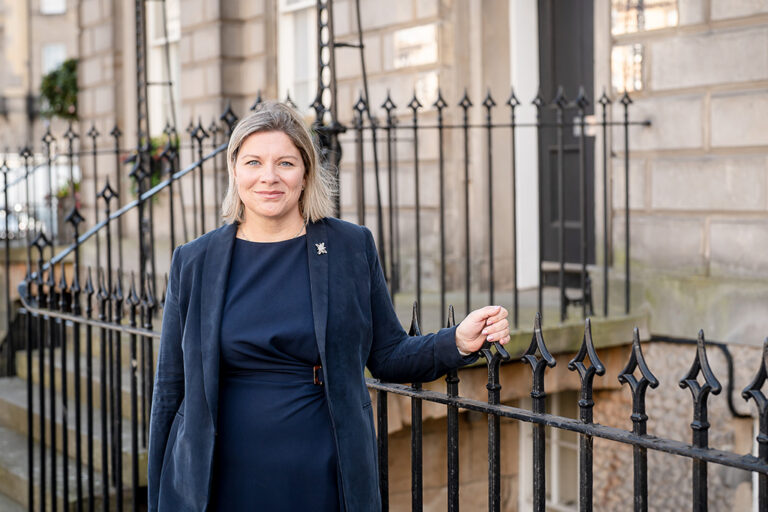
Royal College of Pharmacy issues joint statement on GP walk-in centres
The Royal College of Pharmacy in Scotland has today issued a joint statement setting out our concerns about the roll out of GP walk in centres across Scotland, alongside our colleagues at Royal College of General Practitioners in Scotland and Chartered Society of Physiotherapy. Our organisations represent members who are deeply committed to ensuring that patients can access the right care, from the right professional, at the right time, and that they receive the highest possible standard of care. However, as a collective we do not believe that GP walk-in centres are the solution to current access challenges in primary care. Alongside general practice, community pharmacies across Scotland already provide a wide range of walk-in services that closely mirror those offered by walk-in GP centres. Significant effort has gone into promoting Pharmacy First and Community Pharmacies to patients over the years, and we are concerned that the pilot will create confusion about where a patient’s first port of call should be. Through Pharmacy First care is available at more than 1,200 locations across Scotland at a cost of approximately £7.5 million. By comparison, the initial 16 walk-in GP centres are estimated to cost £36 million. This represents a significantly more expensive service that duplicates existing provision. Furthermore, evidence also suggests that walk-in GP centres can exacerbate health inequalities. Such services are often used disproportionately by people who are generally healthier, more affluent, and more able to navigate healthcare options, frequently for conditions that are self-limiting and may not have required medical intervention. Community pharmacies buck the inverse care law because their distribution is heavily concentrated in high-deprivation neighbourhoods where health needs are greatest. Rather than investing in walk-in GP centres, resources could be directed towards a range of proven measures that would improve access, strengthen existing services, and support higher-quality patient care. From a community pharmacy perspective, the College would like to see investment in a digital and interoperable shared patient record so that all community pharmacists have access to the necessary information that they need to support clinical decision making. We, alongside our General Practice and Physiotherapy colleagues, are fully committed to improving both the speed and quality of patient access to healthcare services. However, we do not believe that walk-in GP centres are the solution to this complex and multifaceted issue. Instead, we believe the Programme for Government 26/27 should focus on the measures outlined above to deliver more meaningful and lasting improvements for patients, clinicians and the wider health system. Director for Scotland at the Royal College of Pharmacy Laura Wilson, speaking about the joint statement, said: “As a group of Royal Colleges and professional bodies, we are fully committed to improving access to and quality of primary care services, so patients can see the right healthcare professional at the right time, and right place. “Community pharmacies across Scotland are based on local high streets and in other community spaces. These services have high footfall and already provide a wide range of walk-in services for typical conditions such as urinary tract infections, respiratory and chest infections, ear, nose, and throat issues, skin conditions, and eye infections. "GP walk in centres duplicate this offering and have the potential to divert a significant amount of resources away from where they are needed most. From a health inequalities perspective, Community pharmacies buck the inverse care law because their distribution is heavily concentrated in high-deprivation neighbourhoods where health needs are greatest. “Instead of investing to duplicate resource, we would prefer to see investment directed into revolutionising the existing primary care offering; including by creating interoperable digital systems which allow for patient information to be shared with community pharmacy teams so that pharmacists have access to all the information required to be able to effectively treat patients in the community.” Read more news stories.
-

Angela Constance MSP Appointed Cabinet Secretary for Health and Care
Scotland’s newly elected first minister, John Swinney, has appointed Angela Constance MSP to be cabinet secretary for health and care. Pharmacists across Scotland are providing high-quality, person-centred care to patients every day in a variety of settings, including in hospital, GP practices and in community. Pharmacists are an integral part of healthcare in all settings, and we need to maximise the skills and potential of the profession. During the election, the Royal College of Pharmacy's manifesto themes focused on maximising pharmacy for patient benefit. We look forward to working with the cabinet secretary and the rest of the Scottish government, and more widely across Parliament, to advance our key priorities, which include: Prioritising the integrated digital patient care record and ensuring this is available to pharmacists in all care settings, with read-and-write access; Undertaking comprehensive workforce planning for pharmacy, so we can ensure that Scotland has the right numbers of pharmacists working at any one time, across all sectors and the right skill mix to support services; Prioritising the introduction of electronic prescribing across the NHS and improving the availability of data about the environmental impact of medicines; Ensuring that protected and funded development time within the working day for pharmacists is embedded in workforce planning. The Royal College of Pharmacy will be seeking an introductory meeting with the cabinet secretary to discuss these policy priorities. Read more news stories.
Our work in Scotland
Vision for the future of pharmacy
Pharmacy 2030: our vision for the future of pharmacy in Scotland.
Pharmacy best practice in Scotland
See how pharmacy teams in Scotland are demonstrating best practice.
Election manifesto for Scotland
Our asks of the next Scottish government.
How we work in Scotland
National Pharmacy Advisory Council
Meet the council for Scotland and find out how it works.
The Royal College of Pharmacy Scotland team
Supporting members and leading pharmacy in Scotland.
Our policy and advocacy work in Scotland
Find out more about the College’s Scottish policy and advocacy work.