Pharmacy best practice in Scotland
Explore how pharmacy teams across Scotland are putting the Pharmacy 2030 vision into practice. Discover inspiring case studies, watch best practice examples and share your own successes.
Best practice event
Watch the fantastic plenary session from our Pharmacy 2030 Celebrating Best Practice event, held in Glasgow on 29 May 2022.
Submit your examples
Help us promote the best examples of Scottish pharmacy practice and submit your examples of best practice for review.
Written case studies
Read our case studies of best practice in different settings across Scotland, supporting the aims of our professional vision for the future – Pharmacy 2030.
Video case studies
Watch pharmacists from across Scotland talk about their examples of best pharmacy practice and hear from pharmacy teams as they offer valuable insights.
News and Blogs

Scottish Government must take further action to tackle drug deaths says the Royal College of Pharmacy
The Royal College of Pharmacy is calling for more to be done by the Scottish Government to tackle drug deaths after figures published by National Records for Scotland revealed an 11% increase in deaths compared to 2024. Responding to the latest national figures, the College re-stated its commitment to working with Scottish Government and partners to reduce harm from drugs and drug deaths. In 2021 the College published a report, ‘Pharmacy’s role in reducing harm and preventing drug deaths’, making 14 recommendations which have been partially implemented by Scottish Government. Key recommendations included that all pharmacists should have access to shared patient records to enhance patient safety and better management of patient transitions between care settings, which have not yet been addressed. Following the new figures, the College would welcome immediate discussions with Scottish Government and partners to consider what further national policy changes are required, and how they could be practically implemented on the ground to save lives. Laura Wilson, Director for Scotland at the Royal College of Pharmacy said: “Every death from drug misuse is a tragedy for the individual as well as family, friends, and their wider community. We are shocked to see such an increase in drug related deaths. “We are committed to working with Scottish government and partners to reverse this trend. “Nitazenes and other synthetic opioids being mixed with existing drugs are causing serious harm, and this could be a significant factor which explains the rise in drug deaths. “We stand ready to work with Scottish Government and all other partners to ensure that our recommendations are implemented in full.” Read more news.
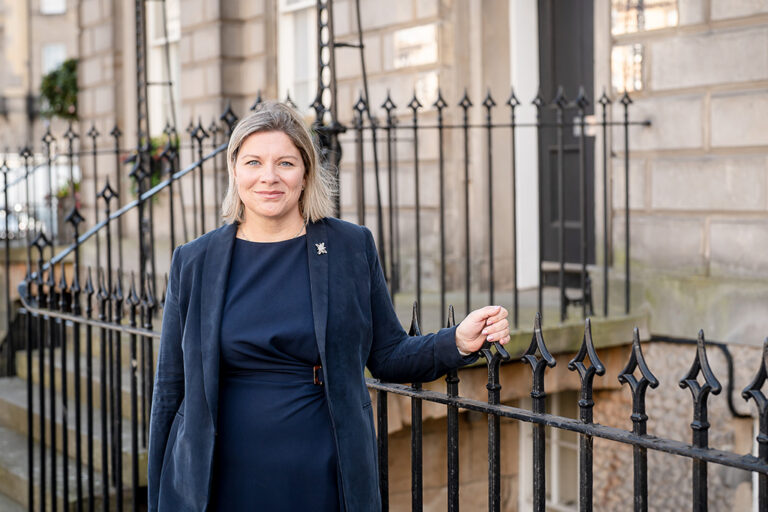
Royal College of Pharmacy issues joint statement on GP walk-in centres
The Royal College of Pharmacy in Scotland has today issued a joint statement setting out our concerns about the roll out of GP walk in centres across Scotland, alongside our colleagues at Royal College of General Practitioners in Scotland and Chartered Society of Physiotherapy. Our organisations represent members who are deeply committed to ensuring that patients can access the right care, from the right professional, at the right time, and that they receive the highest possible standard of care. However, as a collective we do not believe that GP walk-in centres are the solution to current access challenges in primary care. Alongside general practice, community pharmacies across Scotland already provide a wide range of walk-in services that closely mirror those offered by walk-in GP centres. Significant effort has gone into promoting Pharmacy First and Community Pharmacies to patients over the years, and we are concerned that the pilot will create confusion about where a patient’s first port of call should be. Through Pharmacy First care is available at more than 1,200 locations across Scotland at a cost of approximately £7.5 million. By comparison, the initial 16 walk-in GP centres are estimated to cost £36 million. This represents a significantly more expensive service that duplicates existing provision. Furthermore, evidence also suggests that walk-in GP centres can exacerbate health inequalities. Such services are often used disproportionately by people who are generally healthier, more affluent, and more able to navigate healthcare options, frequently for conditions that are self-limiting and may not have required medical intervention. Community pharmacies buck the inverse care law because their distribution is heavily concentrated in high-deprivation neighbourhoods where health needs are greatest. Rather than investing in walk-in GP centres, resources could be directed towards a range of proven measures that would improve access, strengthen existing services, and support higher-quality patient care. From a community pharmacy perspective, the College would like to see investment in a digital and interoperable shared patient record so that all community pharmacists have access to the necessary information that they need to support clinical decision making. We, alongside our General Practice and Physiotherapy colleagues, are fully committed to improving both the speed and quality of patient access to healthcare services. However, we do not believe that walk-in GP centres are the solution to this complex and multifaceted issue. Instead, we believe the Programme for Government 26/27 should focus on the measures outlined above to deliver more meaningful and lasting improvements for patients, clinicians and the wider health system. Director for Scotland at the Royal College of Pharmacy Laura Wilson, speaking about the joint statement, said: “As a group of Royal Colleges and professional bodies, we are fully committed to improving access to and quality of primary care services, so patients can see the right healthcare professional at the right time, and right place. “Community pharmacies across Scotland are based on local high streets and in other community spaces. These services have high footfall and already provide a wide range of walk-in services for typical conditions such as urinary tract infections, respiratory and chest infections, ear, nose, and throat issues, skin conditions, and eye infections. "GP walk in centres duplicate this offering and have the potential to divert a significant amount of resources away from where they are needed most. From a health inequalities perspective, Community pharmacies buck the inverse care law because their distribution is heavily concentrated in high-deprivation neighbourhoods where health needs are greatest. “Instead of investing to duplicate resource, we would prefer to see investment directed into revolutionising the existing primary care offering; including by creating interoperable digital systems which allow for patient information to be shared with community pharmacy teams so that pharmacists have access to all the information required to be able to effectively treat patients in the community.” Read more news stories.
Where does Pharmacy fit into Scotland’s public service reform agenda?
The new Scottish Government is prioritising public service reform, in their words, to ensure public services are inclusive, sustainable, and effective in improving people’s outcomes. As the Royal College for Pharmacy, we believe that utilising pharmacy in the most appropriate ways is key to ensuring the success of public service reform in healthcare. We exist to improve patient outcomes and advocate for thousands of pharmacists across all sectors. We’re very active in lobbying the Government for concrete policy changes which would improve patient outcomes, you can read these in our 2026 Election Manifesto for Scotland. As a key stakeholder already advocating strongly for public service reform, we recently responded to the Scottish Parliament’s Public Service Reform Committee’s consultation on this topic. However, we are concerned that the Public Service Reform Committee consultation does not create sufficient space for stakeholders to contribute ideas about the fundamental redesign of services. That’s why we’ve published an open letter to the Scottish Government and everyone with an interest in Public Service Reform in Scotland. In our letter, we call for public service reform to focus on redesigning services, not simply reducing budgets or workforce numbers. Reform should make better use of the pharmacy workforce, accelerate digital transformation through integrated health and care records, expand preventative care, and break down organisational barriers to deliver more joined-up, person-centred services. We know that pharmacists are an underutilised clinical resource that can improve access to care, deliver independent prescribing, deliver appropriate care to reduce pressure on hospitals and other NHS services, and help deliver better outcomes for patients across Scotland. Fiona McIntyre FRCPharm, Policy and Practice Lead for the Royal College of Pharmacy in Scotland has set out more about what genuine public service reform would look like for pharmacy in her blog ‘Pharmacists must be fully integrated into the NHS’. In this piece, she argues that pharmacists must be fully integrated into the NHS if Scotland is to meet future healthcare challenges and maximise the benefits of recent pharmacy education and legislative reforms. With all pharmacists now qualifying as independent prescribers, pharmacy teams have significant potential to support a focus on prevention, manage long-term conditions and provide care close to home. Achieving this will require better integration of community pharmacy into NHS services, universal access to shared digital health records, greater investment in pharmacy teams, and the redesign of care pathways so that pharmacists can work at the top of their clinical expertise. We look forward to continuing to work with the Scottish Government, MSPs and other stakeholders to achieve fundamental reform of pharmacy services, supporting the Scottish Government's ambition to improve outcomes for people across Scotland. Laura Wilson FRCPharm Director for Scotland