The Hanbury collection
Published: 12 January 2023
This was published when the organisation was the Royal Pharmaceutical Society.
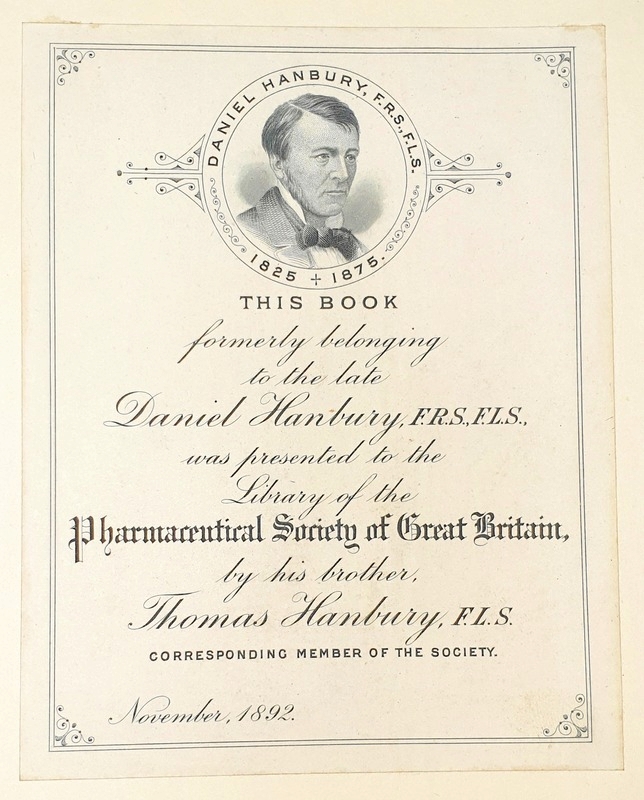
Daniel Hanbury’s beautiful book collection was donated to RCPharm’s library in 1892.
Find out more about the Hanbury collection and the person who owned it.
Also discover the Hanbury Botanical Gardens in Italy, and their connection to pharmacy.
Contents on this page
The Hanbury Collection
Anna and Thomas’ loss
British pharmacognosist Daniel Hanbury’s (1825-1875) book collection, consisting of more than 500 items on pharmacognosy and botany, was donated to the RCPharm (then the Royal Pharmaceutical Society/RPS) library in 1892.
We might never have been in possession of this fascinating collection if Daniel’s sister, Anna, had not moved house 17 years after his death. The Pharmaceutical Journal reported at the time that Daniel’s brother, Thomas, had always intended to donate the books to RCPharm but had found it difficult to part with them. Anna had housed the collection since 1875 and an imminent move precipitated the final decision.
Do take a look at the RCPharm library catalogue for everything the Hanbury collection has to offer.
Hanbury Collection bookplate
Chinese/Japanese lantern or winter cherry
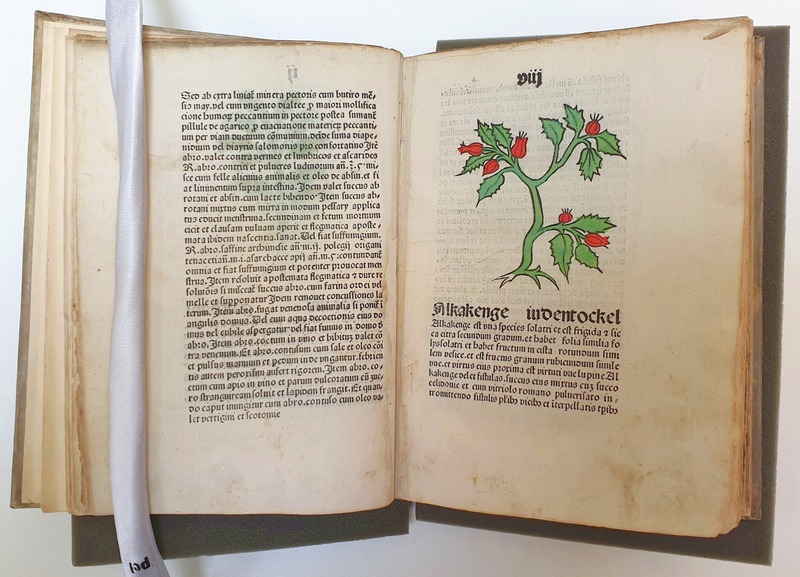
Herbarius Patavie (1485)
Printed by Johann Petri in Passau, Germany, Herbarius Patavie is the oldest book in both the Hanbury Collection and in the RCPharm library. It’s one of the first printed European herbals with plant woodcuts.
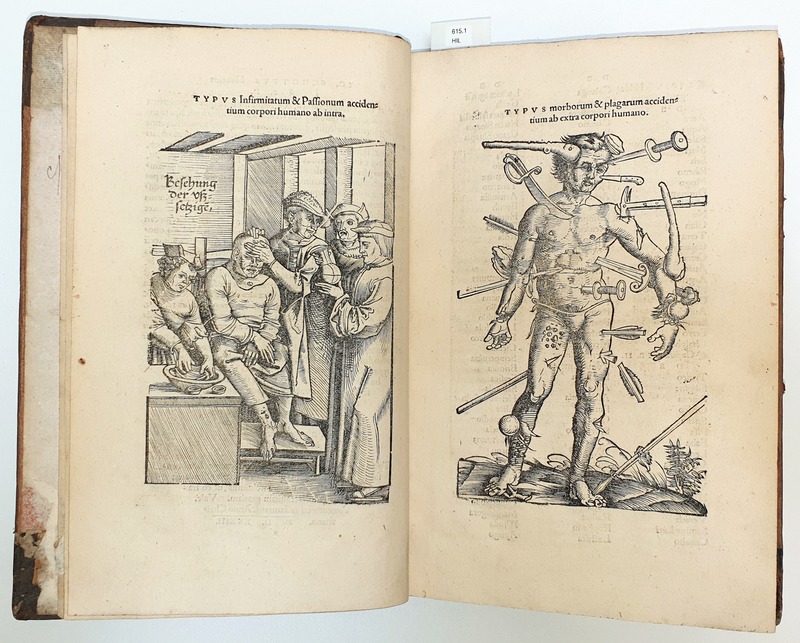
Physica (1533) – St Hildegard of Bingen
Jean Kennedy Irvine gave Physica and Hildegard a special mention in her address to the council on being voted the first female president of the Pharmaceutical Society in 1947.
As reported in The Pharmaceutical Journal, Irvine commented that the “impression that women [were] something new in pharmacy” was incorrect, adding:
“St Hildegard, abbess of a Benedictine monastery at Bingen, on the Rhine, has been described as the greatest scientific writer of the Middle Ages, and of one of her works, ‘Physica’, we have a fine copy in our library. It is one of the books of the Hanbury Bequest – not indeed a first edition, but dated 1533 – and anyone who doubts the place that women took in the pharmacy of that time should read that book. They will read of the hundreds of drugs that Hildegard brought into use, how she taught, and how she treated patients.”
Woodcuts of a patient being seen by physicians and a medieval ‘wound man’
Male and female whales
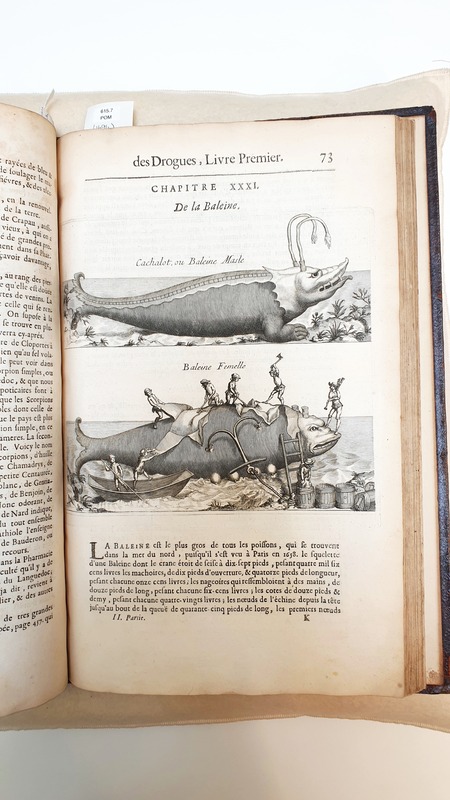
Histoire Générale des Drogues (1694) – Pierre Pomet
Pomet was chief druggist to Louis XIV of France. Pomet’s Histoire Générale des Drogues is divided into three classes – plant, animal and mineral.
The book includes information on such exotic drugs as Egyptian mummies and unicorn horns. The engraving to the right depicts a male and female whale. Demand for products like cetaceum wax, found in sperm whales and used in pharmaceuticals, boosted the whaling trade.
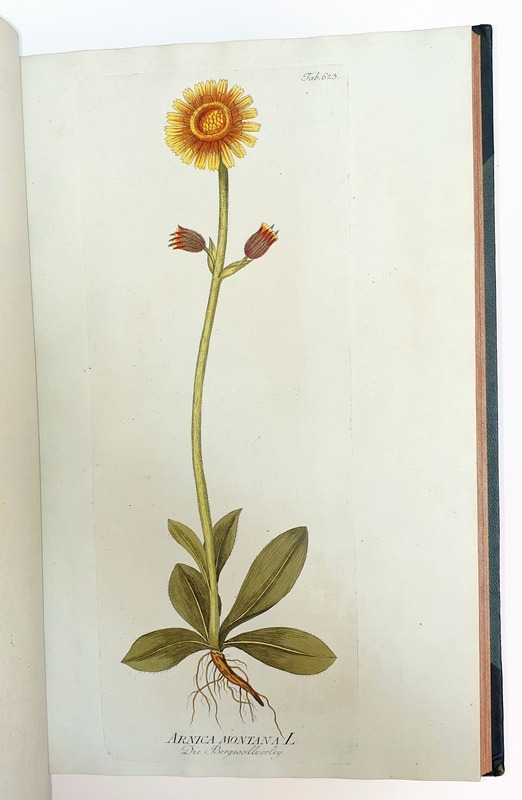
Icones Plantarum Medicinalium (1788-1812) – Joseph Jakob Edler von Plenck
Icones Plantarum Medicinalium covers indigenous European medicinal plants, ordered according to the Linnaean classification system and giving their pharmaceutical application.
Von Plenck was born in Vienna in 1735. He worked as a surgical apprentice from 1753 until 1756 and after apprenticeship attended lectures at Vienna University Medical School. By 1758, he had joined the Imperial Army’s artillery corps as regimental surgeon, where he remained until the end of the Seven Years’ War in 1763.
After another spell at university, he obtained a licence to practise surgery. At the invitation of Empress Maria Theresia, he later took the position of professor of surgery and obstetrics at the University of Tyrnau. From 1783, he was director of military field pharmacies in Vienna and was appointed professor of chemistry and botany at the Military Medical Academy in 1786.
Von Plenck wrote on many different subjects, including pharmacology, surgery, botany, anatomy, chemistry, dermatovenereology, obstetrics and gynaecology.
Arnica montana
Paeonia officinalis
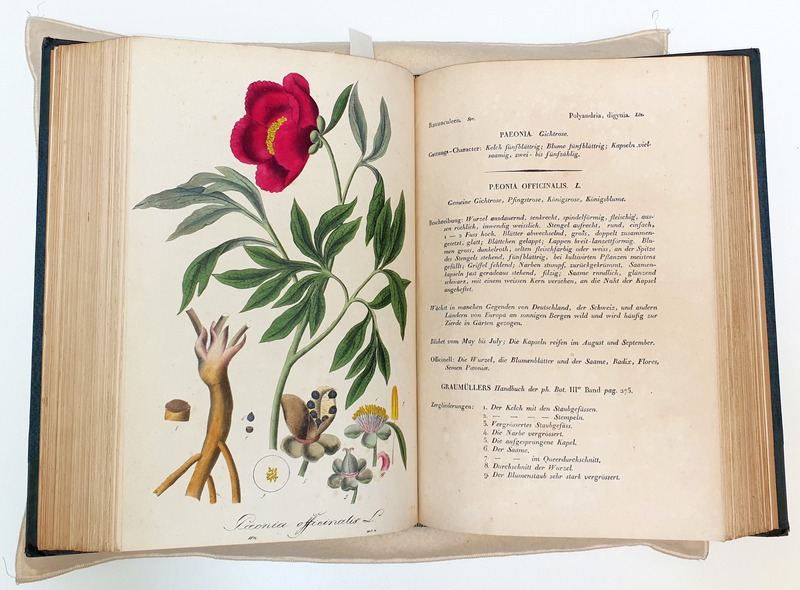
Deutschlands wildwachsende Arzneipflanzen (1828) – Johann Gottlieb Mann
Mann said that he had written his work specifically for doctors, veterinarians and pharmacists, who wouldn’t otherwise have the time to study plants growing wild. The aim was to faithfully reflect Germany’s wild medicinal plants, and the most dangerous cases of mistaken identity.
Plants are listed alphabetically according to their Latin names, with plant locations, flowering time and the parts of the plant used in medicine all included in the text.
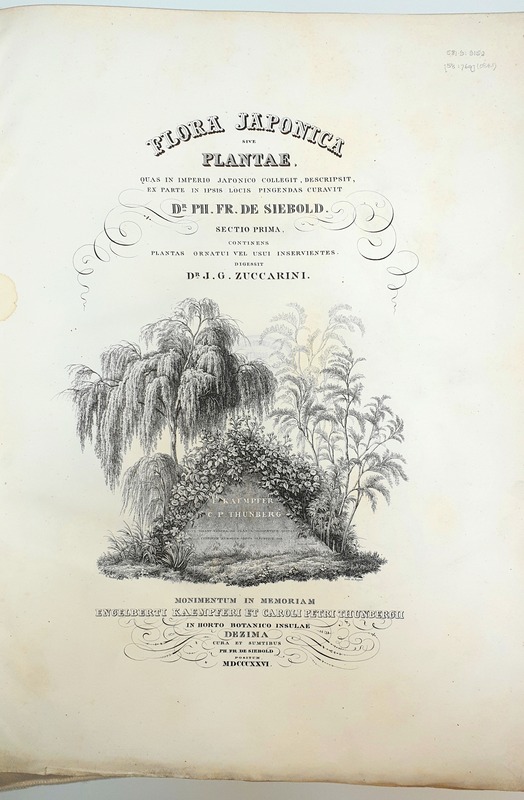
Flora Japonica (1835) – Philipp Franz von Siebold
Born in Würzburg (Germany) in 1796, von Siebold also studied medicine there.
Later, working as a physician in Japan, he introduced European techniques to cataract surgery, including the use of belladonna to dilate the pupils, and he was equally open to learning about Japanese medical practices in return. With his interest in botany, von Siebold also researched Japanese plants, writing this book on the subject.
O-Ine, von Siebold’s daughter, became the first female doctor to practise Western medicine in Japan.
Title page of Flora Japonica
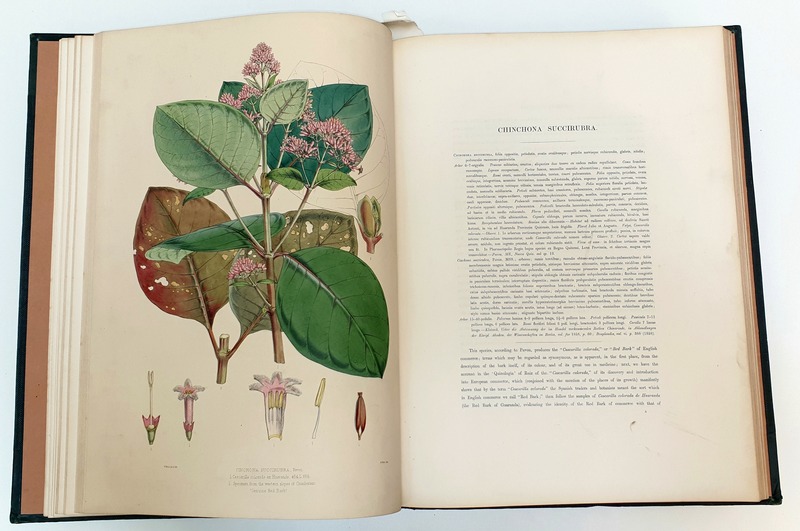
Cinchona succirubra
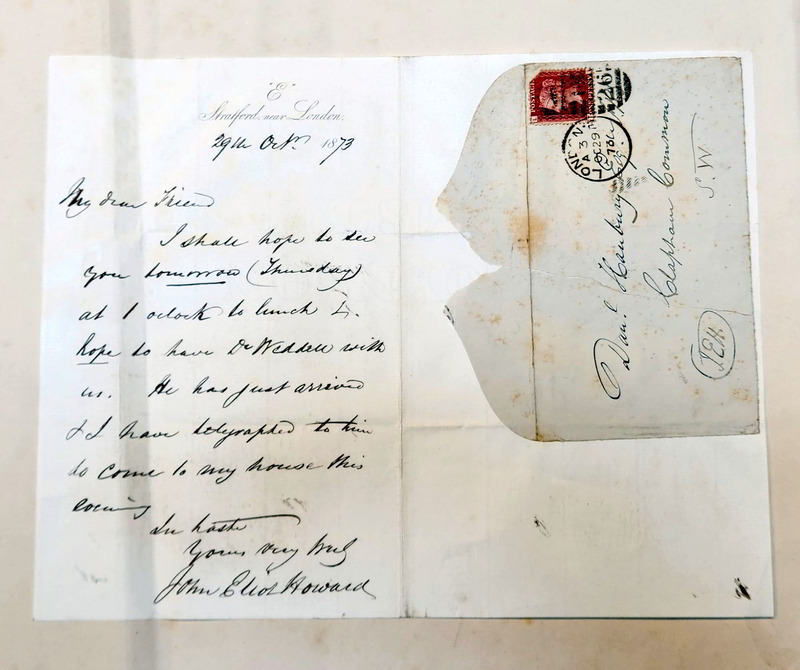
Luke Howard was responsible for Allen and Howard’s research and manufacturing laboratories, situated in Plaistow, Essex. Around 1805, the laboratories moved to Stratford, London, and Howard continued to work from there after his partnership with William Allen was dissolved. The friendship between the two men remained for the rest of their lives.
A letter (see right), dated 29 October 1873, attached inside our copy of Illustrations of the Nueva Quinologia of Pavon, is from John Eliot Howard to his friend Daniel Hanbury inviting him to lunch the next day. Howard writes that Dr Weddell, mentioned in the work, will also be joining them.
Illustrations of the Nueva Quinologia of Pavon (1862) – John Eliot Howard
Howard, a chemist and quinologist, was known for his study of Cinchona (Peruvian) barks and of quinine, an alkaloid derived from the bark, which was the first successful drug treatment for malaria.
He was a member of a number of societies including the Pharmaceutical Society of Great Britain from 1853, and he was elected a fellow of the Royal Society in 1874.
Both John Eliot Howard and his brother Robert worked for their father’s firm, which was a well-known manufacturer of quinine amongst other products.
In 1798, their father, Luke Howard, had entered into partnership with William Allen, first president of the Pharmaceutical Society, under the name Allen and Howard (the Hanbury family were later to become partners with Allen under the company name Allen & Hanburys).
About Daniel Hanbury (1825-1875)
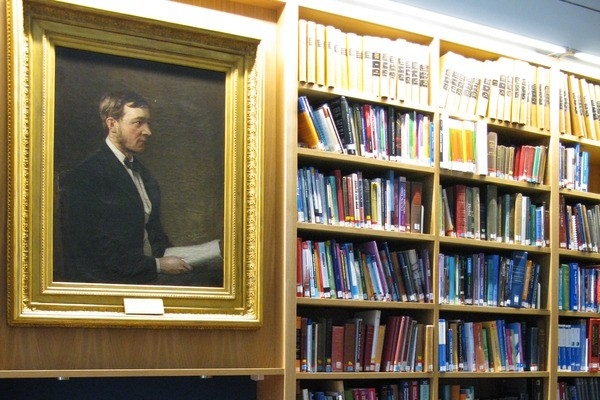
The name Daniel Hanbury rarely receives a mention in connection with pharmacy history. His pensive portrait hangs in RCPharm library, but we knew little about him until we started researching his fascinating personal book collection, donated to the library in 1892.
Here, we want to celebrate the achievements of a man who, by all accounts, was ‘modest’ and ‘unassuming’, and who never desired to be centre stage as he quietly pursued his study of materia medica for the benefit of pharmacy.
Background
Daniel Hanbury was born on 11 September 1825, the eldest child (six survived) of Daniel Bell Hanbury and Rachel Christy. Daniel’s father and uncle (Cornelius Hanbury) were amongst the founder members of the Pharmaceutical Society of Great Britain in 1841. They were nephews by marriage of William Allen, the Society’s first president and, like Allen and Jacob Bell, they were Quakers.
Portrait of Daniel Hanbury in RCPharm’s library
The Hanbury brothers and William Allen had further ties as business partners, along with John Thomas Barry, in the long-established pharmaceutical firm Allen, Hanburys and Barry – later Allen & Hanburys.
Early life
After leaving Clapham Grammar School in 1841, Daniel was apprenticed in the family business. He began part-time study at the Society’s newly opened School of Pharmacy in 1842, attending lectures in chemistry, botany, pharmacy and materia medica, his particular interest being materia medica under professor Jonathan Pereira.
He was amongst the first students to work in the practical chemistry laboratory which opened in 1844 under the direction of professor of pharmacy, Theophilus Redwood, who was also the Pharmaceutical Society’s first librarian.
Further Pharmaceutical Society connections
Daniel’s connections to the Pharmaceutical Society went much further than that of student at its school. At the age of 25 he started working for the Scientific Committee “for the promotion of pharmacological knowledge”, probably in the capacity of researcher, and he wrote for The Pharmaceutical Journal, with notable papers on Chinese materia medica. These articles were later brought together in the publication Science Papers, chiefly Pharmacological and Botanical.
In December 1856, Daniel was registered as a pharmaceutical chemist and an elected member of the Pharmaceutical Society (that same year, he was made a partner in the family business). Four years later he was appointed one of the Society’s examiners in botany and materia medica, a position he held for 12 years.
Always an advocate for the profession, in his opening address as president of the British Pharmaceutical Conference in 1868, Daniel commented:
“We must not relax our efforts in promoting that spirit of study and research which so highly contribute to advance the dignity of the profession of pharmacy.”
Daniel Hanbury, pharmacognosist
It was in “study and research” that Daniel’s interests lay, and he was best known as a pharmacognosist, researching crude drugs derived from plants. Travelling abroad to advance his research, Daniel even accompanied Dr Joseph Hooker, assistant director of Kew Gardens (later director), to Syria and Palestine in 1860.
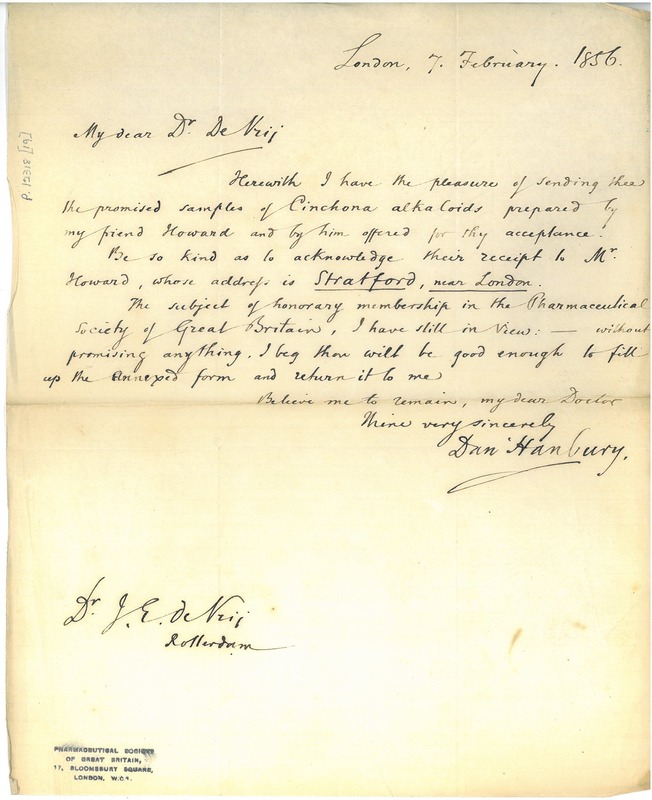
He was an avid letter writer, and the RCPharm archives contain some of his correspondence, including this letter (see right), forwarding samples of Cinchona alkaloids to Dr de Vrij.
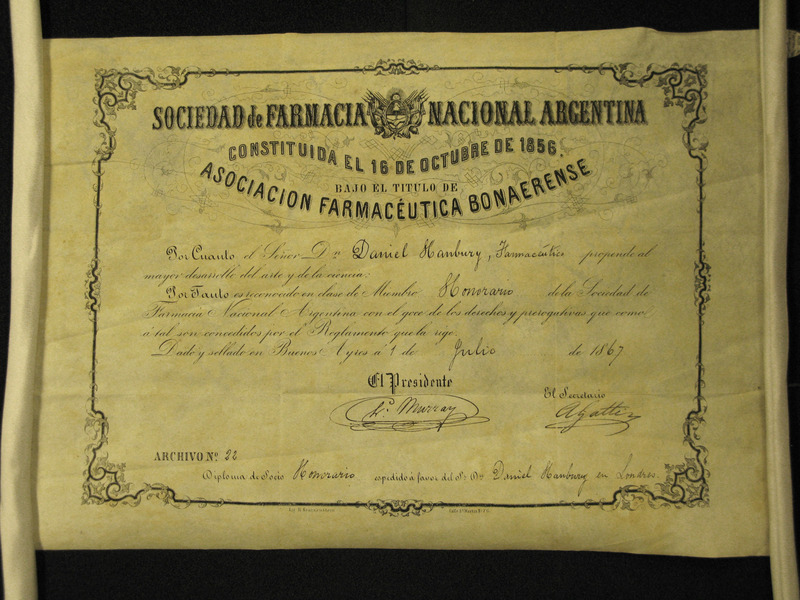
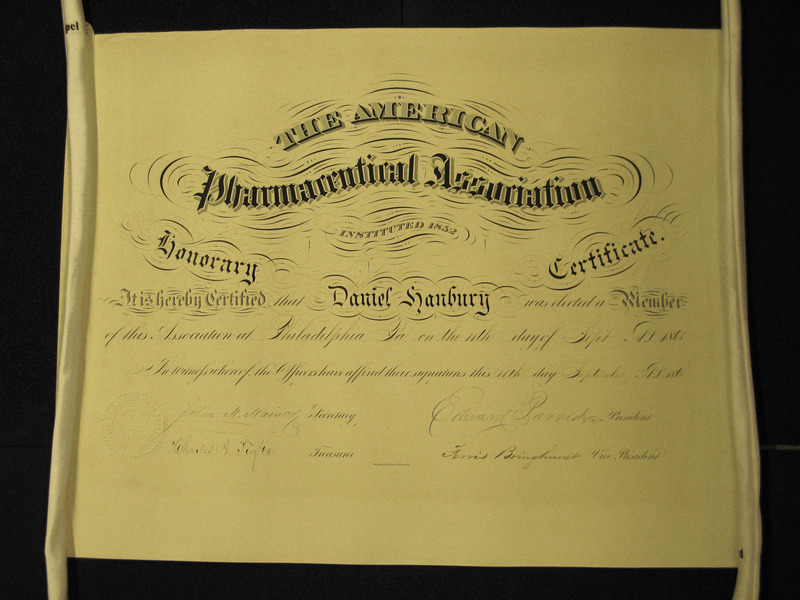
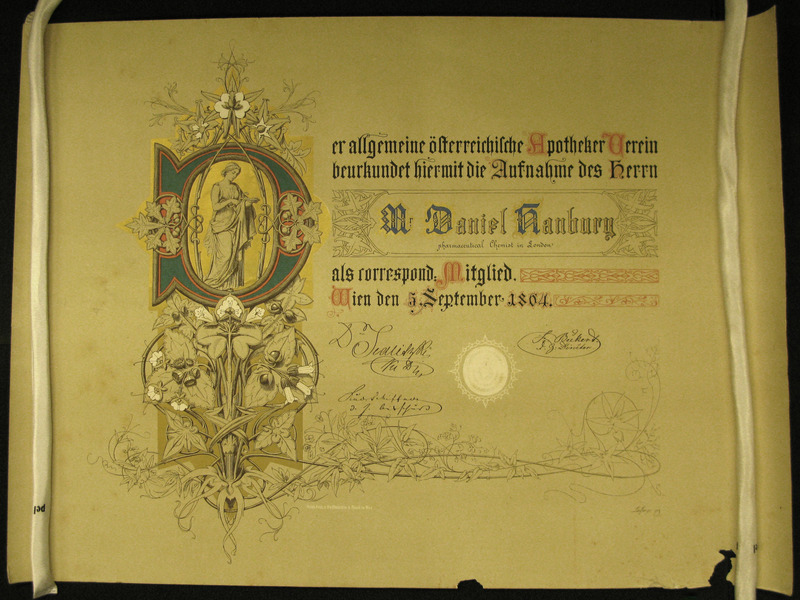
The archives also contain certificates showing his membership of pharmaceutical societies and associations around the world.
At home, Daniel was elected a fellow of several societies, including the Linnaen (1855); the Chemical (1858); the Royal Microscopical (1867) and the Royal Society (1867).
He thought himself undeserving of Royal Society fellowship, a rather harsh self-assessment for someone who devoted his entire life to his passion: the study of materia medica.
Letter from Daniel Hanbury to Dr de Vrij
National Pharmaceutical Society of Argentina
The American Pharmaceutical Association
The Austrian Pharmacists’ Association
The Pharmacographia and Friedrich Flückiger
Daniel Hanbury’s studies culminated in his book: Pharmacographia: a history of the principal drugs of vegetable origin, met with in Great Britain and British India. The drugs included in the book are those “commonly kept in store by pharmacists”, or those “known in the drug and spice market of London”, and the work “contains a comparatively small number which belong to the pharmacopoeia of India”. Entries include a drug’s botanical origin, when it was first used in medicine, its microscopic structure and chemical composition, with sections also on production, commerce and adulteration.
In the literature, there are various accounts of Daniel Hanbury’s first meeting with Friedrich Flückiger, the book’s co-author. One is that Daniel’s articles on liquid storax, written for The Pharmaceutical Journal, led to Flückiger making contact; another that it was actually Hanbury who reached out to Flückiger after reading one of his books on pharmacognosy. However, in his “obituary notice of Daniel Hanbury” (translated into English) Flückiger states that Daniel’s “views on frankincense” led to their acquaintanceship.
Friedrich Flückiger was a professor of pharmacy and pharmacognosy at Bern (later at Strasbourg) University. The two began collaborating in 1867, and they became great friends. After Hanbury retired from the family business in 1870, he could concentrate on their book, with Flückiger giving an insight into how they conducted their research:
“The collections and libraries of London, Kew and Paris, the warehouses of the London docks, what the auctions of the drug brokers in the city offered for inspection, all these were repeatedly consulted or ransacked by the two friends together and compared by the aid of their mutual experiences and impressions.”
The Pharmacographia was reviewed in The BMJ in 1874, the year it was published, with high praise:
“It abounds in research of every kind, and is a labour of love of two eminent, conscientious and able men. It will be a classical work in its department of study.”
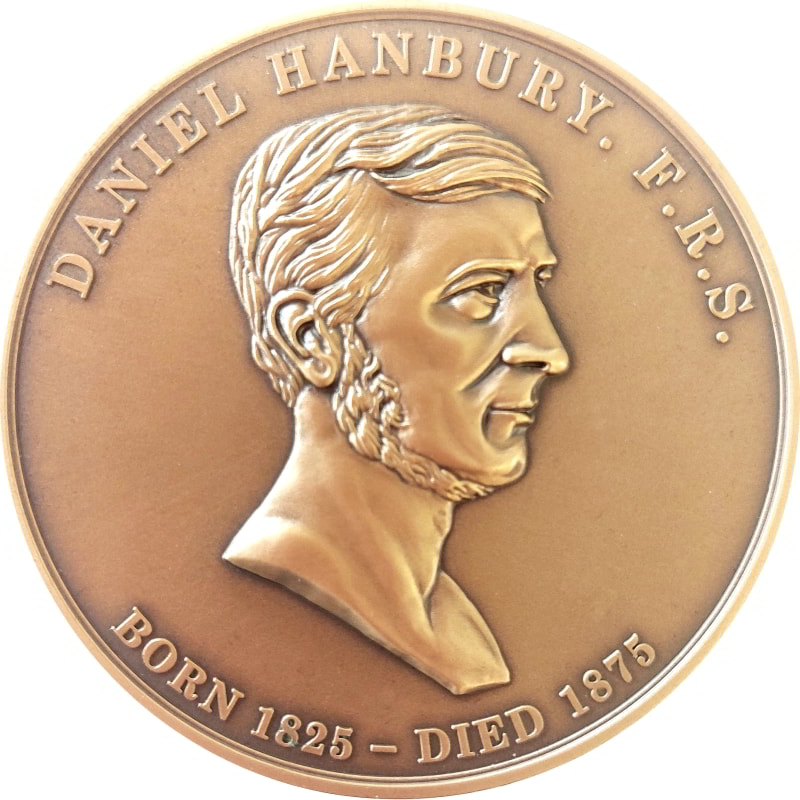
Hanbury Memorial Medal
Sadly, following a short illness, and soon after publication of the Pharmacographia, Daniel died of typhoid fever on 24 March 1875. Brother and sister, Thomas and Anna, were by his side. He was 49 years old. He is buried in Wandsworth in the Society of Friend’s burial ground.
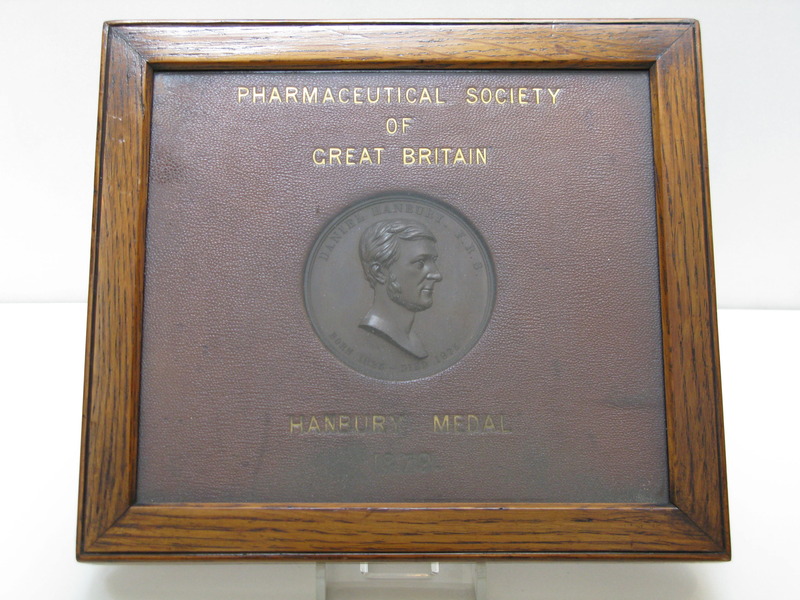
Shortly after his death, Daniel’s friends and colleagues resolved to honour a life dedicated to science by awarding a medal in his memory for “high excellence in the prosecution or promotion of original research in the Natural History and Chemistry of Drugs”.
From the outset, the Society decided to award it to “investigators in any part of the world”. As professor Georg Dragendorff of Dorpat said:
“Our science is confined to no single nationality, and […] consequently he who labours for the advancement of pharmaceutical science acquires an international importance.”
In the early years, the Hanbury Medal was presented more frequently to international scientists and researchers, predominantly those from other European countries. Hanbury’s collaborator on the Pharmacographia, Flückiger, was its first recipient in 1881, the latest being professor David Jones, from Queen’s University Belfast, in 2025.
Ultimately, Daniel Hanbury’s interest had always been science over business. As he himself said:
“All science is interesting for us, since almost every scientific discovery may sooner or later, directly or indirectly, yield some result profitable to pharmacy.”
The Hanbury Medal
Hanbury Botanical Gardens
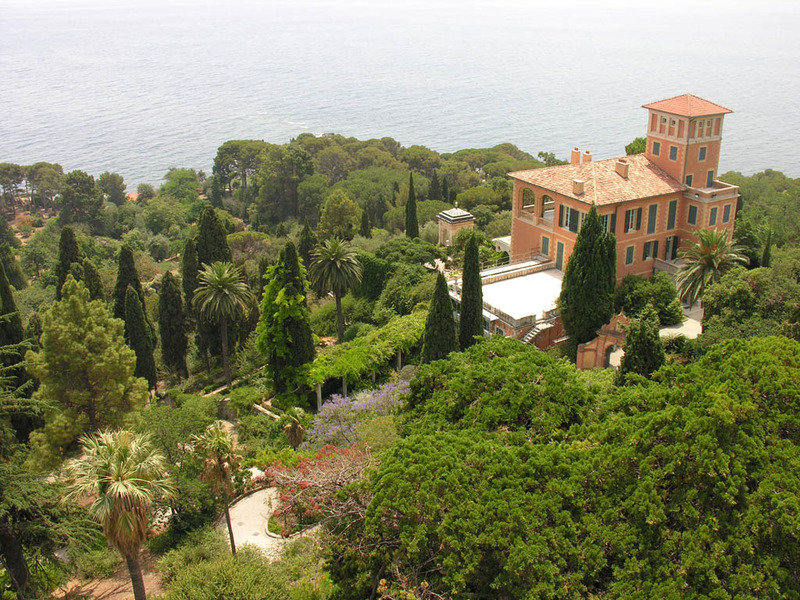
The Hanbury Botanical Gardens are situated on the La Mortola promontory overlooking the Mediterranean. Tripadvisor tells us that they are “beautiful” and “calming” with a “wonderful magic”. What it doesn’t tell us, though, is of the gardens’ connection to pharmacy.
Thomas, Daniel and the making of a garden
Daniel Hanbury was an enthusiastic traveller, taking every opportunity to further his research on materia medica. When in March 1867, his brother Thomas, who had worked as a merchant in Shanghai, purchased the ruined Palazzo Orengo in La Mortola, with its neglected grounds and olive groves, Daniel immediately saw the plot’s potential with its temperate climate and sheltered position.
Once purchased, work began immediately to restore the Palazzo and to create a botanical garden. With his extensive knowledge of plants, Daniel’s influence on the early garden was considerable. Through his numerous contacts, he was able to obtain plant species from around the world, including those which were considered of particular use to pharmacy then, examples being Iris florentina, Casimiroa edulis, and Euphorbia resinifera.
The Hanbury Botanical Gardens
Curator Alwin Berger’s notes in Hortus Mortolensis (1912) show the extent of Daniel’s involvement in those early days: he brought Aloe arborescens and var. frutescens to the gardens from Kew, and he introduced other Aloe species, including Aloe ferox.
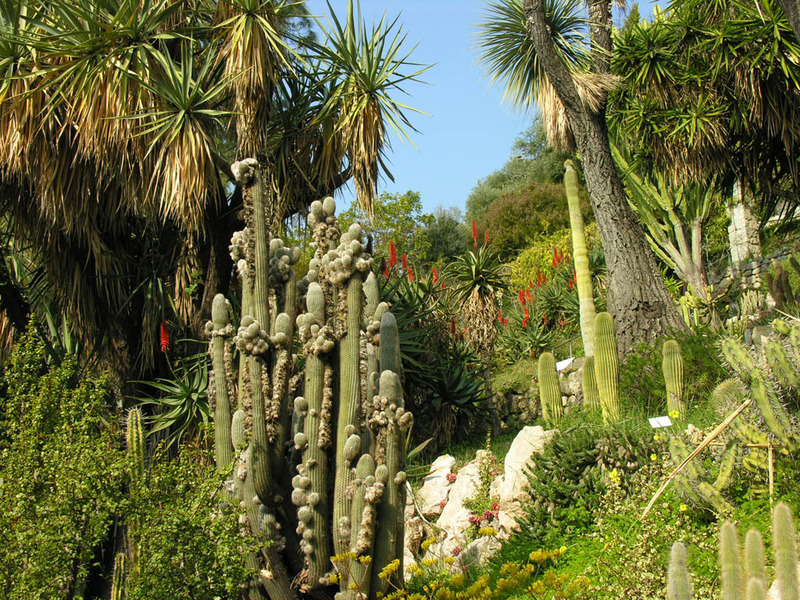
The seeds of Argania sideroxylon, “the Argan tree of Morocco” were provided by Daniel. He planted Cereus peruvianus, Selenicereus nycticalus, Streptanthus tortuosus, and Oxalis triangularis, supplying many other plants in the genus. Daniel started the collection of Opuntias at La Mortola and, together with Thomas, planted Opuntia ficus-indica “in a great many places in the garden”.
There are numerous examples of Daniel’s contributions, but the most interesting entry relates to Styrax officinalis. Daniel planted “a dozen young trees […] near the house on 14 November 1868”. He had attempted to extract the resin, known for its medicinal properties, on different occasions throughout his travels, finally achieving his aim, Berger writes, at La Mortola in December, 1874.
Daniel’s involvement continued until his untimely death in 1875.
Succulents in the Hanbury Botanical Gardens
A pharmaceutical chemist’s holiday
So much has been written about the Hanbury Gardens at La Mortola. There are accounts of the changes and improvements undertaken by Ludwig Winter, a trained gardener and landscaper employed by Thomas, and how Thomas’ son, Cecil, developed the gardens, alongside his wife, Dorothy, adding avenues of cypress, rare plants and additional species from around the world. The Hanbury Gardens were purchased by the Italian government in 1960, but their future was finally secured when the University of Genoa (Università di Genova) took over management in the mid-1980s.
One notable article appeared in The Chemist and Druggist in 1906, in which pharmacist William Maskew described his visit to the gardens whilst holidaying on the Riviera. “All the garden paths lead down towards the sea”, he wrote, “and I did not find a square yard of garden devoid of interest to the pharmacist”. Of particular interest were the various species of agaves and aloes, cacti specimens and the bottlebrush tree from Australia.
There were yuccas, Camellia japonica and Pinus pinea. Indigenous plants had been allowed to grow wild in one area and here alone there were 450 plant species.
The Palazzo terrace
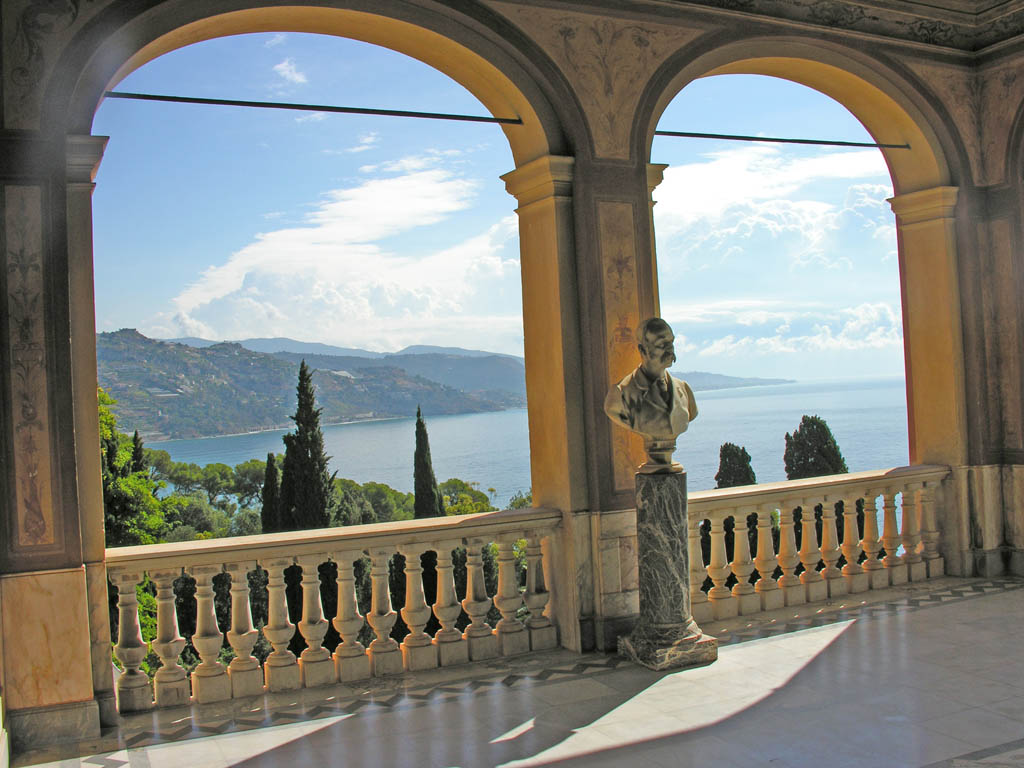
“Under the front terrace of the house is a museum of seeds”, Maskew explained, “stored in glass-stoppered bottles carefully arranged and catalogued”. Although not for sale, the seeds could be exchanged for “varieties of interest” and in the catalogue were the names of “several British pharmacists who had availed themselves of this privilege”.
“A visit to La Mortola”, he concluded, “should not be missed by any pharmacist, naturalist or antiquary who may find himself anywhere between Cannes and San Remo”.
You might decide to take William Maskew’s advice and visit the Hanbury Botanical Gardens. And, if you do, just imagine the Hanbury brothers discussing their plans, and feel work pressures recede as you stand on the hillside, gazing far out to sea.
Queries
If you have any questions about Daniel Hanbury and the Hanbury Collection, do contact us via [email protected].