Pharmacy: Delivering a Healthier Wales 2028 goals
Published: 1 September 2025
This was published when the organisation was the Royal Pharmaceutical Society.
Download PDF
Download the article in PDF format so that you can access anywhere
Foreword
Pharmacy: Delivering a Healthier Wales (PDaHW)1 is the pharmacy professions’ vision to 2030, aligned to ‘A Healthier Wales2‘ it sets out long-term ambitions for how patients in Wales will further benefit from the expertise of pharmacy teams.
“First published in 2019, the vision is the culmination of extensive engagement with the profession and stakeholders across Wales, and this latest supplementary document has followed that same collaborative approach.
Since the document’s launch in 2019, interim goals for 2022 helped maintain momentum toward the 2030 vision. Despite the immense challenges of the COVID-19 pandemic, the profession made remarkable progress, an inspiring testament to its dedication during uncertain times. The 2022 goals have since been reviewed, and new milestones set for 2025. Over the past three years, the profession has continued to achieve significant strides toward those targets.
It’s been really pleasing to see the PDaHW programme delivery board, driving progress, keeping goals in sharp focus, and escalating challenges to the Welsh Pharmaceutical Committee where needed. The delivery board has been ably supported and underpinned by the work of the four working subgroups, aligned to each theme of the vision. The membership of both the working subgroups and delivery board is representative of the diversity across the profession, with a balance across sector, geographical and job role, together with wider membership from patient groups and the key strategic partners and stakeholders vital for progressing the vision.
This document sets out new 2028 goals, which provide further stepping stones towards our overarching 2030 vision. These goals will further support the development of the profession, ensure we fully utilise the skills of the whole pharmacy team and ensure we remain at the forefront of the delivery of innovative and emerging technologies and medicines, to benefit the people of Wales.
These goals have been shaped with the aid of hundreds of pharmacy professionals, wider members of the pharmacy team, undergraduate students, patient representative groups and other health and social care professions. The strength of the vision lies in the contribution and passion of the profession for ensuring optimal patient care.
The document illustrates the enormous progress made to date by the profession in helping deliver the 2025 goals and celebrates the success of all those achievements. Delivery of the 2028 goals, will ensure spread and scale in the delivery of pharmaceutical services, ensuring the people of Wales have equitable access to services and optimal pharmaceutical care, wherever they live and however they access those services. However, these ambitions can only be realised in the correct environment, one with adequate investment in pharmaceutical services, a sustainable workforce and robust digital infrastructure.
As chair of the Welsh Pharmaceutical Committee, I am incredibly proud of the progress and commitment of the profession in driving forward this vision and would like to take this opportunity to thank everyone who has contributed to the development of the new 2028 goals.
I will be stepping down as chair of the committee this year but will continue to be involved as the director of pharmacy representative and look forward to the next steps of our journey towards the 2030 vision.
– By Jonathan Simms, chair of the Welsh Pharmaceutical Committee
Background and strategic context
This latest iteration of the pharmacy professions’ long-term vision refreshes and builds on PDaHW, first published in 2019, together with the updated document3 published in 2022. The document has been developed following extensive engagement with over 500 pharmacists, pharmacy technicians and other members of pharmacy teams practising in every part of Wales, together with stakeholders and bodies representing patients and other healthcare professionals.
Since the publication of PDaHW in 2019, there has been tremendous change in all aspects of pharmacy practice in Wales, and pharmacy teams have accomplished a huge amount helping to deliver the strategic direction set out in the vision.
This latest refresh provides the opportunity to reflect on and celebrate the many accomplishments of pharmacy teams in the six years since PDaHW was published, as we have worked to deliver the ambitious goals set for 2022, 2025 and 2030. This is the product of those reflections and through the engagement with pharmacy teams and stakeholders, it sets out new interim goals to be achieved by 2028, whilst maintaining the focus on delivering the overarching goals to 2030.
Whilst the progress made already has been substantial, there have been and remain significant challenges for pharmacy professionals and their teams in all settings. Demand for the skills and expertise of pharmacy professionals is higher than ever, fuelled by increasing realisation of the benefits which arise when pharmacists and pharmacy technicians are closely involved in the delivery of care. In common with other healthcare professions, workforce pressures remain high, and recruitment challenges have been experienced in all settings. The challenging economic climate and financial pressures are affecting the provision of pharmacy services most notably influencing the decline in the number of community pharmacies in Wales. Data provided by Community Pharmacy Wales4, illustrates between July 2020 and April 2024 there were 27 pharmacy closures in Wales, reducing the overall number to 686.
Alongside these challenges there are opportunities which will enable and support the pharmacy professions in Wales to deliver its collective vision. The legislative changes which are already enabling pharmacy technicians to supply and administer medicines without a prescription, and the changes to initial education and training of pharmacists which mean all pharmacists registering from autumn 2026 will do so as prescribers, will during the next cycle of delivering our vision, facilitate rapid expansion in autonomous clinical roles.
Medicine supply chains will be transformed by regulatory changes which enable original pack and hub and spoke dispensing, by regulations governing the point of care manufacture of advanced therapy medicinal products, together with the changes to the supervision of the supply of medicines from pharmacies5.
As in previous iterations of PDaHW, this document describes the professions’ aspirations to deliver high-quality pharmaceutical care which meets the needs of patients, the public and the NHS in Wales. The goals are deliberately ambitious and will only be achieved if the broader political, financial and professional environment supports delivery. Ensuring pharmaceutical services are innovative, meet patient needs, and are financially sustainable is essential, as is adequate investment in developing a sustainable workforce and building the underpinning infrastructure. Achieving the goals within this vision, will go a long way towards delivering the transformation needed for sustainable pharmaceutical services in all sectors, aligned to the priorities of the NHS.
Since 2022, several key strategic documents have been published which are aligned with PDaHW. These will continue to help to drive forward the professions’ ambitions in the next three years.
They include:
- A new contractual framework for community pharmacies in Wales – ‘Presgripsiwn Newydd6‘, implemented in April 2022, introduced substantial reforms to the way the NHS contracted with community pharmacies, encouraging the provision of clinical services and promoting integration with other primary-care contractors, the NHS and social care;
- The Welsh Government’s ‘Independent Review of Clinical Pharmacy Services at NHS Hospitals in Wales7‘, in response to a report commissioned from the Royal Pharmaceutical Society (RPS, now RCPharm)8, sets out a series of key strategic actions across four themes intended to bring about the transformation in clinical pharmacy practice required to ensure it remains an essential component of high-quality hospital care, helping to improve health outcomes and prevent avoidable harm;
- The ‘Strategic Pharmacy Workforce Plan9‘ developed by Health Education and Improvement Wales (HEIW) with partners, sets out the actions necessary to develop the pharmacy workforce in Wales. The plan provides a blueprint for driving radical change and comprehensive improvements in how we develop, value, and support our pharmacy workforce, in recognition of the increasing clinical leadership role they play in caring for people using medicines, in a variety of settings;
- A Healthier Wales, first published in 2018 with refreshed updated actions published in 2024, sets out a long-term future vision of a “whole system approach to health and social care”, which is focused on health and wellbeing, and on preventing illness. PDaHW sets out how pharmacy can help deliver the government’s long-term vision;
- ‘The Well-being of Future Generations (Wales) Act’ 201510, focused on improving the social, economic, environmental and cultural wellbeing of Wales. The act gives a legally binding common purpose – the seven wellbeing goals – for national government, local government, local health boards and other specified public bodies. It details the ways in which specified public bodies must work and work together to improve the wellbeing of Wales.
Enhancing patient experience
The vision for pharmacy to 2030 centres on designing services around patient needs. The supporting core principles of patient-centred care remain fundamental, guiding the profession as it expands clinical service delivery. In alignment with A Healthier Wales, pharmacy teams have increasingly delivered clinical services closer to home, improving patients’ access and outcomes. This shift will continue, with a greater focus on equitable service delivery across Wales in the next three years.
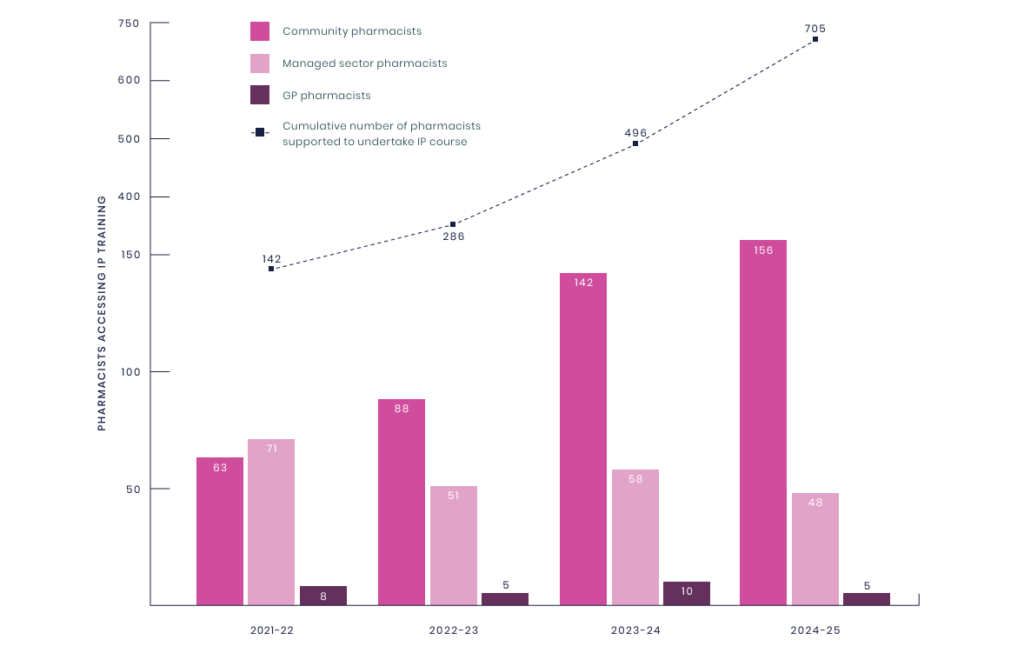
Equity of access has already improved. Recent changes to the Community Pharmacy Contractual Framework have seen the Sore Throat Test and Treat (STTT) and the UTI services become mandatory elements of the Clinical Community Pharmacy Service, following a £6m investment in community pharmacy by the Welsh Government. HEIW have facilitated the training of pharmacist independent prescribers (PIPs), and we have seen a significant expansion in the numbers of pharmacists prescribing for patients in all settings. The following infographic (Figure 1) shows the increasing number of pharmacists who have received funding from HEIW to undertake independent prescribing training since 2021.
Figure 1: Sectoral spread of pharmacists receiving funding through HEIW to undertake IP training
Improved collaboration and multidisciplinary team (MDT) working with other healthcare professionals remains critical to pharmacists and pharmacy technicians playing a full role in improving people’s health and wellbeing; this will need to be strengthened in the next three years to ensure patients healthcare needs are met by both the most appropriate healthcare professional, and in the most appropriate setting.
Pharmacy technicians are now delivering more patient-facing services including influenza vaccinations, discharge medicines reviews (DMRs) and access to emergency and bridging contraception in community pharmacy. Within hospitals they are supporting improving how medicines are used and are leading clinics. The number of pharmacy technicians in GP practices has increased as they support pharmacists, other healthcare professionals and patients with the practical aspects of medicines management.
Patients are increasingly feeling the benefits of significant developments in the digital infrastructure within NHS Wales as progress is made to fully digitise how medicines are prescribed and dispensed. The first electronic prescription in primary care was issued in a GP practice and dispensed at a community pharmacy in Rhyl, North Wales in November 2023 and Cardiff and Vale University Health Board became the latest to begin the rollout of electronic prescribing and medicines administration (ePMA) in its hospitals in July 2025. Digital prescribing systems will improve the safety and efficiency of prescribing and dispensing of medicines for patients and healthcare professionals alike. Patients are also benefitting from the increased functionality in the NHS Wales app and through wider adoption, will experience more seamless access to healthcare services.
PDaHW will help strengthen the focus on prevention and wellbeing. All members of the pharmacy team will support patients to keep well, including effectively collaborating with all involved in a patients care to meet the commitments of A Healthier Wales whereby there is a “whole system approach to health and social care, which is focussed on health and wellbeing, and on preventing illness”.
Reflection on progress and 2025 goals
2025 goal: support pharmacy teams to make every contact with a patient count.
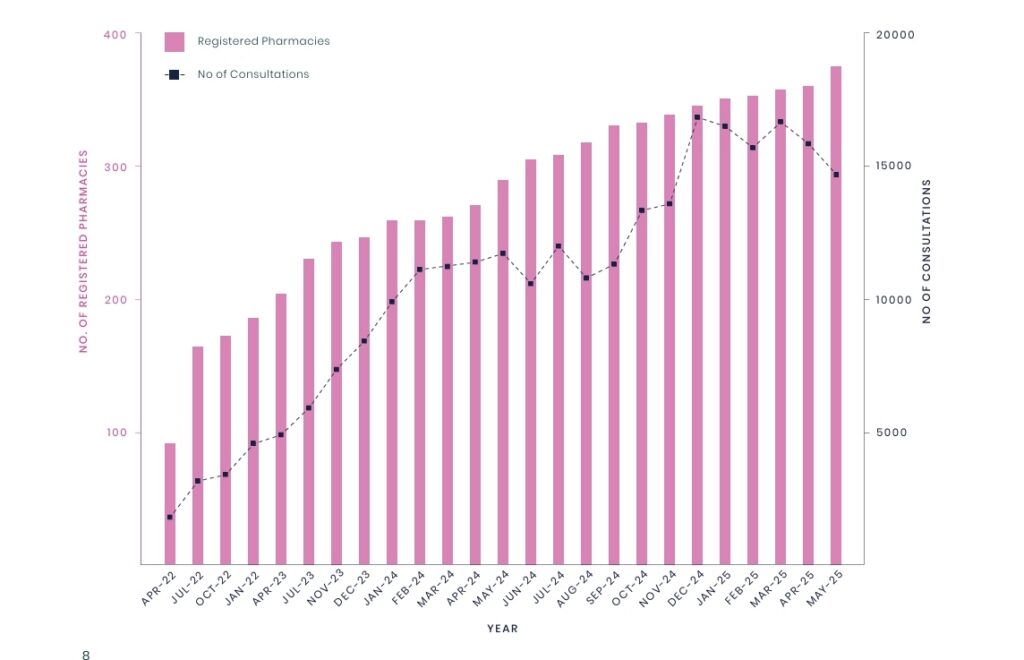
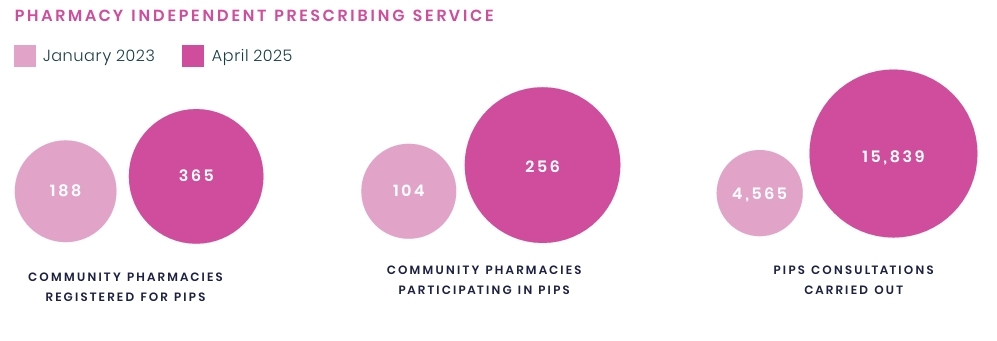
Every pharmacy team makes a vital contribution to improving patient outcomes. Community pharmacies offer some of the most accessible healthcare services, providing patients with direct access to highly trained pharmacists, pharmacy technicians, and support staff. Collectively, they provide expert advice, medicines, and care tailored to individual needs, including at times when other primary care services are closed. Changes to the community pharmacy contractual framework have resulted in demonstrable improvements in access to care for people in the communities served by pharmacies. Patients have been able to access a significantly wider range of clinical services, on an increasingly consistent basis across Wales. In addition, the Pharmacist Independent Prescribing Service has expanded rapidly since 2022 (Figure 2) and will become available from the majority of pharmacies in Wales within the life of this vision.
Community Pharmacy Service Data (April 2024 to March 2025)
Community Pharmacy Service Data (April 2024 to March 2025)
Patients in Wales are increasingly accessing a range of clinical services through local community pharmacies on an increasingly consistent basis.
CAS

STTT
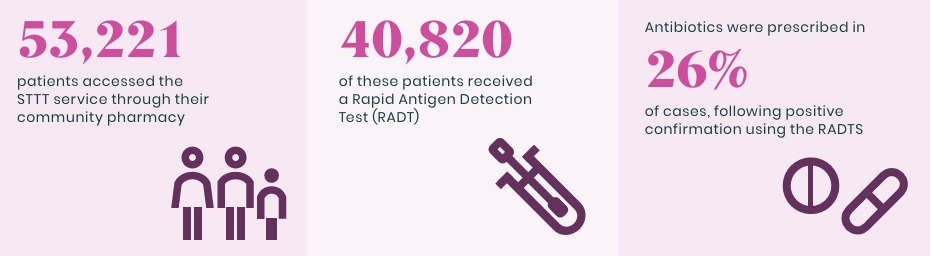
Figure 2: PIPS
Following changes to the Human Medicines Regulations which came into force in 2024, pharmacy technicians are now able to administer and supply medicines under patient group directions (PGDs). This enabling legislation is supporting pharmacy technicians in community pharmacies to expand their clinical roles, with 83 pharmacy technicians now accredited to provide contraception services, and 8% of all influenza vaccinations in community pharmacies given by pharmacy technicians in the 2024/2025 influenza season (Data Source: CPW). Changes to the directions governing the delivery of community pharmacy clinical services made in 2022 mean on average, pharmacy technicians are now completing more than one in every five DMRs.
Within hospital pharmacy teams, pharmacists and pharmacy technicians embedded in multidisciplinary teams provide medicines expertise, and through spending more time on clinical activity deliver improved medicines optimisation for patients.
Pharmacy teams embedded in urgent and emergency care departments, working as part of the MDT, help support the safe and efficient delivery of care to patients, and we have seen an increasing number of pharmacists and pharmacy technicians deployed in emergency departments (EDs) in the past three years with a pharmacy ED service now provided routinely in five health boards.
This must be further developed, Welsh Government’s ‘Review of clinical pharmacy services at NHS Hospitals in Wales’ in response to the ‘Independent review of clinical hospital pharmacy services in Wales’ by RPS, sets out 60 system-wide strategic actions, which includes “Health boards should ensure all Urgent and Emergency Care settings receive a clinical pharmacy service and that appropriately trained pharmacist prescribers are incorporated into multidisciplinary teams within all Emergency Departments and Same Day Emergency Care units as a priority”.
Good practice example 1
At the Grange University Hospital, it was identified that medication-related issues contributing to delays/sub-optimal flow and patient outcomes was adding to the already present severe pressures on the Urgent Care system. A need to have a sustainable all year-round ED pharmacy team at the front door was identified. Funding for a new ED pharmacy team was approved, with the team operating seven days per week and clinically reviewing 80% of the overall ED admissions each day.
The team proactively reduce medicine costs by providing advice and guidance on variability in supply, prescribing and pricing, scrutinise spend and proactively challenge for use of patient own medicines. The team collaboratively work with ED colleagues to provide advice on guidelines, patient group directions and policy together with reviewing stockholding and patient safety initiatives. Analysis has indicated that 99% of medication reconciliation occurs within 24 hours, 83% of medicines are prescribed by independent prescribing pharmacists, incidence of omitted medicines has reduced by 50%, missed doses of critical medicines reduced by 67%, allergy status omitted reduced by 65% together with reduced medicine errors on discharge, reduced length of stay and reduced rates of readmissions.
Good practice example 2
During an eight-week pilot introducing pharmacy support in Betsi Cadwalader University Health Board IHC Emergency Department (ED), a total of 1,896 interventions were made – 65% by pharmacists and 35% by medicines management pharmacy technicians. The pharmacy technicians helped maintain patient safety by referring pharmacists to notable interventions. Interventions were graded using the All-Wales Intervention Database methodology to calculate cost-avoidance, which totalled £404,954. The ED pharmacy team more than tripled medicines reconciliation rates for the duration of the project, averaging 64 per week. The majority were undertaken by the ED pharmacy technicians, which released the pharmacists to focus on higher acuity patients and answering more complex queries. This pilot, similar to others carried out throughout Wales, has helped demonstrate the value of embedding pharmacy teams as part of the MDT within emergency departments, with this now becoming more commonplace.
Patients have also benefitted from an expansion in pharmacy professionals employed directly by GP practices and in NHS 111. The number of both pharmacists and pharmacy technicians has increased significantly since PDaHW was first published (Figure 3). In the three-year period between April 2022 and March 2025, the number of FTE pharmacists employed in GP practices increased by 32%, whilst for pharmacy technicians, the increase was 56% (Data Source: Stats Wales).
Figure 3: Pharmacists and pharmacy technicians employed in general medical practices in Wales March 2020 to March 2025 (headcount)
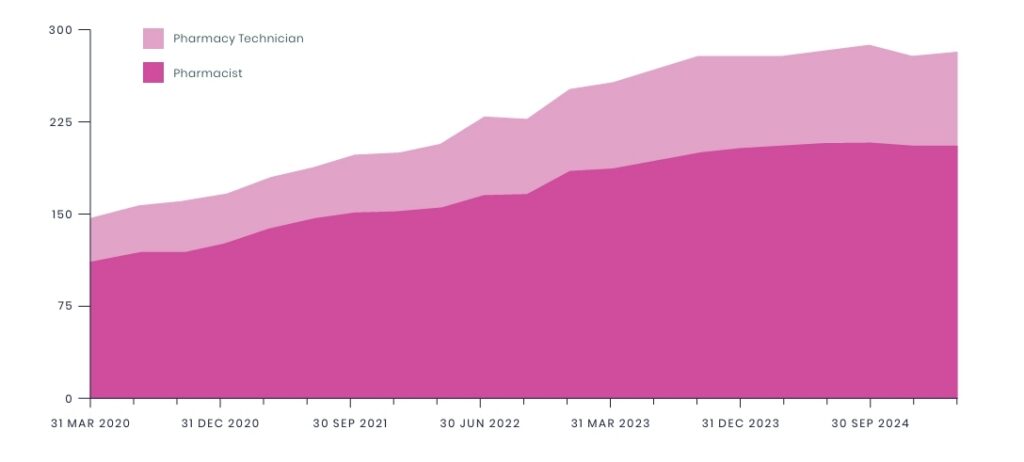
(Data source: Find statistics and data about Wales – StatsWales)
In 2019, PDaHW described our ambition to ensue all pharmacists in patient-facing roles in GP practices were qualified as prescribers by 2022. More than 200 GP practice pharmacists are now prescribers and are regularly using their prescribing skills in their roles. This has more than doubled since 2019 with 215 pharmacist prescribers issuing more than 1.3-million prescriptions from GP practices between April 2024 and March 2025. In March 2025, in community pharmacy there were 287 active independent prescribers; the number was 68 in April 2022 and just one when PDaHW was first published (Data Source: Health Boards).
2025 goal
Deliver services that focus on the needs of the individual, tackling health inequalities and ensuring a sustainable healthcare service for today’s citizens as well as for future generations.
Ensuring people take their medicines appropriately optimises health gains through reduced over prescribing and over-ordering of medicines and has a positive impact on reducing medicines waste. Pharmacy recycling and disposal of medicines schemes, for example inhaler recycling schemes in Wales are helping to reduce the environmental impact of medicines and improving environmental sustainability.
Community pharmacy teams are now accessing ‘Greener Primary Care Wales Framework and Award Scheme11‘ supporting them to improve their sustainability and environmental impact. The ‘RPS Greener Pharmacy guides and toolkit12‘ provides a self-accreditation toolkit applicable across all settings.
We have seen the strides some pharmacies have made in making physical adaptations to premises and the way they deliver their services to improve environmental sustainability. This includes installation of low energy lighting, use of recycled paper, biodegradable bags, reduced use of single use plastics, and the installation of solar panels together with the switch to electric vehicles.
We will renew our focus on supporting many more pharmacy teams to reduce their carbon footprint by 2028.
Good practice example 3
Community pharmacist Andy Evans, from JDS Evans Pharmacy, based in Newport, South Wales, has achieved net-zero carbon emissions and received the gold award from Public Health Wales’ Greener Primary Care Wales Framework and Award Scheme.
JDS Evans has made substantial changes to reduce their carbon emissions, including installing solar panels, using LED lightbulbs, insulating the pharmacy with recycled lagging and replacing the petrol van used to deliver customer prescriptions with an electric vehicle.
In addition, the JDS Evans contributed financially to an environmental charity to plant trees to offset the pharmacy’s remaining carbon footprint and achieve net-zero status.
Through a healthcare sustainability project and ongoing continued work, JDS Evans actively counsels’ patients on the clinical and environmental benefits of changing from metered-dose inhalers to dry-powder inhalers.
See Pharmacy Video English.
2025 goal
Enhance patient experience in national clinical priority areas, ensuring pharmacy services are focused on improving outcomes.
Since 2022, the Royal Pharmaceutical Society and Marie Curie have been working in partnership and have, through a multi-professional steering group, developed quality improvement, Daffodil Standards for community pharmacy teams. The ongoing partnership provides leadership and advocacy for improving access to medicines and care at the end of life. The Daffodil Standards13 align with those implemented by the Royal College of General Practice and facilitate collaborative working to strengthen patient support in community settings. The commitment from all sectors of pharmacy practice has supported optimal palliative and end-of-life care for the benefit of patients and their carers.
Work is ongoing to support community pharmacy teams to sign up to the standards and to support pharmacies to implement them within their practice. To date, 66 community pharmacies in Wales have signed up to the standards.
To support the delivery of good end of life care and ensuring specialist pharmaceutical expertise within palliative care services, palliative care pharmacy leads are now in post within six health boards/trusts (Data source: Health Boards, March 2025). However, to support equity of access across Wales, there must be consistent specialist palliative care pharmacy provision within each health board and trust, and we continue to push for the adoption of the role in all health boards.
A network of mental health first aiders within pharmacy teams has been established, with accredited mental health first aid training being undertaken by pharmacy team members in all sectors. As many as 90% of community pharmacies reported that all their staff had completed the Mental Health Awareness e-learning package in 2023/2024, with 91% reporting that at least one member of staff had completed first aid for mental health training.
The skills and clinical expertise of pharmacy teams across settings is helping patients access blood-borne virus (BBV) testing services in a timely, convenient manner. In particular, those at high risk of hepatitis C in the community, are benefiting from rapid testing services in some areas being available through community pharmacies, alongside traditional confidential advice and support together with harm prevention measures including needle and syringe exchange programmes. These services are helping to reach those patients who may not traditionally engage with healthcare services.
Good practice example 4
Wellington Road Pharmacy in Rhyl, North Wales has been offering a BBV testing service to patients in their local community. The service is available to anyone who is high risk of contracting hepatitis C. Trained members of the pharmacy team, including a pharmacist and a pharmacy technician perform a mouth swab on patients to detect hepatitis C antibodies.
The team have promoted the service locally and have regular conversations with patients accessing needle and syringe supply or supervised administrations services. The team have identified a number of positive cases through antibody detection, in addition to members of the community requesting a test when they suspect potential exposure. As well as providing easy access to testing for their community, the service has also enhanced relationships with the local substance misuse service, with their nurse supporting ad hoc testing clinics at the community pharmacy.
Sarah Hulse, the consultant blood-borne virus pharmacist for Betsi Cadwaladr University Health Board (BCUHB), works across North Wales looking after people living with HIV and viral hepatitis. Sarah leads the rapid test and treat pathway for hepatitis C in the community which has helped provide treatment for marginalised communities who find it difficult to access care via traditional treatment pathways. One of the key priorities for the World health Organisation and a Welsh Government goal, to eliminate hepatitis B and C as a public health threat by 2030, is to increase testing to be able identify people who still need to be treated and engage them in care. Hepatitis C testing by community pharmacies helps to widen access to testing and to potentially reach patients who may not be engaging with any other healthcare professionals.
2025 goal
Strengthen the research and quality improvement practice of all pharmacy professionals, ensuring a focus on patient outcomes.
An increasing number of pharmacy professionals in Wales are actively conducting, engaging and supporting research, however work is still needed to truly create a culture of quality improvement, service evaluation and research within the pharmacy workforce. For pharmacists working towards professional credentialing, the non-clinical domains of the four pillars of practice are often those that prove most challenging for candidates to reach. Data released from the latest RPS Annual credentialing report (2024)14, shows that for cumulative data since the inception of the credentialing platform, for both core advanced and consultant candidate performance, the research domain has the lowest pass rate for candidates.
PRW with the support of higher education institutions (HEIs) and the profession has provided the leadership which has resulted in an increase in practitioner supervision of pharmacy undergraduate projects. Approximately 35% of undergraduate projects delivered at the School of Pharmacy and Pharmaceutical Sciences, Cardiff and 25% at Swansea University have benefited from a joint supervision approach between pharmacy practitioners and academics. This approach has had synergistic benefits, with undergraduates benefitting from the real-world expertise of pharmacy professionals in their research, and pharmacy professionals being enabled to participate and lead on elements of practice research themselves.
Good practice example 5
Pharmacy Research Wales (PRW) have led on an initiative to strengthen the collaboration across Wales between academia and NHS. Practitioners have been invited to come forward with a project idea, they are then supported by an academic, working together to build a research proposal and subsequently jointly supervising an undergraduate project. All team members benefit from this collaboration, which is currently run with Cardiff and Swansea University, where practitioner numbers engaged in the partnership have increased to 60 per year.
As a result of actions emerging from the Seamless Pharmaceutical Care working group, two practitioners, Emyr Jones and Lois Gwyn, have led on identified collaborative undergraduate projects in 2025: one exploring the role of community pharmacy in social prescribing through the School of Pharmacy and Pharmaceutical Sciences, Cardiff and another scoping the current roles of pharmacist independent prescribers in primary care with Swansea University.
Next steps to 2028
The next three years must build on the significant progress made to date ensuring more consistent and equitable access to pharmaceutical services in all settings and every part of Wales. Every patient, regardless of location, should receive the same high standard of pharmaceutical care. Achieving this is essential to delivering NHS Wales priorities and ensuring patients have access to the right healthcare professional in the right setting.
As the profession works to meet these priorities, it is vital to fully harness the expertise of the entire pharmacy workforce. Sustained investment and support for the pharmacy network are fundamental to delivering equitable services and addressing health inequalities across communities.
Pharmacy’s focus on improving wellbeing and preventing ill health
Pharmacy’s focus on improving wellbeing and preventing ill health
A Healthier Wales sets out the need for a shift and emphasis towards health, wellbeing and prevention as the central focus for delivering patient care by 2028.
“We will have a greater emphasis on preventing illness, on supporting people to manage their own health and wellbeing, and on enabling people to live independently for as long as they can, supported by new technologies and by integrated health and social care services which are delivered closer to home”.
This ambition must be delivered through a coordinated approach across the entire health and social care system, with pharmacy teams well placed to support this shift in focus towards wellbeing and prevention. This shift was one of the founding principles of PDaHW.
“We will increase our focus on health, wellbeing and prevention with all community pharmacies becoming health and wellbeing hubs, collaboratively working with the MDT within the primary care cluster.”
To meet the priorities of the NHS in Wales we must ensure we continue to focus on improving people’s health, early detection of illness and preventing the onset of progression of disease.
Through the promotion of healthy lifestyles, to early detection and intervention, the importance of the development of knowledge and skills amongst all members of the pharmacy team and integration of pharmacy services in wider care pathways, cannot be underestimated. In hospitals, pharmacists and pharmacy technicians will utilise their interactions with inpatients and those awaiting planned care to influence them to make positive health behaviour change following the ‘Making Every Contact Count’ principle.
Good practice example six
During her recent CPOC fellowship, Claire Frank raised awareness of how pharmacists and pharmacy technicians can support patients with active preparation for surgery regardless of the sector they practice in. Stopping smoking, reducing alcohol intake, increasing physical activity, focusing on nutrition and wellbeing, optimising comorbidities and preparing the home environment can reduce complications by 50% and length of stay by one to two days, benefiting both patients and the wider NHS. Importantly surgery is considered a teachable moment so lifestyle change introduced pre-operatively is often sustained long term, helping deliver a healthier Wales.
The pharmacy team at Wrexham Maelor Hospital use the pre-operative assessment consultation as an opportunity to counsel patients on optimal use of their medication and promote smoking cessation. Claire has encouraged the wider pharmacy department to utilise their consultations to promote lifestyle change (e.g., encouraging mobilisation with condition specific tips from Moving Medicine) and optimise comorbidities which may worsen surgical outcomes (e.g., anaemia, diabetes, frailty). She is currently exploring ways primary and secondary care teams can signpost patients to Centre for Perioperative Care’s ‘what to ask, think about and do if you might be having an operation’ leaflet at the beginning of their surgical pathway to raise awareness of the benefits of lifestyle change, aligning with Welsh Government’s ‘Promote, Prevent and Prepare for Planned Care’ policy and maximising the impact on surgical outcomes.
2028 goal
Community pharmacies will become community wellbeing hubs offering a range of health improvement and protection services, where all members of the pharmacy team are empowered to promote health and wellbeing through all their interactions with patients and the public.
- We will develop and consult with stakeholders on what prevention means in the context of community pharmacy;
- We will increase the proportion of community pharmacies offering priority health improvement and health; protection services and increase health improvement and protection activity in pharmacies;
- We will increase the number of pharmacists, pharmacy technicians and pharmacy staff who are able to support people to make positive changes to their health and wellbeing.
Pharmacies and pharmacy practice’s contribution to improving environmental sustainability
Pharmacies and pharmacy practice’s contribution to improving environmental sustainability
The Welsh Government declared a climate emergency in April 2019, with the aim to trigger more focus and greater action to meet the challenges presented by climate change.
Wales has a legally binding target to deliver net-zero emissions by 2050, as set out in the ‘Environment Wales Act 201615‘, and the ‘Welsh Government Net Zero policy16‘ describes the ambition for the public sector to be net zero by 2030. As the health service contributes approximately 4-5% of total UK carbon emissions and medicines alone account for 25% of all the NHS’s carbon emissions, the role for all across healthcare is clear.
Several plans are in place to drive the action needed to reduce carbon emissions in the health and social care sector. The ‘Well-being of Future Generations Act (Wales) 2015’ describes seven wellbeing goals that all public bodies must work towards, one of which is ‘A Globally responsible Wales’ with a focus on the environmental impact of one’s actions. A Healthier Wales describes the need to embed action on the climate emergency in decision making and plans across the health and social care system. The ‘NHS Wales decarbonisation strategic delivery plan17‘ sets out the initiatives and steps needed to reduce emissions within the NHS. Whilst the ‘Greener Primary Care Wales Framework and Award Scheme’ can help independent primary care contractors improve their sustainability and environmental impact.
We must ensure the services we deliver and how we deliver them are sustainable now and for the future, to deliver environmentally sustainable health and care to meet the Net Zero Wales ambition, protect health and promote equity.
2028 goal
Pharmacy professionals will lead efforts to reduce the environmental impact of medicines and services, with pharmacy teams actively engaged in reducing pharmacy’s carbon footprint and improving value and environmental sustainability in the NHS.
We will increase the number of community pharmacies participating in Public Health Wales’ Greener Primary Care scheme.
- We will support community pharmacies to implement measures which reduce their carbon footprint;
- We will support pharmacists and pharmacy teams working in hospital settings to engage with the RPS Greener Pharmacy Guides and Toolkit;
- We will work with other prescribers in primary and secondary care to reduce the environmental impact of medicines and medical gases.
Pharmacy professionals providing leadership in national priority areas
Pharmacy professionals providing leadership in national priority areas
“The creation of the new National Strategic Clinical Networks represents a once in a generation opportunity to drive change, improve outcomes, reduce variation, and improve the health and lives of our population in Wales. Located within the Networks and Planning directorate of the NHS Wales Executive, the focus of the networks is to improve the quality, sustainability and outcomes of NHS Wales services within their relevant area of focus” (Mark Dickinson, director of networks, NHS Wales executive (now NHS Wales Performance and Improvement)).18
The National Strategic Clinical Networks have been established to drive change, improve outcomes, reduce variation, and improve the health and lives of people in Wales.
They draw directly on the expertise of clinicians working in front line service delivery in primary, community, secondary and tertiary care. It is essential that the networks draw on the breadth of clinical leadership across all healthcare disciplines, with the expertise of pharmacy professionals embedded within the networks, essential to drive the change needed to benefit the people of Wales.
2028 goal
We will increase the number of pharmacists and pharmacy technicians providing leadership at a national level, improving medicines use and patient outcomes as active members of NHS Wales’ strategic clincial networks, whilst continuing to build leadership capacity in the workforce.
- We will ensure expert pharmaceutical advice is available to the NHS strategic clinical networks and that a named pharmacy professional is contributing to their work of every network in Wales;
- We will ensure aspiring leaders in pharmacy have access to a range of pharmacy, multidisciplinary, and public sector-wide opportunities for leadership development.
Research by pharmacy professionals
Research by pharmacy professionals
Research, audit, quality improvement and service evaluation provide the knowledge and evidence required to continually improve care and health outcomes. Generating evidence and implementing evidence-based practice contributes to safe, high-quality treatment and ensure effective services and interventions are available to patients and the public.
To foster a sustainable research culture, pharmacy professionals need the environment which enables access to research training, promotes partnership between practitioners and academia, and provides time for research. Adoption of career pathways for pharmacy professionals which enable research will support recruitment and retention of pharmacists and pharmacy technicians as well increasing the evidence base underpinning high-quality pharmaceutical care in Wales.
2028 goal
We will increase the contribution pharmacists and pharmacy technicians in Wales make to demonstrate the benefits of pharmaceutical care and pharmacy services through participation in and dissemination of research, service evaluation and quality improvement activities, whilst continuing to build research capacity and capability in the workforce.
- We will provide opportunities for community pharmacy teams to support research and service evaluation which demonstrates the effectiveness of the expanding range of clinical services available from pharmacies;
- We will develop an evidence repository to collate and disseminate the findings of research, service evaluation and quality improvement activities undertaken by pharmacists and pharmacy technicians in Wales;
- We will increase the number of pharmacists and pharmacy technicians with research skills and capability.
Developing the pharmacy workforce
Health and care is fundamentally a people business, delivered by people, for people. The people who work across health and care are its greatest asset and are key to delivering high-quality care19.
Workforce pressures in healthcare are well described, and pharmacy teams, in common with others, continue to experience pressure which impacts adversely on them and their ability to care for patients. Recruitment and retention challenges, alongside the increased demand for services, exacerbates pressures which impact the wellbeing of the workforce. A 2024 workforce wellbeing survey conducted by RPS and Pharmacist Support found that 87% of respondents described themselves as being at high risk of burnout20.
Effective long-term workforce planning with an integrated and funded workforce plan is essential to delivering workforce development, providing a blueprint for driving change and improvements in how we develop, value, and support our pharmacy workforce.
The strategic pharmacy workforce plan
The strategic pharmacy workforce plan
In June 2023 HEIW launched its ‘Strategic Pharmacy Workforce Plan’. Implementation and delivery of the plan will help create a sustainable workforce for now and the future, a workforce which is agile and digitally enabled, and which displays the correct behaviours, skill mix and leadership capability necessary to deliver excellent patient care within the wider context of the NHS. A collaborative approach across the whole profession is necessary to ensure the success of the plan with all committed to its implementation. Work has begun on implementation and continues with stakeholder engagement.
Pharmacy graduates in 2025 will be the first to embark on HEIW’s new foundation training programme encompassing independent prescriber registration at registration. The novice independent prescribers who register at the end of the programme will need support through a post registration career development pathway which enables building competence and expansion of individuals’ scopes of practice. The modern apprenticeship (MA) pathway for pharmacy technicians provides a two-year vocational route to a registration and a range of careers within pharmacy and the NHS. A new pathway is available for pharmacy assistants and others who do not have the required GCSEs traditionally needed to apply for the MA funded pre-registration pharmacy technician training provided by HEIW. HEIW’s ‘Access to’ route provides the underpinning knowledge to support those members of the workforce to access pre-registration pharmacy technician training, and in doing so, widens access to a life-long professional career for people in every part of Wales.
New ‘Pharmacy Workforce Planning fora’ are overseeing HEIW’s work to migrate data systems and produce a whole pharmacy workforce map which provides new insights into the pharmacy workforce. As data flows improve, so will the ability to make more informed workforce planning decisions.
Pharmacists and prescribing
Pharmacists and prescribing
Following the publication of GPhC’s updated ‘Standards for the initial education and training of pharmacists’ (IETP)21, there have been significant changes to undergraduate training programmes with much greater exposure to clinical practice prior to graduation. The new standards mean programmes now incorporate the skills, knowledge and attributes required for prescribing, enabling pharmacists who register from 2026 to independently prescribe from the point of registration.
In large numbers, pharmacists across Wales are increasing their competence to meet evolving service demands, with a strong focus on independent prescribing.
The benefits of pharmacist prescribers are being realised across all settings, particularly within the more clinically focused community pharmacy contract which has driven a notable increase in prescribing services. As of June 2025, over 47% of pharmacists in Wales hold a prescribing annotation, up from 30% in December 2022, reflecting a 17% increase in just under three years, according to GPhC register data.
Through Welsh Government investment and collaborative plans between HEIW and Schools of Pharmacy in Wales, students are benefitting from significant time spent on clinical placement during their degree.
All foundation pharmacist training across Wales is multisector and the HEIW post-registration programme, through implementation of the RPS post-registration foundation curriculum, supports the development of new registrants early in t heir career together with the achievement of independent prescriber status.
Pharmacy technicians
Pharmacy technicians
Supported and funded by Welsh Government through the Modern Apprenticeship Framework, HEIW’s Level 4 Pre-registration Pharmacy Technician training programme includes accreditation for final accuracy checking of prescriptions and equips trainees with the skills and knowledge for advancing practice across all sectors.
The role of the pharmacy technician has evolved substantially and continues to do so, exemplified by pharmacy technicians now being enabled to supply and administer medicines under PGDs.
Impending changes in legislation to the supervision of activities that take place in pharmacies will have implications across both community and hospital settings, enabling greater delegation of activities by a pharmacist to a pharmacy technician, facilitating the more effective use of the skills of every member of the pharmacy team.
As the pharmacy technician role evolves, the need for a post-registration development pathway for pharmacy technicians, supported by curricula and milestone assurance assessments is evident.
Non-registrant pharmacy workforce
Non-registrant pharmacy workforce
Releasing the potential of pharmacists and pharmacy technicians to deliver more patient-facing clinical care needs to be facilitated by upskilling all members of the pharmacy team. Suitably competent pharmacy support staff must be empowered to take on greater levels of responsibility with the appropriate training and delegated authority.
Pharmacy support staff are often the first contact the patient has with the pharmacy services they wish to access and have the potential to play a much greater role in the prevention and wellbeing agenda for patients. Developing opportunities for these team members to progress their careers will be crucial, and they must be supported with opportunities that develop their skills, provide job satisfaction and allow for them to take on and be rewarded for having greater responsibility. Pharmacy support staff are an essential component of the workforce, particularly in community and hospital settings, and often these roles provide an opportunity for people to progress to registration as a pharmacy technician in the future.
Inclusion, diversity and wellbeing
Inclusion, diversity and wellbeing
Results from the 2024 RPS workforce wellbeing survey demonstrate the need for a workplace culture to be conducive to positive mental health and wellbeing. All working environments must adopt a culture of belonging, so that all team members feel recognised and valued, and draw strength from the diversity of the workforce. Individuals who do not feel as though they belong will have poorer mental health and wellbeing and are more likely to leave the profession.
We need to ensure we continue to remove barriers and create equitable working environments, ensuring the needs of individuals are considered.
Legislation and policy in Wales as well as initiatives such as ‘More than just words22’ make sure the language needs of Welsh speakers are met; this is important for staff as well as patients and the public.
Pharmacy working environments must foster a culture of belonging that is inclusive, respectful, safe, celebrates diversity and supports wellbeing. A culturally competent workforce is vital to support both the inclusivity of the workforce, and to address inequalities and health disparities that are shown to disproportionately affect patients from under represented ethnic groups.
Reflection
2025 goal
Create an engaging work culture where leadership is empowered at all levels, wellbeing is prioritised, and supporting each other in learning and development becomes the norm.
The pharmacy workforce across all sectors has continued to develop and increase its skills. This has required the whole profession to not only develop themselves but support the development of others. This can sometimes feel challenging against a backdrop of workforce pressures, but we have seen great examples from the profession where this is happening.
Pharmacists are increasingly taking on the role of the designated prescribing practitioners (DPPs) to support the development of trainee prescribers. A role traditionally undertaken by doctors, this expansion in access to DPPs has been critical to increasing the capacity within the system to support future trainee independent prescribers, including those graduating from 2025 and undertaking the prescribing qualification as part of foundation training.
Pharmacy technicians are supporting the development of the pre-registration workforce, with experienced colleagues developing their practice, to enable delivery of vaccinations, supply of medicines under PGDs, and preparation of medicines in aseptic services.
This only provides a snapshot of the types of learning and development pharmacy teams in Wales are supporting. The culture within teams is crucial to the success of the development of the whole team, with leadership provided at all levels and clear development pathways in place.
Good practice example 7
Robert Cousins, a superintendent community pharmacist from Insync Pharmacy in Cardiff has implemented a structured training programme to develop the pharmacy workforce. Robert has shown how the training of healthcare professionals can not only be beneficial for the wider healthcare system but also for the company.
Insync champions staff development and within recent years has supported the development of three independent prescribing pharmacists, four pharmacy technicians, together with the wider development of all support staff. The learning and development opportunities offered by Insync has enabled them to deliver a wide variety of clinical services to patients and ensured staff satisfaction and retention.
Insync has expanded its workforce development externally by engaging in the foundation pharmacist training programme, supporting the training of thirteen pharmacists in the past five years through the multisector structure. Insync also offer undergraduate student placements, post registration foundation pharmacist placements and utilise the expertise of their independent prescribing pharmacists to act as Designated Prescribing Practitioners to other pharmacists seeking independent prescriber status.
2025 goal
Increase the understanding of pharmacy practice in all settings for early career pharmacy professionals through a multisector approach.
To deliver a pharmacy workforce capable of delivering the vision of A Healthier Wales: a workforce that can work, communicate and understand the whole patient care pathway, it is essential we build a flexible workforce with the skills and understanding of different care settings.
Since 2022, foundation pharmacist trainees in Wales have benefited from a multisector experience; from August 2025, this training year will incorporate the IP qualification. The ‘Post registration Foundation Pharmacist Programme’ provides protected study time; this time provides trainees with an opportunity to shadow healthcare professionals within a different setting.
Welsh Government and HEIW investment now means pharmacy undergraduates studying in Wales have access to multisector clinical placements as part of their studies. These placements ensure student pharmacists can meet the GPhC’s IETP learning outcomes in quality assured training sites, gaining valuable practice experience at the earliest stage of their career development.
Pre-registration pharmacy technicians, through access to bespoke learning opportunities facilitated by HEIW, are now benefitting from time spent in different settings as part of their training and development. This supports the development of pharmacy technicians to understand their roles in different settings, ensure they meet all the required training competencies required by the GPhC, and provides them with a more complete picture and understanding of the whole patient journey.
Good practice example 8
Simon Evans, who worked across multiple sectors as a foundation pharmacist within Aneurin Bevan University Health Board, found this to be an invaluable experience in developing both his clinical knowledge and understanding of the entire patient journey. Simon’s training in community, hospital, and primary care highlighted how each sector contributes to patient care – from prescribing and clinical decision-making, to dispensing, counselling, and long-term medicines optimisation. Experiencing these different settings first-hand allowed Simon to see how care is delivered at each stage, as well as the challenges patients often face when transitioning between services. Simon now feels he has a more holistic perspective on patient care, strengthened communication skills, developed problem-solving skills, and enhanced ability to work effectively within the multidisciplinary team. Ultimately, the multisector training has not only equipped Simon to provide more person-centred care and improve patient outcomes but has also made him a confident and well-rounded pharmacist. Simon now feels fully prepared to enter practice as a pharmacist and contribute positively to patient care.
Good practice example 9
Pre-registration pharmacy technicians at Glangwilli hospital in Hywel Dda University Health Board are now benefitting from a multisector training experience. Trainees benefit from learning and development opportunities while working with the medicines optimisation teams in primary care. Secondary care training placements then focus on dispensing, risk management, and critical incident handling, to ensure the trainee meets all the desired competencies.
Emma Morgan was the first pre-registration pharmacy technician from this hospital to undertake this type of training opportunity. Emma found that this multisector experience enhanced her understanding of the patient journey whilst increasing her awareness of work in different settings. Following her training Emma hopes to continue to work in in a multisector role to apply her knowledge of both sectors, enhancing patient care and ensuring that the patient journey is seamless.
2025 goal
Enhance services available to patients by increasing capability and consistency of skills within pharmacy teams.
Fantastic progress has been made in upskilling teams and increasing access to services, highlighted throughout this document.
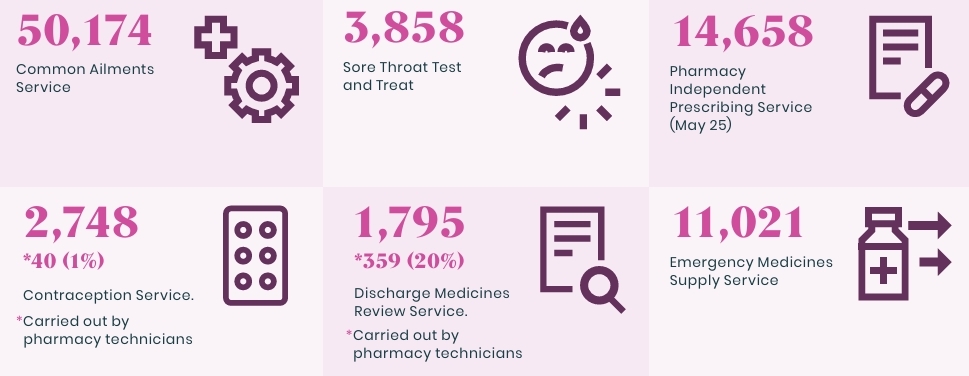
Key statistics from community pharmacy (June 2025)
Each figure shows the number of consultations provided.
In hospitals and primary care settings, patients are increasingly benefitting from the skills of pharmacy teams, embedded in MDTs and managing complex case loads of patients in clinics (see good practice examples below).
Good practice example 10
In 2024, a Point of Care Haematology (PocHi) machine was installed in the Clozapine clinic in Ysbyty Cwm Cynon and Keir Hardie Health Park in Cwm Taf Morgannwg University Health Board. This has meant that patients are now able to collect their medication in the same appointment as their blood tests, preventing the week delay between blood tests and medicine provision. The lead pharmacy technician for the clinic, Karen Tompkins, is leading the medicines management of clozapine for patients. As part of the service, Karen will screen prescriptions for legality and dosage accuracy and monitor the ZTAS website to check results are within normal ranges to ensure the dispensed medication reaches the clinic for supply to the patient. Management plans are created if results are out of range. All medication queries from the clinic team are referred to Karen in the first instance and escalated where necessary, to the mental health pharmacists, demonstrating a safe and effective pharmacy technician-led service for patients.
Good practice example 11
Pharmacy technicians embedded within community resource teams and working closely with all disciplines within the primary care network are supporting patients at home with their medicine needs across health boards. One such example in Betsi Cadwaladr University Health Board, sees patients referred to the team with issues that include non-compliance, hoarding medication and confusion with medication regimens.
Rachael Roberts, a pharmacy technician leads an ‘out-reach’ service which has been developed to review patients at risk of medication-related incidents in the community, taking a ‘proactive’ approach to keeping patients well at home and reducing hospital admissions. This has also supported the multidisciplinary team approach to patient care, highlighting the real value that pharmacy teams bring.
2025 goal
Establish a network of consultant pharmacists to provide leadership on clinical priority areas in Wales.
Consultant pharmacists are clinical experts working at a senior level, delivering care and driving change across the healthcare system. Individuals will have completed the RPS approved credentialing process and have demonstrated that they have the level of competence expected of consultant practice. A parallel process is in place for the RPS, as the professional body to review and approve consultant pharmacist posts.
Since PDaHW was first published in 2019, we have seen an additional ten consultant pharmacist posts in Wales introduced, with 21 consultant pharmacists now in post23.
There are increasing numbers of pharmacists in Wales, who are either credentialed or undergoing credentialing with the RPS. Many of these pharmacists are being supported by HEIW’s Consultant Pharmacist Community of Practice. To support more pharmacists who aspire to these clinical leadership roles we need to create formal routes to career progression which assure and recognise advanced and consultant level practice through robust processes such as professional credentialling.
Consultant pharmacist credentialing community of practice
From an initial consultant pharmacist credentialing community of practice pilot in 2022, 8 out of 12 pharmacists who submitted portfolios for RPS assessment by clinical competency committee achieved the credential.
There was a broad consensus that a credentialing community of practice should be a permanent but dynamic feature of NHS Wales, to support both those pharmacists resubmitting portfolios and those embarking on their credentialing journey.
A core of credentialed pharmacists from the first cohort have taken forward learning from the pilot to support a second credentialing cohort aiming to submit portfolios.
The community of practice is provided in partnership with HEIW, all pharmacy professionals registered with HEIW on Y Ty Dysgu platform can find out more via the following link Consultant pharmacist practice – HEIW YTD Portal.
Next steps and 2028 retention and recruitment
Building on the National Train Work Live campaign and through delivery of the actions in the ‘Strategic Pharmacy Workplan’, we will renew our efforts to recruit and retain the best pharmacists and pharmacy technicians, offering attractive, diverse careers in pharmacy, together with the benefits of training, practicing and living in Wales. This begins with schools in Wales; by taking innovative approaches to raising awareness of the diverse careers available in pharmacy and the pathways to access them we will attract and develop future pharmacy professionals who know, understand and care about communities in Wales. We must widen access to create a diverse workforce, which reflects the people and communities of Wales, a workforce that wants to practice within Wales’ communities long after their training is completed.
Led by one of the Welsh Clinical Leadership fellows at HEIW, a virtual reality resource has been created to provide a virtual work experience for children aged 13-18 years of age. Utilising virtual reality and gamification, the VR tool enables children to access and experience what it would be like to work in community pharmacy.
HEIs in Wales engage in outreach work with school age pupils, raising awareness and highlighting the varied and rewarding roles a career in pharmacy can bring. Typically this is focused at the higher end of school education but are developing plans to engage at primary school level in the near future.
Foundation pharmacist training will continue to be a multisector offering, providing a varied training experience and ensuring Wales is an attractive place to train for graduates. It remains essential that we retain the very best foundation pharmacists upon registration, and that we ensure a pipeline of pharmacists, practicing in the communities in which they have trained. Supporting of the foundation pharmacists through their early years remains fundamental. The HEIW post-registration foundation pharmacist training programme, through implementation of the RPS post-registration foundation pharmacist curriculum will continue to support these practitioners and provide a clear pathway to develop the skills to progress to the RPS advanced practice credentialing pathways.
Pharmacy technicians will be further enabled to utilise their clinical and technical skills, delivering greater patient-facing care and through impending changes to legislation, take on a greater role in terms of the supervision of pharmacy services in all settings.
Job planning must be considered as a key enabler to developing the workforce, whilst delivering high standards of care and professionalism across all settings. It also provides the potential opportunity to grow portfolio careers and cross-sector working. To support transformation and application of career development frameworks, job plans will be developed for all pharmacy team roles providing NHS services.
Job plans for pharmacy professionals should include protected time for learning, teaching and research, commensurate with the stage of people’ careers, together with the expectation of pharmacy professionals also taking their time for self-development. The Welsh Pharmaceutical Committee believes that all pharmacy professionals should have protected learning time within working hours and has published a position statement to reflect this24. In line with the RPS Protected Learning Time policy25, protected learning time should be seen as time to develop yourself, time to develop others and time to develop services/undertake research. Providing this support can positively impact on mental health and wellbeing, supporting development across all areas of professional practice.
2028 goal
Higher education institutions and employers in Wales, supported by HEIW, will offer attractive pharmacy careers which promote the recruitment and retention of pharmacy professionals with the skills patients and the NHS in Wales need, and who reflect the diversity and culture of the people of Wales.
- We will increase the number of school leavers in Wales pursuing a career in pharmacy in Wales;
- We will increase the number of pharmacists and pharmacy technicians undertaking foundation training in Wales and the proportion of our foundation pharmacists who trained at one of Wales’ schools of pharmacy;
- We will reduce the proportion of unfilled pharmacist and pharmacy technician posts in all sectors of practice;
- We will increase the proportion of the pharmacy workforce that is able to understand and use familiar everyday expressions with patients and the public in Welsh.
Workforce supply and shape
Workforce supply and shape
“By 2030, we will have a sustainable workforce in sufficient numbers to meet the health and social care needs of our population” (HEIW Strategic Pharmacy Workforce Plan).
Our aim, aligned to that of the whole health and care workforce, is to ensure we have a sustainable, diverse, and well skilled pharmacy workforce which fully utilises the skills of all members of the pharmacy team. To achieve this, we must first have a complete picture of the shape and size of the whole pharmacy workforce wherever they are providing NHS services. Utilising data provided by the Wales National Workforce Reporting System and the NHS Electronic Staff Record, we can obtain the necessary insight into patterns and trends within the pharmacy workforce to ensure it meets the needs of patients, the public and the NHS in Wales.
This will support a data driven approach to workforce planning and allow the measuring of the impact of commissioning, attraction, recruitment and retention strategies across the NHS.
Pharmacy teams will be further embedded in multidisciplinary teams, with the correct skill mix and long-term workforce planning, to ensure we have the capacity to deliver pharmaceutical care for the people of Wales.
2028 goal
We will improve our understanding of the shape and size of the pharmacy workforce in Wales, utilising data to develop a workforce that meets people’s need for pharmaceutical care and pharmacy services.
- We will fully implement the national workforce reporting tool in community pharmacy and utilise the information it provides, along with the information the reporting tool provides for pharmacists and pharmacy technicians working in GP practice;
- We will carry out an annual assessment of the hospital pharmacy workforce against the baseline completed assessment carried out in 2025 aligned to the priorities in the review of clinical pharmacy services at NHS Hospitals in Wales.
Career pathways
Career pathways
In line with priorities stated in the ‘Independent Review of Clinical Pharmacy Services at NHS Hospitals in Wales’, a tiered pharmacist workforce of advancing practice, through credentialing assessment aligned to the four pillars of practice within the RPS pharmacist post-registration curricula is needed. Credentialing provides quality assurance to both the public and employers of the attainment of the necessary knowledge, skills and attributes of a health professional at a particular level.
The credentialing process is a passport which recognises that competencies attained in one setting are transferable to another, facilitating a fluid, agile workforce, entrusted to deliver care across settings.
A post registration development framework will be developed for pharmacy technicians, supported by curricula and milestone assurance assessments that creates a workforce of advancing practitioners.
Pharmacy technicians will continue to develop and expand their roles in all sectors of practice, continuing to deliver an increasing number of clinical patient-facing services. Impending changes to supervision legislation will aid the pharmacy technician workforce to fully utilise their skills and the whole of the pharmacy technician workforce will be supported in their development to deliver the services needed for the people of Wales. Career progression and development opportunities will be accessible for all members of the pharmacy team, supporting a workforce that continues to upskill and provides a clear pathway for a fulfilling future in pharmacy.
2028 goal
We will agree all-Wales post registration career pathways for all pharmacy professionals in clinical roles covering all sectors of pharmacy practice, and provide a range of opportunities for the wider members of the pharmacy teams to improve their capability, expand their practice, and take on new roles.
- We will consult on, publish and implement an all-Wales post-registration career framework for every pharmacist providing NHS services in Wales;
- We will begin to develop a post-registration career framework for pharmacy technicians;
- We will provide more opportunities for pharmacy teams within hospitals to undertake continuing professional development which supports delivering the priorities described in the Review of clinical pharmacy services at NHS Hospitals in Wales;
- We will complete a ten year forward view of the competency requirements of the community pharmacy workforce and use this to define the education, training and career development needs of pharmacists, pharmacy technicians and the wider community pharmacy workforce.
Prescribing
Prescribing
With all new registrant pharmacists being authorised to prescribe at the point of registration from 2026, and the increasing numbers of current registrants who have completed postgraduate prescribing training, it is imperative all the skills of pharmacists are utilised effectively to the benefit of patients and the NHS.
Pharmacists will be supported to build peer networks, in which they can reflect and share experiences. These networks will help prevent practitioners becoming isolated and, create opportunities for pharmacists in different sectors to learn from one another.
Training, education and resources to support expanding a prescriber’s scope of practice will be readily accessible. Successful initiatives such as the educational programme tailored to support community pharmacists in Wales to deliver the Pharmacy Independent Prescribing Service, delivered in collaboration by HEIW and RPS with support from CPW, provide a foundation for improving competence and growing confidence amongst pharmacists. In turn, this will enable prescribing pharmacists to expand their scope of practice and make an even more meaningful contribution to the health systems they work in. HEIW has extended this educational programme until March 2028, in light of high demand and positive practitioner feedback.
Pharmacists, in common with other non-medical prescribers, will be supported to demonstrate, improve and appropriately evidence their competence to prescribe through a ‘once for Wales’ approach. Developed by HEIW, the ‘Standards for Competency Assurance of Independent and Supplementary Prescribers in Wales26‘ set the requirements for evidencing and review of ongoing competence to prescribe and provide an opportunity to map to other competency frameworks. These standards also provide the basis for assessing and evidencing pharmacist prescribers’ development needs. They will enable employers, service commissioners, professional bodies and education providers to support pharmacist prescribers with their professional development and receive the necessary assurances to allow pharmacists to take on new, more challenging roles. The pharmacy profession will be an exemplar of adopting HEIW standards by 2028.
2028 goal
We will fully implement the standards for competency assurance of independent and supplementary providers for all pharmacists in Wales and put in place processes which ensure the information gathered from implementing the standards is used to provide pharmacist prescribers with the support they need to optimise the use, safety and effectiveness of medicines through prescribing and deprescribing.
- We will agree and implement a national approach to ensure every post foundation pharmacist working in an NHS hospital or supporting the delivery of NHS hospital services in the community in Wales, can prescribe safely and effectively;
- We will introduce the use of an e-portfolio by all pharmacist prescribers to demonstrate continued competence and as a tool to improving prescribing practice;
- All pharmacist prescribers will confirm their scope of prescribing practice annually and we will use this information to support employers and pharmacist prescribers to expand their scope of practice to meet the needs of the NHS and people in Wales.
Seamless pharmaceutical care
Ensuring continuity of care in the provision of pharmaceutical care was a founding principle within PDaHW. To ensure this is a reality for all patients, particularly that a patient’s pharmaceutical care is not interrupted as they transition between care settings, requires a patient centred approach where medicines are optimised and medication-related harm is prevented, pharmacy teams have an obvious and important role.
Continuity of care requires a coordinated approach with effective collaboration and communication between healthcare professionals, including between primary and secondary care. Pharmacy professionals and pharmacy teams will need to play the leading role in ensuring continuity of supply, presentation and use of medicines. Together with the timely sharing of patient information through interoperable digital systems, pharmacy professionals will help keep patients well, safe from medication-related harm, and prevent admissions to hospital.
Patients are benefitting from the expertise of pharmacy teams, working as part of wider MDTs earlier in their care. In hospitals, pharmacy teams embedded in urgent and emergency care departments enables the most appropriate discussions about medicines to be taken at the same time as initial decisions about overall care. Research shows that pharmacy input early in the patient’s admission reduces medication errors and readmissions. An expansion of pharmacy teams within emergency care settings is backed by quantifiable data (see good practice examples one and two). Implementation of actions within the Welsh Government’s ‘Independent Review of Clinical Pharmacy Services at NHS Hospitals in Wales’, will lead to further improvements in unscheduled care.
When patients are discharged from hospital, sharing information about their medicines has been shown to make a meaningful difference to the quality of their care, reduce waste and prevent readmission to hospital. Enabling pharmacy technicians to deliver the DMR service has led to an increase in the number of DMRs provided in Wales and the proportion of discharges from hospital where medicines information is shared with the community pharmacies providing ongoing care for patients. More than 11,000 DMRs were conducted in the first six months of 2025 with more than three quarters of those facilitated by the automated electronic transfer of discharge information between the hospital and patient’s pharmacy.
Once at home, patients are benefitting from the expertise of pharmacy professionals to help improve medication adherence. Community services in many health-board areas are being led by pharmacists and pharmacy technicians who are implementing seamless pathways of care. These services such as the ones in Aneurin Bevan University Health Board, Cwm Taf Morgannwg University Health Board and Swansea Bay University Health Board are providing essential support for patients who have problems in managing their medicines.
Pharmacy teams working across all settings will continue to ensure patients’ medicines are optimised wherever they receive their care and will support delivery of more services closer to patients’ homes. By 2028, pharmacy professionals will be maximising the use of available digital solutions to ensure the safe transfer of care between settings.
Reflection on progress and 2025 goals
2025 goal
Increase patient access to PIPs. Ensuring the expertise of PIPs are fully utilised across all care settings.
The significant increase in availability of pharmacist prescribing has already been highlighted. It represents a significant shift in clinical service delivery and transformation of the role of community pharmacies since the first publication of PDaHW.
In hospitals in Wales, pharmacist prescribers are delivering clinics supporting patients in many clinical areas. Through delivery of the actions within the ‘Independent Review of Clinical Pharmacy Services at NHS Hospitals in Wales’, the skills of pharmacist prescribers will be utilised more effectively and made available more equitably to support patients and meeting the NHS priorities.
Pharmacist prescribers are now embedded within and integral to NHS 111 Wales clinical model, supporting patients and reducing demand on emergency departments. Within GP practices, an increasing number of pharmacists are utilising their prescribing skills to optimise patients’ medicines.
2025 goal
Optimise the use of medicines and minimise the risk of medication-related harm for scheduled care as patients transfer between care settings.
In the 12-month period from April 2024 to March 2025, over 35% of nearly 21,000 DMRs completed identified at least one difference between the medicines a patient was prescribed on discharge from hospital and those they received in primary care. As many as 85% of these were resolved at the community pharmacy (Data source: CPW). Further improvements in pharmacy access to discharge information will lead to further reductions in harm when people are discharged from hospital.
Resolving discrepancies at discharge through increased provision of DMRs provides an important safety net, however pharmacy teams in secondary care are well placed to take proactive steps to prevent harm and promote wellbeing. Pharmacists providing perioperative care and prehabilitation services, can identify modifiable risk factors and promote healthy lifestyles and as prescribers, take action to optimise people’s medicines (e.g. for the management of hypertension, diabetes and anaemia) in a way which will improve the outcomes they get from planned care. This is just one way pharmacy teams in hospitals can support the Welsh Government’s approach to healthy waiting set out in ‘Promote, Prevent, Prepare for Elective Care’.27
To facilitate the safe and timely discharge of patients requiring support to manage medicines at home, pharmacy technicians are leading services which support patients in their own home. Following a referral from hospital pharmacy teams, pharmacy technicians in primary care, such as those in Community Resource Teams visit patients in their own homes, to provide appropriate tailored support and where necessary, interventions, to improve medicines use. These services improve patients’ ability to manage their medicines at home; supporting long-term independence; reduces the need for expensive ‘medicines administration at home’ care packages and reduces the demand for healthcare interventions associated with unintentionally poor medicines concordance, for example, hospital readmission.
Good practice example 12
Melanie Owen, a specialist pharmacy technician working at Ysbyty Gwynedd in Betsi Cadwaladr University Health Board, provides a pharmacy technician-led stable clinical pharmacy service to the elective orthopaedic arthroplasty ward without the requirement of direct pharmacist supervision. Melanie provides a medicines management service which includes medication chart reviews, medicines reconciliation and optimisation including the transcription of discharge prescriptions for her specialist area. Melanie also screens newly prescribed medication within her scope of practice and accesses and reviews microbiology and post operative blood results including electrolytes, full blood count and therapeutic drug levels.
2025 goal
Establish direct referral systems to and from pharmacy services, improving efficiencies in service delivery.
Anecdotal evidence suggests some progress has been made to establish referral systems to and from pharmacy services, these are largely informal and developed locally for example, between GP practice and community pharmacies providing the independent prescribing service. Formal referral pathways between services have not routinely been established. Throughout the engagement exercise, we heard of the need for more robust referral systems to be established, with an increasing volume of clinical activity being provided by pharmacists and now pharmacy technicians, pharmacy services are dealing with patients with increasingly complex needs. The increasing complexity means it is necessary for pharmacy services to be able to seamlessly transfer people’s care to more appropriate providers when a pharmacist cannot meet their care needs.
Improving the integration of pharmacy services in care pathways remains a priority, building on the learning from pilots which have been recently established to expand and integrate pharmacy’s role in delivering care.
Good practice example 13
Gareth Hughes, a community pharmacist from Tynewydd Pharmacy, in Cwm Taf Morgannwg University Health Board has worked alongside the local health-board team to establish a pilot where the pharmacist can request midstream urine (MSU) samples to be sent for culture and sensitivity testing. By working with Digital Health and Care Wales, Gareth was granted access to the Welsh Clinical Portal and was able to demonstrate a technical proof of concept through the use of dummy samples. Once the technical logistics were established Gareth has been able to integrate the use of MSU samples into his prescribing practice, where clinical guidance has illustrated testing benefits. Results from the MSU testing have illustrated that, in the majority of cases, the initial treatment prescribed was the most appropriate. There have been cases, however, which have demonstrated the benefits to community pharmacy having access to this testing, whereby sensitivity data has resulted in Gareth switching treatment. This service has allowed relationships to be formed between the community pharmacist and the microbiology team which has reduced the need for patients to be passed between the pharmacy and general practice and provided prompt access to appropriate antimicrobials. Additionally, the service has allowed Gareth to treat more complex patients, where MSUs are clinically indicated, reducing the number of GP referrals.
2025 goal
Continue transforming access to medicines (TrAMS) to the most innovative and life-saving medicines including cancer therapies. intravenous antibiotics and parenteral nutrition for patients in Wales.
The TrAMS programme28 business case was endorsed by the Welsh Government in 2021 and aims to transform the delivery of pharmacy technical services and the aseptic preparation of medicines in the NHS in Wales. The programme will greatly improve access to critical medicines, patient outcomes and pharmaceutical care across Wales, through creating national and regional technical services in modern, bespoke facilities including radiopharmacy, the preparation of systemic anticancer therapy (SACT) parenteral nutrition (PN), and centralised intravenous additives (CIVAS).
The first stage of the TrAMS programme is expected to be completed in 2026 with the build and commissioning of a new radiopharmacy facility to serve hospitals in South Wales. Work is also underway to finalise the business case for the first aseptic regional unit providing SACT, PN and CIVAS also in South East Wales, with further hubs in South West and North Wales to follow subsequently.
Within the TrAMS programme there has been a strong focus on developing the pharmacy professional workforce, providing advanced career pathways for pharmacists and pharmacy technicians in technical services through completion of the Pharmaceutical Technology and Quality Assurance course. There has also been a concerted effort to diversify the workforce, in particular to utilise non-pharmacy professional roles including the expansion of science manufacturing technician (SMT) roles, enabling pharmacy professionals to spend more time providing patient-facing services. More than a quarter of the current workforce have completed or are undertaking SMT training. The Scientist Training Programme has also enabled the use of non-pharmacy science graduates in NHS aseptic services. The first cohort of scientist trainees are due to graduate during 2025, bringing additional expertise into the technical services workforce in Wales.
Through strong collaboration between the pharmacy technical services units in Wales and the Schools of Pharmacy, research and development in identified priority areas is driving service improvement in these specialist areas of patient care.
Through utilisation of the expertise of pharmacy teams working within technical services in Wales, patients are already benefitting from innovative delivery of services closer to home.
Good practice example 14
Outpatient Parenteral Antimicrobial Therapy is a service that has been offered by BCUHB since 2020. This service has enabled patients to receive their treatment from home, or within the community, rather than experience long hospital stays. With the ‘Hospital at Home’ model a key tenet of A Healthier Wales, the demand and requirement for this service to increase in the future.
Aligning to the vision outlined within PDaHW, Pharmacy Technical Services in BCUHB is preparing for this paradigm shift in treatment by utilising state of the art aseptic technologies and semiautomation to offer an insourced production model for the ambulatory devices required for this service.
Working with both industry partners and Welsh Government, this project has developed a scalable and sustainable manufacturing method that will offer a flexibility for clinicians, as well as a reduced time-to-treatment and a reduction in treatment cost.
Next steps and 2028
There is good evidence demonstrating the risk of miscommunication and medication errors remains problematic when patients move between care settings. This increases the risk of patient harm, poorer outcomes and significantly increases the risk of hospital readmissions.
When pharmacy professionals are part of the wider MDT there are significant benefits for patients. Pharmacy teams lead on preventing and resolving medicines issues when patients transition between settings. For example, the benefits of the DMR service have been robustly demonstrated, one such study found that having a DMR after a hospital discharge was associated with reduced risk of readmission within 40 days.29
Safe transfers of care are underpinned by appropriate digital infrastructure which facilitates the electronic transmission of discharge information between settings.
Pharmacy technicians are increasingly delivering errors, especially when patients move between clinical care for patients. Whether through promoting medicines optimisation and adherence in primary care, delivering clinical services such as vaccinations, undertaking medicines reconciliation for patients on hospital admission and at discharge, and providing patient counselling in outpatient clinics (for example clozapine clinics).
In the next three years, increased consistency and equity of access to pharmaceutical care will need to be realised.
Integration into care pathways
Integration into care pathways
As clinical pharmacy services have developed across all settings and pharmacy professionals are dealing with more complex patient caseloads, it is essential that arrangements are in place to ensure patients are appropriately referred into and out of services.
To ensure patients access the right service from the most appropriate healthcare professional, pathways will be efficient and robust and seamless for patients. Building upon current pilots and though the development of prescribing services, pharmacist prescribers across all settings will be further enabled to initiate requests for diagnostic testing and investigations.
2028 goal
Pharmacy services will be further integrated into care pathways. Where pharmacy services are included in a pathway, to facilitate prompt access to care by pharmacy professionals. The pathway will include arrangements for the seamless navigation of patients to the most appropriate care provider when their needs cannot be met by a pharmacy professional.
Minimising medication-related harm
Pharmacy professionals must have consistent and up to date access to information about a patients care and medicines to allow informed decisions and to improve patient outcomes. This information must be in formats which help prevent medication errors, especially when patients move between care settings.
The long-term aim is for pharmacists and pharmacy technicians in all settings to have read and write access to electronic medical records, facilitating the delivery of safe and effective pharmaceutical care to every patient in Wales.
2028 goal
We will ensure all pharmacy professionals have access to digital information about people’s care and the medicines they are prescribed, to improve outcomes and reduce the risk of medication-related harm including when patients transfer between care settings.
- We will provide community pharmacists with access to the Welsh Clinical Portal for ordering tests and reviewing medical histories;
- We will make the national shared medicines record available in ePMA systems in every health board and NHS Trust in Wales;
- We will increase the number of digital discharge summaries shared with community pharmacies.
Equitable and consistent delivery of pharmaceutical services
Equitable and consistent delivery of pharmaceutical services
There has been significant progress in the development of pharmacy services in every sector of practice throughout Wales since the PDaHW was published and refreshed in 2019 and 2022 respectively. Progress towards the professions’ vision for pharmacy practice in 2030 has been facilitated by ‘Presgripsiwn Newydd’, ‘Independent Review of Clinical Pharmacy Services at NHS Hospitals in Wales’ and changes in the regulatory and professional environment.
However, while many more patients are benefiting from increased access to pharmaceutical care, we know that the offering is not necessarily consistent or equitable across Wales.
We must now consolidate the progress made and take action to ensure services and pharmaceutical care are delivered more consistently throughout Wales.
2028 goal
We will promote value and sustainibility within the NHS, ensuring pharmacy services across all settings which offer the greatest benefit to patients and the NHS are provided more consistently where patients and other healthcare professionals need them.
- We will increase the number and proportion of community pharmacies offering both the extended minor illness and the contraception elements of the national independent prescribing service;
- We will increase the number of pharmacists and pharmacy technicians in secondary care who are working in the priority clinical areas set out in the Review of clinical pharmacy services at NHS Hospitals in Wales.
TrAMS
TrAMS
Within the next three years, we will make substantial progress on the transformation of aseptic services. Starting with a new radiopharmacy facility in South East Wales, we will support establishing regional aseptic facilities across Wales and move to a single national operational model for technical services.
To support workforce development, a project in collaboration with the HEIW Healthcare Science and wider workforce programmes, will explore both a mentoring scheme for advanced level practitioners and career development pathways for teams working in pharmacy technical services.
The TrAMS programme will work with colleagues across the UK to develop an education and competence framework to feed into the career pathways for pharmacy technical services staff, to standardise and transform the opportunities for learning and careers in technical services.
Additionally, these changes create opportunities for further centralisation of other pharmacy services that would benefit from an all Wales approach including medical gas testing, procurement and homecare services.
2028 goal
We will centralise services to improve capacity, contingency and quality for innovative and life-saving medicines including cancer therapies, diagnostic agents, intravenous antibiotics and parenteral nutrition for patients in Wales.
- We will establish a new regional radiopharmacy service for South East Wales;
- We will develop a delivery plan, utilising centralised and nearer to patient facilities for clinical trials requiring aseptic preparation in Wales;
- We will endeavour to develop ‘Once for Wales’ models for delivering other pharmacy services such as medical gas testing, unlicensed medicines procurement and homecare;
- We will develop a plan for improving the facilities and infrastructure available to make advanced therapy medicinal products more readily available in every part of Wales.
Harnessing innovation, data and technology
Since PDaHW was first published ‘Harnessing Innovation and Technology’ has been a priority theme to enable delivery of the professions’ ambitions. Throughout our engagement, it has been apparent there is a need for improvements in the collection and use of data, be that for workforce planning, improving patient safety or demonstrating the positive outcomes of pharmaceutical care. To address this need and to reflect the improving availability of data and the advances in areas such as data science and the use of artificial intelligence in the last three years, this theme has been updated to explicitly incorporate data within its scope. In the next three years we will seek to make improvements through ‘Harnessing Innovation, Data and Technology’.
To deliver the ambitions set out in this document, pharmacy teams need the right environment and support in which to deliver optimal pharmaceutical care. The effective deployment and better use of technology is fundamental to this aspiration.
The national Digital Medicines programme30 brings together the programmes and projects that will deliver the benefits of a fully digital prescribing approach in all care settings in Wales. With the overarching principle of ‘Making the prescribing, dispensing and administration of medicines everywhere in Wales, easier, safer, more efficient and effective, for patients and professionals through digital’.
Since the previous iteration of PDaHW3 we have seen incredible progress in the deployment of digital technology to support patients and the NHS, and as work progresses on these designated programmes, much more is still to be achieved.
The rollout of the Electronic Prescription Service (EPS) within primary care, is allowing prescribers to send prescriptions electronically to a patient’s nominated pharmacy, improving efficiencies and patient safety, and supporting efforts to reduce pharmacy’s carbon footprint and improve sustainability. Within secondary care, ePMA is ensuring fully digital systems replace the need for paper medicines charts and prescriptions, provide decision support for clinicians, and reduce transcription and the risk of error, making the entire process safer, easier and more efficient.
Many patients are now using the NHS Wales app to order repeat prescriptions and choose the pharmacy they want to dispense their prescriptions. The app is enabling patients to take a more active role managing their own health and wellbeing and is helping them take responsibility for their condition and their medicines. Planned developments over the next year will enable people to track their place on the waiting list for treatment, view hospital appointments, and request test results. In addition, there will be opportunities to influence developments in the app to improve operational efficiency and improve clinical service delivery in pharmacies which we will need to exploit.
In all sectors, pharmacy teams are implementing new technologies to improve patient safety and the efficiency of pharmacy processes. Examples include the installation of automated dispensing systems and patient medication record (PMR) systems that facilitate closed loop accuracy checking and remote clinical checks of prescriptions. There are many examples of pharmacy teams employing innovative technology in practice to allow more time to be spent on delivery of pharmaceutical care. To support patients’ access to medicines during times when their community pharmacy may be closed, and backed by Welsh Government capital funding, many community pharmacies have installed prescription collection automation points. In Dolgellau, North Wales, Betsi Cadwaladr University Health Board, in partnership with researchers from the universities of Bangor, Oxford and Aberdeen31, is evaluating the use of an automated collection point which allows patients to access critical medications in this very rural area during the out-of-hours period, when access to pharmacies is more limited.
Advanced therapies are becoming part of routine quarter of GP practices, with around 5.6-million care in the NHS, with pharmacists and pharmacy technicians possessing unique skills which can support their safe and effective preparation and use. Increased access to advanced therapy medicinal products (ATMPs) and precision medicine, including using pharmacogenomic testing to guide treatment, aligns with the priorities of the NHS in Wales and offers significant benefits for patients, reducing medication-related harm and improving therapeutic outcomes. The Genomics Delivery Plan32 for Wales describes a vision for ‘Working together to harness the potential of genomics to improve the health, wellbeing and prosperity of the people of Wales.’ One of its key aims is the development of a pharmacogenomics delivery plan, which will set the actions for adoption of pharmacogenomics within routine clinical practice.
Reflection
2025 goal
Implement electronic prescribing solutions across all pharmacy settings, including supporting patients to access pharmacy services through the NHS Wales app.
Excellent progress has been made to implement and adopt electronic prescribing; there is however still much to be done to ensure equitable access to EPS and ePMA across Wales.
Within secondary care, every health board and trust has begun or will shortly begin implementing ePMA. Each organisation is at a different point in the journey to a fully digitised system and pharmacy teams are playing a leading role in digitising the medicines pathway in Wales. Pharmacists and pharmacy technicians must continue to lead the rollout and adoption of electronic prescribing in every hospital and every member of the pharmacy team must adapt their working practices to harness the benefits ePMA will bring.
In primary care, since the first electronic prescription in Wales was sent and dispensed in November 2023, EPS has been made available in over two thirds of community pharmacies and quarter of GP practices, with around 5.6-million prescription items having been transmitted and dispensed digitally33.
2025 goal
Ensure medication-related incidents are reported and actioned to improve patient safety.
The All Wales Medicines Safety Network through collaboration with the Once for Wales Concerns Management System have developed the medication incident form within Datix Cymru. Developing an effective system for capturing medication safety incidents is key to promoting a safety culture whereby healthcare staff can report incidents efficiently to ensure learning and implement risk reduction strategies to safeguard patient safety.
Datix Cymru was launched in 2022 and uses the descriptors for medication safety incidents developed by the All Wales Medicines Safety Network. The network continues to collaborate with the Once for Wales Concerns Management System and a change request to improve the medication error reporting functionality within Datix Cymru has been actioned and is undergoing approvals.
Despite the excellent work which has taken place to improve the quality and usefulness of data on medication-related incidents in Wales, we are not yet effectively using these data to improve safety and reduce harm.
Good practice example 15
Supporting the use of smart pump dose error reduction software to reduce infusion rate errors
Intravenous medication administration errors occur at a rate of 27% in hospital with the majority of errors attributed to programming pumps with the incorrect infusion rate. Smart pumps equipped with dose error reduction software (DERS) check programmed infusion rates against pre-defined upper and lower dose limits and infusion rates for the specific medication (drug library), thereby acting as a defence against infusion rate errors. The All Wales Drug Library and Smart Pump Working Group was established to share expertise and ensure robust governance in the development of smart pump drug libraries to safe implementation of the technology to reduce errors. A series of standard operating procedures have been developed by the working group to support DERS implementation. Work is ongoing to use data from the smart pumps to explore use of DERS technology and infusion rate errors from overriding of pre-defined limits.
2025 goal
Increase capacity for pharmacy professionals to spend on patient-facing activity by introducing efficiencies in the dispensing of medicines.
Demand for clinical pharmacy services has increased in primary and secondary care and patients are increasingly benefiting from the expertise of pharmacy teams. To create more capacity for the provision of pharmaceutical care, pharmacy professionals must be supported by infrastructure and processes which remove them from and improve the efficiency of supply chain activities.
The rollout of electronic prescribing systems in primary care and hospitals is helping to provide a paperless digital system with the ability to track a patient’s prescription at any point, reducing time locating or transcribing paper prescriptions and medication administration records.
Some PMR systems are already implementing digital workflows utilising technology including AI and barcode validation, to not only support patient safety, but to improve efficiency. Automated dispensing systems are in operation within hospitals and community pharmacies to support the dispensing of medicines, and a rise in 24/7 prescription collection points is supporting patients to access their medicines at a time convenient to them. These measures and the opportunities presented by greater use of the NHS App provide a basis for further use of technological innovations and better use of data to improve care.
Good practice example 16
Community pharmacies across Wales are embedding technological solutions within their practice to aid operational processes. Dylan Jones a community pharmacist in Llanidloes Pharmacy in Powys Teaching Health Board has taken a holistic approach to the operational element of their community pharmacy. To deliver the ambitions within the community pharmacy contract and to adequately serve a rural community with an extensive range of pharmaceutical services, the pharmacy has fundamentally changed its traditional operational aspects including the dispensing process.
Through employment of a PMR system incorporating artificial intelligence and barcode validation, the wider pharmacy team have embraced the new technology releasing the responsible pharmacist from the dispensing process whilst also reducing medication dispensing errors. The redesigned digital workflow allows the pharmacist to carry out the clinical check, whilst barcode validation is used to ensure accuracy. Supported by staff training, development and better utilisation of the skills of the whole team, Llanidloes Pharmacy delivers a full range of clinical services, including an independent prescribing service, with consultations ranging from between 300 and 400 each month.
Not only are patients benefitting from an increased access to clinical services, but staff satisfaction within their role has also increased, whilst the pharmacy is able to offer undergraduate students a more clinically focused experience whilst on training placements.
2025 goal
Embed elements of a medicines genomic plan into pharmacy practice.
‘The Genomics Delivery Plan for Wales’ details how Genomics Partnership Wales (GPW) will work in partnership with the Welsh Government and other stakeholders, to harness advances in the understanding and application of genomics to transform public health strategy and delivery of care. In response to one of the key aims of the Genomic Delivery Plan for Wales, HEIW in partnership with GPW have developed a Genomics strategic workforce plan.34 The plan sets out a roadmap for the next three years with actions identified to support the workforce including pharmacists and pharmacy technicians, to realise the potential of genomic medicine for the benefit of patients and the population.
In July 2024, a consultant pharmacist for genomics and pharmacogenomics role was established, to lead actions to enable and embed best practice in the use of pharmacogenomic testing in Wales. A National Pharmacogenomics Group established in 2022 supports a multidisciplinary, coordinated national approach to the development and introduction of pharmacogenomic services within Wales.
Pharmacy teams across Wales can access HEIW’s introduction to pharmacogenomics training, with postgraduate courses in pharmacogenomics available at several universities in Wales. The total number of pharmacy professionals undertaking pharmacogenomic training remains small but proportionate to the availability of use of testing in NHS Wales. However, an increasing number of pharmacy professionals are accessing courses relevant to their practice to build their knowledge and expertise in this important field.
More patients in Wales are benefiting from access to pharmacogenomic testing than ever before. In 2020, Wales become the first part of the UK to routinely provide all cancer patients being treated with certain types of chemotherapy dihydropyrimidine dehydrogenase screening, to identify their risk of severe side effects and help prevent these occurring. In 2025, a feasibility study to evaluate the impact of implementing CYP2C19 genotype testing prior to prescribing clopidogrel treatment in stroke care is underway. In addition, Wales also has two study sites which explore point-of-care testing for the MTRNR-1 gene in neonatal services to assess the susceptibility to ototoxicity caused by aminoglycosides.
Good practice example 17
CYP2C19 Genotype Testing Project
A new feasibility project has launched at the University Hospital of Wales (UHW), Cardiff & Vale University Health Board, to evaluate the service impact of implementing CYP2C19 genotype testing prior to prescribing clopidogrel treatment in stroke care – following the publication of NICE Diagnostics Guidance (DG59) in July 2024. The guidance recommends genotype testing prior to prescribing clopidogrel for all patients who experienced an ischaemic stroke or TIA to reduce the risk of recurrent stroke and improve clinical outcomes.
Testing began on 19 May 2025 and is led by Sophie Harding, consultant pharmacist for pharmacogenomics. The project is delivered in partnership with the UHW Stroke Team, the All-Wales Medical Genomics Service, and supported by the Stroke Implementation Network (NHS Wales Performance and Improvement).
The project assesses the feasibility of integrating CYP2C19 testing into routine clinical workflows, with a focus on turnaround times, coordination between laboratories and clinical teams, and overall impact on patient care. By enabling more targeted antiplatelet therapy, the project aims to explore how best to implement this test into routine Welsh clinical practice.
Beyond patient benefits, the initiative is also supporting the development of multidisciplinary team capabilities in delivering precision medicine. It offers valuable learning on implementation logistics, clinical decision-making, and interprofessional collaboration – laying the groundwork for wider rollout across NHS Wales.
This pilot aligns with the Welsh Government’s Genomics Delivery Plan to progress the mainstreaming of genomics through optimising medicines use for patients in Wales.
Next steps and 2028
Better use of innovation, data and technology will both improve patient outcomes and support increasing pharmacists’ and pharmacy technicians’ capacity to provide pharmaceutical care. In the next three years we will build on the progress made towards the 2025 goals by ensuring the pharmacy workforce is empowered to embrace the opportunities that innovative technologies provide whilst being supported to develop their own digital capability.
The Digital Medicines programme will accelerate the pace of adoption of digital technology to support the delivery of effective care by pharmacy professionals. This will include making significant progress towards the deployment of a comprehensive single medicines record for people in Wales.
To support the release of time for pharmacy professionals to spend on direct patient care, to improve data driven decision making, and to improve the outcomes of care, we will begin to explore how AI can support operational and clinical pharmacy activities.
Pharmacy will be at the forefront of the wider use of pharmacogenomics within clinical practice guided by robust advice on the cost-effective use of pharmacogenomic tests.
Pharmacists and pharmacy technicians will support more people in Wales being able to access ATMPs and advanced therapies investigational medicinal products through new and refurbished aseptic facilities or good manufacturing practice-compliant processes delivered near to patients.
Electronic prescribing
Electronic prescribing
The Digital Medicines programme will ensure that electronic prescribing will be the default position for prescribing medicines in all areas of practice. EPS will be available to all GPs and community pharmacies and in secondary care, paper medicines charts and prescriptions will be replaced by fully digital and interoperable ePMA systems.
2028 goal
We will implement electronic prescribing across wales to increase productivity, transform the role of pharmacy professionals and support the safe and efficient prescribing, dispensing and administration of medicines for patients.
- Every community pharmacy in Wales will access prescriptions through the electronic prescribing service;
- Every GP practice in Wales will send prescriptions using the electronic prescription service with patients able to choose the most appropriate or convenient pharmacy for them each time they have their prescription dispensed;
- Electronic prescribing and medicines administration will be routinely used in every hospital in Wales.
Patient safety and medication-related incidents
Data regarding medication safety incidents are captured by every health board and trust covering primary, community, secondary and tertiary care. Primarily these data are collected through the reports made to the Once for Wales Concerns Management System. Additional information on medicines safety is available from national prescribing and safety indicators, adverse drug reaction reports made to the Yellow Card Centre Wales and the medicines safety dashboard examining hospital admission associated with medicines-related harm. Currently incident report data are captured and processed by different individual systems and organisations and there is no national view of medicines safety incidents to facilitate sharing and learning. The development of a national digital system for sharing learning from medication safety incidents will provide a more cohesive mechanism for identifying actual and potential risks from medicines use, the development of risk reduction strategies, and cross sector and organisation learning with commensurate benefits for patient safety.
2028 goal
We will develop a national digital system to facilitate and share learning from medication-related incidents, to reduce medicines-related harm and improve patient safety.
Pharmacogenomics and advanced therapy medicinal products
Pharmacogenomics and advanced therapy medicinal products
Pharmacogenomic testing has the potential to significantly improve medication effectiveness and safety by tailoring treatment to an individual’s genetic makeup. Pharmacy professionals will be further supported to improve their awareness of and expertise in pharmacogenomics for the benefits of patients in Wales.
Plans for a pharmacogenomic delivery plan will be realised, aligned to the key aims of the Genomics Delivery Plan for Wales. The plan will set out the actions which need to be taken for the adoption of pharmacogenomics into routine clinical practice in Wales.
Advanced Therapies, the collective term for a novel class of biological medicines that are based on genes, cells or tissue, offer ground breaking opportunities for the treatment of diseases which until now have been considered untreatable. Advanced Therapies have the potential to vastly improve clinical outcomes in a range of disease indications, including rare diseases where there are currently no or limited treatment options available. However, if pharmacy in Wales is to contribute to making these ground breaking treatments available, work is needed to prepare organisations, the workforce and the pharmacy estate to ensure the regulatory requirements for these treatments are met.
2028 goal
We will ensure pharmacy professionals have the knowledge, expertise and facilities they need to lead and participate in the deployment of pharmacogenomic testing and advanced therapies.
- We will publish a national pharmacogenomics plan;
- We will identify a pharmacogenomics lead in every health board and increase the number of pharmacists and pharmacy technicians who have completed training in pharmacogenomics;
- We will develop a plan for improving the facilities and infrastructure available to make advanced therapy medicinal products more readily available in every part of Wales.
Utilising technology, data and AI
Utilising technology, data and AI
The pharmacy professions must do more to embrace and embed the use of technology to support the delivery of pharmaceutical care. Advances in innovation and technology happen at pace but the pace is often not linear. As we have seen with the availability and capability of AI, on occasion huge strides are made in a very short space of time. Whilst many pharmacies are using technology to support efficient processes, many do not and the use of newer technologies, data and AI to guide pharmaceutical care is not widespread. Through the utilisation of AI and barcode validation in PMR systems, to automated dispensing systems and prescription collection points, these technologies must become commonplace, and the professions must become more conversant with and confident in the adoption of advances in technology in the life of this document.
Implementing digital workflows, closed loop dispensing systems, robotics, semiautomation and full automation must become more mainstream in the profession, as should the use of AI. RPS’s ‘Artificial Intelligence in Pharmacy’ policy35 outlines just some of the scope for AI use in pharmacy practice, and how it has the potential to transform the way that pharmacists and pharmacy teams work. We will see further adoption of AI to support patient safety, aid decision making and automation of operational and administrative processes.
2028 goal
We will more effectively use automation, technology, data, and artificial intelligence to improve productivity and release time for pharmacy professionals to deliver direct patient care to those who need it most.
- We will increase the number of community pharmacies that have implemented automated solutions (e.g. dispensing robots and prescription collection cabinets) to improve productivity;
- We will utilise data available as a result of implementing ePMA in hospitals to introduce a needs-based approach to prioritisation and provision of pharmaceutical care for hospital inpatients;
- We will identify and implement opportunities to use artificial intelligence to improve efficiency and productivity in hospital pharmacies.
Appendix 1 – 2028 goals
Enhancing patient experience
Enhancing patient experience
Community pharmacies will become community wellbeing hubs offering a range of health improvement and protection services, where all members of the pharmacy team are empowered to promote health and wellbeing through all their interactions with patients and the public.
- We will develop and consult with stakeholders on what prevention means in the context of community pharmacy;
- We will increase the proportion of community pharmacies offering priority health improvement and health protection services and increase health improvement and protection activity in pharmacies;
- We will increase the number of pharmacists, pharmacy technicians and pharmacy staff who are able to support people to make positive changes to their health and wellbeing.
Pharmacy professionals will lead efforts to reduce the environmental impact of medicines and pharmacy services, with pharmacy teams actively engaged in reducing pharmacy’s carbon footprint and improving value and environmental sustainability in the NHS.
- We will increase the number of community pharmacies participating in Public Health Wales’ Greener Primary Care scheme;
- We will support community pharmacies to implement measures which reduce their carbon footprint;
- We will support pharmacists and pharmacy teams working in hospital settings to engage with the RPS Greener Pharmacy Guides and Toolkit;
- We will work with other prescribers in primary and secondary care to reduce the environmental impact of medicines and medical gases.
We will increase the number of pharmacists and pharmacy technicians providing leadership at a national level, improving medicines use and patient outcomes as active members of NHS Wales’ strategic clinical networks, whilst continuing to build leadership capability in the workforce.
- We will ensure expert pharmaceutical advice is available to the NHS strategic clinical networks and that a named pharmacy professional is contributing to their work of every network in Wales;
- We will ensure aspiring leaders in pharmacy have access to a range of pharmacy, multidisciplinary, and public sector-wide opportunities for leadership development.
We will increase the contribution pharmacists and pharmacy technicians in Wales make to demonstrating the benefits of pharmaceutical care and pharmacy services through participation in and dissemination of research, service evaluation and quality improvement activities, whilst continuing to build research capacity and capability in the workforce.
- We will provide opportunities for community pharmacy teams to support research and service evaluation which demonstrates the effectiveness of the expanding range of clinical services available from pharmacies;
- We will develop an evidence repository to collate and disseminate the findings of research, service evaluation and quality improvement activities undertaken by pharmacists and pharmacy technicians in Wales;
- We will increase the number of pharmacists and pharmacy technicians with research skills and capability.
Developing the pharmacy workforce
Developing the pharmacy workforce
HEIs and employers in Wales, supported by HEIW, will offer attractive pharmacy careers which promote the recruitment and retention of pharmacy professionals with the skills patients and the NHS in Wales need, and who reflect the diversity and culture of the people of Wales.
- We will increase the number of school leavers in Wales pursuing a career in pharmacy in Wales;
- We will increase the number of pharmacists and pharmacy technicians undertaking foundation training in Wales and the proportion of our foundation pharmacists who trained at one of Wales’ schools of pharmacy;
- We will reduce the proportion of unfilled pharmacist and pharmacy technician posts in all sectors of practice;
- We will increase the proportion of the pharmacy workforce that is able to understand and use familiar everyday expressions with patients and the public in Welsh.
We will improve our understanding of the shape and size of the pharmacy workforce in Wales, utilising data to develop a workforce that meets people’s need for pharmaceutical care and pharmacy services.
- We will fully implement the national workforce reporting tool in community pharmacy and utilise the information it provides, along with the information the reporting tool provides for pharmacists and pharmacy technicians working in GP practice;
- We will carry out an annual assessment of the hospital pharmacy workforce against the baseline completed assessment carried out in 2025 aligned to the priorities in the Review of clinical pharmacy services at NHS Hospitals in Wales.
We will agree all-Wales post registration career pathways for all pharmacy professionals in clinical roles covering all sectors of pharmacy practice, and provide a range of opportunities for the wider members of pharmacy teams to improve their capability, expand their practice, and take on new roles.
- We will consult on, publish and implement an all-Wales post-registration career framework for every pharmacist providing NHS services in Wales;
- We will begin to develop a post-registration career framework for pharmacy technicians;
- We will provide more opportunities for pharmacy teams within hospitals to undertake continuing professional development which supports delivering the priorities described in the Review of clinical pharmacy services at NHS Hospitals in Wales;
- We will complete a ten year forward view of the competency requirements of the community pharmacy workforce and use this to define the education, training and career development needs of pharmacists, pharmacy technicians and the wider community pharmacy workforce.
We will fully implement the Standards for Competency Assurance of Independent and Supplementary Prescribers for all pharmacists in Wales and put in place processes which ensure the information gathered from implementing the standards is used to provide pharmacist prescribers with the support they need to optimise the use, safety and effectiveness of medicines through prescribing and deprescribing.
- We will agree and implement a national approach to ensure every post foundation pharmacist, working in an NHS hospital or supporting the delivery of NHS hospital services in the community in Wales, can prescribe safely and effectively;
- We will introduce the use of an e-portfolio by all pharmacist prescribers to demonstrate continued competence and as a tool to improving prescribing practice;
- All pharmacist prescribers will confirm their scope of prescribing practice annually and we will use this information to support employers and pharmacist prescribers to expand their scope of practice to meet the needs of the NHS and people in Wales.
Seamless pharmacuetical care
Seamless pharmaceutical care
Pharmacy services will be further integrated into care pathways. Where pharmacy services are included in a pathway, to facilitate prompt access to care by pharmacy professionals, the pathway will include arrangements for the seamless navigation of patients to the most appropriate care provider when their needs cannot be met by a pharmacy professional.
We will ensure all pharmacy professionals have access to digital information about people’s care and the medicines they are prescribed, to improve outcomes and reduce the risk of medication-related harm including when patients transfer between care settings.
- We will provide community pharmacists with access to the Welsh Clinical Portal for ordering tests and reviewing medical histories;
- We will make the national shared medicines record available in ePMA systems in every health board and NHS Trust in Wales;
- We will increase the number of digital discharge summaries shared with community pharmacies.
We will promote value and sustainability within the NHS, ensuring pharmacy services across all settings which offer the greatest benefit to patients and the NHS are provided more consistently where patients and other healthcare professionals need them.
- We will increase the number and proportion of community pharmacies offering both the extended minor illness and the contraception elements of the national independent prescribing service;
- We will increase the number of pharmacists and pharmacy technicians in secondary care who are working in the priority clinical areas set out in the Review of clinical pharmacy services at NHS Hospitals in Wales.
We will centralise services to improve capacity, contingency and quality for innovative and life-saving medicines including cancer therapies, diagnostic agents, intravenous antibiotics and parenteral nutrition for patients in Wales.
- We will establish a new regional radiopharmacy service for South East Wales;
- We will develop a delivery plan, utilising centralised and nearer to patient facilities for clinical trials requiring aseptic preparation in Wales;
- We will endeavour to develop ‘Once for Wales’ models for delivering other pharmacy services such as medical gas testing, unlicensed medicines procurement and homecare;
- We will develop a plan for improving the facilities and infrastructure available to make advanced therapy medicinal products more readily available in every part of Wales.
Harnessing innovation, data and technology
Harnessing innovation, data and technology
We will implement electronic prescribing across Wales to increase productivity, transform the role of pharmacy professionals and support the safe and efficient prescribing, dispensing and administration of medicines for patients.
- Every community pharmacy in Wales will access prescriptions through the electronic prescribing service;
- Every GP practice in Wales will send prescriptions using the electronic prescription service with patients able to choose the most appropriate or convenient pharmacy for them each time they have their prescription dispensed;
- Electronic prescribing and medicines administration will be routinely used in every hospital in Wales.
We will develop a national digital system to facilitate and share learning from medication-related incidents, to reduce medicines-related harm and improve patient safety.
We will ensure pharmacy professionals have the knowledge, expertise and facilities they need to lead and participate in the deployment of pharmacogenomic testing and advanced therapies.
- We will publish a national pharmacogenomics plan;
- We will identify a pharmacogenomics lead in every health board and increase the number of pharmacists and pharmacy technicians who have completed training in pharmacogenomics;
- We will develop a plan for improving the facilities and infrastructure available to make advanced therapy medicinal products more readily available in every part of Wales.
We will more effectively use automation, technology, data, and artificial intelligence to improve productivity and release time for pharmacy professionals to deliver direct patient care to those who need it most.
- We will increase the number of community pharmacies that have implemented automated solutions (e.g. dispensing robots and prescription collection cabinets) to improve productivity.
- We will utilise data available as a result of implementing ePMA in hospitals to introduce a needs-based approach to prioritisation and provision of pharmaceutical care for hospital inpatients.
- We will identify and implement opportunities to use artificial intelligence to improve efficiency and productivity in hospital pharmacies.
References
References
- Pharmacy: Delivering a Healthier Wales (2019), Available from: https://www.rcpharm.org/wp-content/uploads/2026/09/Pharmacy-Vision-English.pdf
- A Healthier Wales (2018), Available from: https://www.gov.wales/sites/default/files/publications/2021-09/a-healthier-wales-our-plan-for-health-and-social-care.pdf
- Pharmacy: Delivering a Healthier Wales, 2025 Goals (2022), Available from: https://www.rcpharm.org/wp-content/uploads/2026/09/Pharmacy-Delivering-a-Healthier-Wales-2025-Goals.pdf
- Ensuring the Sustainability of Community Pharmacy in Wales, Available from: https://web.archive.org/web/20240812120506/https://cpwales.org.uk/wp-content/uploads/2024/03/Spring-Conference-2024.pdf (archived)
- Pharmacy supervision consultation response, DHSC, 2025, Available from: https://assets.publishing.service.gov.uk/media/6877c9a7760bf6cedaf5bd5c/pharmacy-supervision-consultation-response-17-july-2025.pdf
- Presigripsiwn Newydd, A New Prescription (2021) https://www.gov.wales/sites/default/files/publications/2021-12/a-new-prescription-the-future-of-community-pharmacy-in-wales.pdf
- Independent review of Clinical Pharmacy Services at NHS Hospitals in Wales (2023), Available from: https://www.gov.wales/sites/default/files/publications/2023-09/clinical-pharmacy.pdf
- Prescribing Progress, Transforming Clinical Hospital Pharmacy in Wales for Enhanced Patient Care (2023), Available from: https://www.rcpharm.org/wales/welsh-hospital-review/
- HEIW Strategic Pharmacy Workforce Plan, Available from: https://heiw.nhs.wales/files/strategic-pharmacy-workforce-plan/
- Well-being of Future Generations Act (2015), Available from: https://futuregenerations.wales/discover/about-future-generations-commissioner/future-generations-act-2015/
- Greener Primary Care Wales, Available from: https://phw.nhs.wales/knowledge-article/greener-primary-care-wales/
- RPS Greener Pharmacy Guides and Toolkit, Now available from: https://www.rcpharm.org/pharmacy-guides/rcpharm-greener-pharmacy-guides-and-toolkit/
- The Daffodil Standards (2022), Available from: https://www.rcpharm.org/professional-standards/the-daffodil-standards/
- RPS annual credentialing report (2024), Now available from: https://www.rcpharm.org/wp-content/uploads/2026/09/RPS-Annual-Cred-Report-2024.pdf
- Environment (Wales) Act (2026), Available from: https://www.legislation.gov.uk/anaw/2016/3/contents/
- Net Zero Wales (2021), Available from: https://www.gov.wales/net-zero-wales-carbon-budget-2
- NHS Wales decarbonisation strategic delivery plan (2021), Available from: https://www.gov.wales/nhs-wales-decarbonisation-strategic-delivery-plan
- Introducing the New National Strategic Networks, Available from: https://performanceandimprovement.nhs.wales/functions/networks-and-planning/nandp-docs/introducing-the-national-strategic-clinical-networks-print-version/
- The health and care workforce. The King’s Fund (2022), Available from: https://www.kingsfund.org.uk/insight-and-analysis/long-reads/health-and-care-workforce
- Workforce and Wellbeing Survey, Royal Pharmaceutical Society (2024), Now available from: https://www.rcpharm.org/wp-content/uploads/2026/04/RPS-2024-Workforce-Wellbeing-Survey.pdf
- Standards for the initial education and training of pharmacists, GPhC, (2021), Available from: https://assets.pharmacyregulation.org/files/2024-01/Standards%20for%20the%20initial%20education%20and%20training%20of%20pharmacists%20January%202021%20final%20v1.4.pdf
- More than just words, Welsh Government (2022), Available from: https://www.gov.wales/sites/default/files/publications/2022-07/more-than-just-words-action-plan-2022-2027.pdf
- Directory of approved consultant posts, RPS, Now available from: https://www.rcpharm.org/education/directory-of-approved-consultant-pharmacist-posts/
- Protected learning time for pharmacists: position statement, Welsh Pharmaceutical Committee, 2024, Available from: https://www.gov.wales/protected-learning-time-pharmacists-position-statement
- Protected learning Time, RPS (2023), Now available from: https://www.rcpharm.org/policies/protected-learning-time-plt/
- Standards for Competency Assurance of Independent and Supplementary Prescribers in Wales, HEIW (2023), Available from: https://heiw.nhs.wales/files/heiw-standards-for-competency-assurance-of-independent-and-supplementary-prescribers-in-wales/
- Promote, prevent and prepare for planned care, Welsh Government, 2023, Available from: https://www.gov.wales/promote-prevent-and-prepare-planned-care
- Transforming access to medicines, NHS Wales, Available from: https://nwssp.nhs.wales/a-wp/transforming-access-to-medicines/
- Exploring the association of the discharge medicines review with patient hospital readmissions through national routine data linkage in Wales: a retrospective cohort study. Efi Mantzourani, Hamde Nazar, Catherine Phibben, Jessica Pang, Gareth John, Andrew Evans, Helen Thomas, Cheryl Way, Karen Hodson, British Medical Journal, Available from: https://bmjopen.bmj.com/content/10/2/e033551
- Digital Medicines, Digital health and care Wales, Available from: https://dhcw.nhs.wales/our-programmes/digital-medicines/
- The REMEDY Project, Bangor University, Available from: https://www.bangor.ac.uk/north-wales-centre-for-primary-care-research/
- Genomics Delivery Plan for Wales, Welsh Government (2022), Available from: https://www.gov.wales/sites/default/files/publications/2022-11/genomics-delivery-plan-for-wales_0.pdf
- Electronic Prescription Service dashboard, NHS Wales Shared Services Partnership, data accessed on 03/09/2025, Available from: https://app.powerbi.com/view?r=eyJrIjoiYjA1NmM0NWEtM2U4Yi00NGU3LWJhMTQtYzE1YTA1OTdmNmVhIiwidCI6ImJiNTYyOGI4LWUzMjgtNDA4Mi1hODU2LTQzM2M5ZWRjOGZhZSJ9
- Genomics strategic workforce plan 2024/25-2027/28, HEIW, Available from: https://heiw.nhs.wales/files/genomics-workforce-plan/
- Artificial intelligence (AI) in Pharmacy, RPS (2025), Now available from: https://www.rcpharm.org/campaigns/artificial-intelligence-ai-in-pharmacy/