Medicine shortages
Our work to highlight how medicine shortages affect patient care, the pressures on pharmacy teams, and recommendations to inform action.

World Patient Safety Day (WPSD) 2026
This year’s World Patient Safety Day theme focuses on safe and effective care for people living with noncommunicable diseases (NCDs), under the slogan ‘Safe care for life!’.

Our focus on education and credentialing
RCPharm President Tase Oputu reflects on a significant moment for pharmacy and the College’s focus on education, professional development and credentialing.

Enhanced curriculum and credentialing
Supporting newly qualified pharmacist prescribers to develop their prescribing practice, build professional capability and progress with confidence.

RCPharm annual conference 2026
Bringing together pharmacists and pharmaceutical scientists from across the UK and beyond, this will be our first Annual Conference as the new Royal College.

For newly qualified pharmacists
This resource hub provides real-time practical support to ensure you develop the capability, confidence and professional judgement you need to prescribe safely and effectively.

Celebrating Black History Month 2026
Join us in celebrating Black History Month throughout October, to recognise and celebrate the invaluable contributions of Black people to British society and pharmacy.
News
The latest news and updates from Royal College of Pharmacy.
-

Community pharmacies hit 40m COVID-19 vaccinations
This news story was published when the organisation was the Royal Pharmaceutical Society. Following news that community pharmacies in England had administered over 40m COVID-19 vaccinations by the end of 2023, and that the sector has provided a quarter of all COVID vaccinations to date, Director of RPS in England Dr James Davies said: "This is a fantastic achievement and a testament to the hard work and dedication of the thousands of community pharmacists and pharmacy teams across the country. “Pharmacies are at the heart of communities and expanding vaccination services will play a key role in reducing health inequalities, in particular in deprived areas where trusted local pharmacists have proven they can help address vaccine hesitancy. “With the right support and resources, pharmacists are ideally placed to expand vaccination coverage, engaging with their local communities to boost uptake and support public health and disease prevention." Read more RCPharm news stories.
-

Christina McKelvie MSP Appointed Minister for Drugs and Alcohol Policy
This news story was published when the organisation was the Royal Pharmaceutical Society. Scottish government has announced that Christina McKelvie has been appointed Minister for Drugs and Alcohol policy, following the resignation of Elena Whitham MSP as Drug and Alcohol Minister. Royal Pharmaceutical Society would like to put on record our thanks to Ms Whitham for working with us during her time as Drug and Alcohol Minister, and particularly for her efforts to bring in a new national service to provide emergency access to supplies of naloxone. RPS Scotland has consistently called for naloxone to be available from every community pharmacy for supply to people who use drugs, family, healthcare professionals, and for it to be available in all clinical settings for use in emergencies. This new service across the community pharmacy network is a huge step forward in achieving this, and is recommendation number one from our policy on Pharmacy’s role in reducing harm and preventing drug deaths. We know there is so much more to do to reduce harm and prevent drug deaths across Scotland and look forward to working with Ms McKelvie to take many of our policies on this forward. We will be writing to Ms McKelvie to secure an introductory meeting with her as soon as possible. Commenting on the news, Laura Wilson, Director of RPS Scotland, said: “Pharmacy teams have a huge role to play in reducing harm and preventing drugs deaths across Scotland. We’re pleased with some of the policy steps which have been taken so far, most notably the national naloxone service brought in last year, which is extremely welcome. "There is still so much to do, and we look forward to working with Ms McKelvie, and Scottish government more widely, to implement additional policies to reduce harm and prevent drug deaths.” Read more RCPharm news stories.
-

Pharmacists warn of impact of prescription charges on patient care
This news story was published when the organisation was the Royal Pharmaceutical Society. Pharmacists have warned they are increasingly seeing patients in England declining to take vital medicines owing to the cost of prescription charges. Responding to a survey by the Pharmacists’ Defence Association and Royal Pharmaceutical Society, more than one-third of pharmacists (35%) said they have seen an increase in patients declining prescriptions in the past 12 months. The vast majority of respondents (97%) have seen cases where patients decline some of the medicines on a prescription owing to cost. More than one-quarter (26%) said they saw this often. The type of medicines being declined include those for blood pressure, inhalers, pain relief, statins and mental health. The warning adds to the voices of leading patient groups calling for reform to prescription charges. The Pharmacists’ Defence Association and the Royal Pharmaceutical Society are members of the Prescription Charges Coalition, a coalition of more than 50 organisations including leading patient groups, calling on the Government to scrap prescription charges for people with long-term conditions in England. Chair of the Royal Pharmaceutical Society in England Tase Oputu said: “These survey results show a worrying rise in people not taking up the medicines they have been prescribed. Amid an ongoing cost of living crisis, prescription charges risk widening health inequalities in England. “Nobody should face a financial barrier to accessing the medicines they need to stay well. Prescription charges are an unfair tax on health and increase the risk of avoidable hospital admissions, piling on pressure to the wider health service. “The prescription charges system is confusing for patients and creates unnecessary bureaucracy for pharmacy teams who want to focus their time on patient care. “In a general election year, I hope that political parties can commit to properly reviewing this complex and unjust system. It is high-time this stealth tax was abolished.” Read the survey results The call to scrap prescription charges in England is a vital issue in our general election manifesto. Find out how you can support the campaign at www.rpharms.com/manifesto You can also sign this petition calling on the government to freeze the annual prescription charge increase in 2024/2025
-

Pharmacy First service ‘a leap forward’, says RPS
This news story was published when the organisation was the Royal Pharmaceutical Society. England’s Pharmacy First service is going live today in community pharmacies across the country as part of the government’s primary care access recovery plan. The service provides treatment for seven common conditions with medicines provided by the NHS. For the first time, patients will be able to access medicines for sinusitis, sore throat, earache, infected insect bite, impetigo, shingles and uncomplicated urinary tract infections without having to visit their GP first. Tase Oputu, Chair of the Royal Pharmaceutical Society in England, said: “Pharmacy First is a leap forward in improving patient care by making treatments for a range of conditions more accessible from community pharmacies. “The expansion of clinical services not only empowers patients with greater choice on where and how they receive care, but also makes the most of the valuable skills of pharmacists and their teams. “Pharmacy teams have made an incredible effort to get the service ready alongside all the additional pressures they face. It's an exciting transformation, helping to reshape the landscape of primary care.” Pharmacy First sits alongside two other recently introduced community pharmacy services in England, a contraceptive service enabling women to get oral contraceptives directly from their pharmacist, and a blood pressure check service to help prevent heart attacks and strokes. All three services align with the 'RPS Vision for Pharmacy Professional Practice', developed with the King’s Fund, which sets out how pharmacy teams can support better patient care and address key challenges facing the nation’s health. The vision emphasises the importance of providing consistent patient-focused services through community pharmacy that enhance access to care. Tase took part in several radio interviews, including BBC Radio 4’s flagship Today programme, to discuss the service's impact and importance. Listen to the programme below: https://soundcloud.com/rpharms/bbc-radio-4-today-tase-oputu-310124-0709-hrs?utm_source=clipboardu0026amp;utm_campaign=wtshareu0026amp;utm_medium=widgetu0026amp;utm_content=https%253A%252F%252Fsoundcloud.com%252Frpharms%252Fbbc-radio-4-today-tase-oputu-310124-0709-hrs Find out why RPS Fellow and community pharmacist Reena Barai thinks Pharmacy First is a game changer. Check out our resources to help you feel confident and competent to provide national common clinical conditions services.
-

RPS revises position on prescribing and dispensing by same healthcare professional
This news story was published when the organisation was the Royal Pharmaceutical Society. The Royal Pharmaceutical Society has revised and updated its position on the separation of prescribing and dispensing or administration of a medicine by the same healthcare professional in response to changing practices in healthcare. Previous guidance emphasised the need for separation of prescribing and dispensing, other than in exceptional circumstances, originating from the 1999 Crown Report. The new position statement, along with supporting professional guidance developed jointly with the Royal College of Nursing (RCN), allows for more flexibility. It clarifies that where clinical circumstances make it necessary, and in the best interests of the patient, the same healthcare professional can safely be responsible for the prescribing, dispensing, supply and administration of medicines. This position was agreed following an extensive year-long engagement exercise with medical associations, members, Fellows, expert advisory groups, patient groups and the RPS Country Boards. The statement recognises that independent prescribers across all professions already prescribe and supply or administer medicines for the same patient. Being unable to do so would potentially have a negative impact on patient experience and care. In these situations, a risk assessment should be conducted to establish if prescribing, dispensing and supply or administration of medicines by the same person is in the best interests of the patient. A robust audit trail of the decisions should be made and the actions taken should then be communicated with other professionals supporting the patient’s care. RPS President Professor Claire Anderson said: “Following a consultation with a prescribing pharmacist, a patient may be asked to go to a different pharmacy to have the medicine dispensed, which may not be practical and may also delay or prevent patients who are unwell from getting the medicines they need quickly. "Our revised position acknowledges the changing landscape of education, training and practice related to prescribing and aims to address the needs of an increasingly diverse and dynamic healthcare system. “Allowing flexibility in prescribing and dispensing practices ensures that patient safety remains paramount while adapting to rapidly changing healthcare practice. The heart of this change is centred on the delivery of effective and patient-centred care by healthcare professionals including pharmacists." Read the new position statement and guidance from the RPS and the RCN. Read more Royal College of Pharmacy news stories.
-
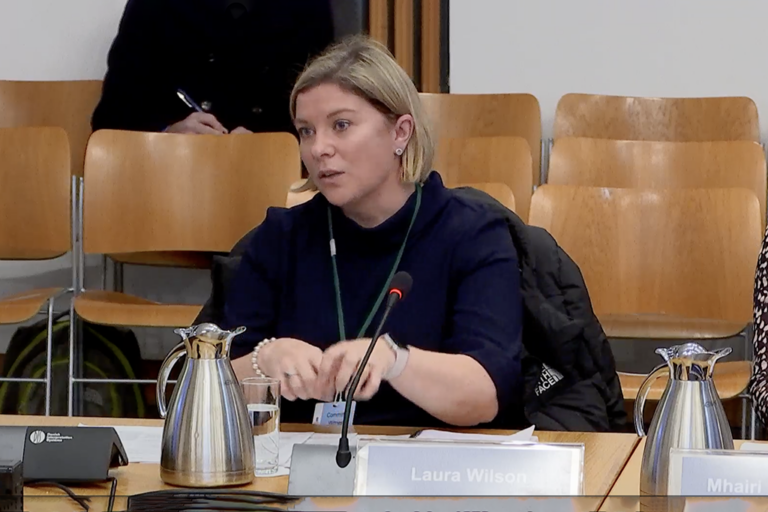
RPS Scotland advises parliamentary committee on remote and rural healthcare
RPS's Director for Scotland emphasises a holistic and 'whole system' Government policy approach around rural care, and training for pharmacists.

We are the Royal College of Pharmacy, the professional leadership body for pharmacists and pharmaceutical scientists. We exist to advance the safe and effective use of medicines, drive excellence in patient care and support pharmacists to deliver the highest standards of practice.
As the third largest workforce in healthcare, pharmacy plays a vital role in the health system, and as experts in medicines, pharmacists and their teams are central to patient care and public health. Our mission is to put pharmacy at the forefront of patient care, advancing the safe and effective use of medicines to the benefit of patients and the public.




Have any questions or comments on the new Royal College website?
Please visit our support page or email [email protected]

RCPharm Professional support
One-to-one support – every weekday, 9am until 5pm
Call 0207 572 2737 to speak to a member of our support team, or you can email us using the link below.
Our one-to-one support service is exclusively for RCPharm members.