Medicine shortages
Our work to highlight how medicine shortages affect patient care, the pressures on pharmacy teams, and recommendations to inform action.


Our focus on education and credentialing
RCPharm President Tase Oputu reflects on a significant moment for pharmacy and the College’s focus on education, professional development and credentialing.

Enhanced curriculum and credentialing
Supporting newly qualified pharmacist prescribers to develop their prescribing practice, build professional capability and progress with confidence.

RCPharm annual conference 2026
Bringing together pharmacists and pharmaceutical scientists from across the UK and beyond, this will be our first Annual Conference as the new Royal College.

For newly qualified pharmacists
This resource hub provides real-time practical support to ensure you develop the capability, confidence and professional judgement you need to prescribe safely and effectively.

Celebrating Black History Month 2026
Join us in celebrating Black History Month throughout October, to recognise and celebrate the invaluable contributions of Black people to British society and pharmacy.

What’s next for a community pharmacist prescribing service in England?
This episode of The PJ Pod reflects on the ‘Community pharmacy independent prescribing pathfinder programme’.
News
The latest news and updates from Royal College of Pharmacy.
-
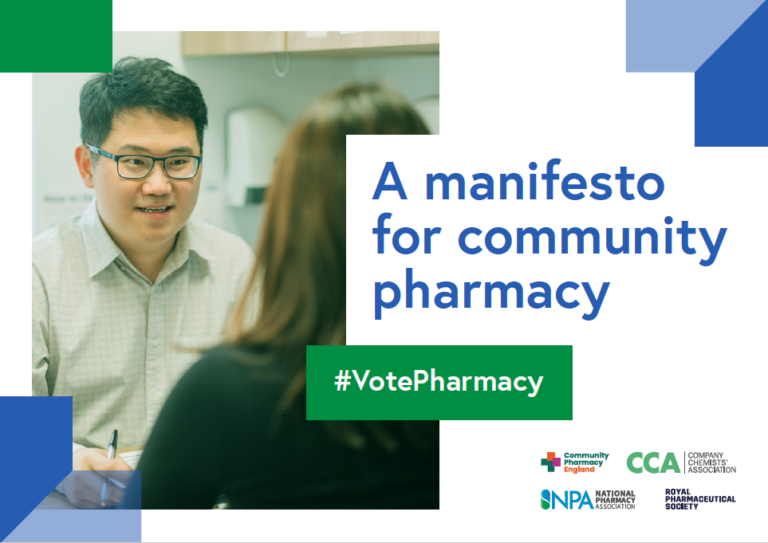
Pharmacy bodies launch community pharmacy manifesto
This news story was published when the organisation was the Royal Pharmaceutical Society. Community Pharmacy England, the Company Chemists’ Association, the National Pharmacy Association and the Royal Pharmaceutical Society have today published a joint manifesto for community pharmacy, ahead of the next general election. Pharmacy teams can use the manifesto to engage with political parties and candidates in the run-up to the election. The #VotePharmacy manifesto and other resources can be accessed from a new online general election hub, www.votepharmacy.org. The hub includes advice about engaging with candidates. Election candidates will be asked to show their support and back a six-point plan to “unleash the potential of community pharmacy”: Fill the funding gap, and commit to long-term sustainable funding, so pharmacies can deliver more of the NHS care patients need. Support and enhance the community pharmacy workforce to ensure that pharmacists and their teams can continue to meet the needs of patients now and in the future. Ensure that patients can access the medicines they need, including an end-to-end review of the medicines supply chain. Rollout an enhanced Pharmacy First service for England, mirroring the highly successful approaches taken in Scotland and Wales. Empower community pharmacists to do more, with an ambitious roadmap for independent prescribing. Make pharmacies centres for public health, prevention and reducing health inequalities. Tase Oputu, Chair of the Royal Pharmaceutical Society in England, said: “Community pharmacy plays a central role in the care of millions of patients each year, boosting vaccine uptake, tackling health inequalities and ensuring vital access to medicines. “But the system is also under pressure, and sustainable funding and support for the workforce will be crucial. “As more pharmacists become prescribers, it is vital the next government makes the most of this opportunity to transform patient care and ensure a positive future for community pharmacy at the heart of the nation’s health service.” All of these issues are highlighted in the RPS general election manifesto. Read more RCPharm news stories.
-
New report emphasises importance of research in pharmacy practice
This news story was published when the organisation was the Royal Pharmaceutical Society. The Royal Pharmaceutical Society welcomes the release of NHS England's report on the involvement of pharmacy professionals in research. The report proposes the implementation of a clinical academic training pathway for pharmacy professionals by 2030. RPS President, Professor Claire Anderson, along with Joseph Oakley, Associate Director for Assessment and Credentialing, and Professor Parastou Donyai, RPS Chief Scientist, participated in the working group responsible for developing the report. RPS President, Claire Anderson, said: “The RPS was delighted to contribute a co-chair and have representation on the short-life working group that produced the report. We wholeheartedly welcome its recommendations. Research is an essential pillar of professional practice, driving continued professional innovation and advancement in care for patients. “The RPS is committed to enhancing pharmacists’ research capabilities. Research is a common domain across the RPS post-registration curricula due to its importance for professional innovation and advancing patient care. We recently worked with NIHR to create e-learning modules for pharmacists starting their research journeys, along with support services and guidance for members. “Professional engagement with research, supported by a network of clinical academics, is vital for the profession’s growth; pharmacists are uniquely placed within the healthcare system to drive forward the evidence base on the safe and effective use of medicines. The report’s suggestion to embed RPS curricula frameworks into pharmacists’ job descriptions by 2026 aligns with our mission to integrate research activities across all pharmacy sectors. This initiative will grow a cohort of research-engaged pharmacists ready to lead the pharmacy research agenda. “Recognising pharmacists’ challenges in balancing research amidst busy frontline roles, we advocate for protected learning time, as outlined in our policy and echoed by the report. Adequate funding is crucial to overcoming these barriers and delivering the report’s vision.” Read more RCPharm news.
-
Annual RPS Workforce Wellbeing Survey results
This news story was published when the organisation was the Royal Pharmaceutical Society. The Royal Pharmaceutical Society has revealed the results of its fifth annual workforce wellbeing survey, in partnership with the profession’s charity, Pharmacist Support, shedding light on the mental health challenges faced by pharmacists. At a time when pharmacists are increasingly being asked to deliver transformational change in the face of significant workplace pressures, the survey underscores the urgent need for better support systems to combat burnout and promote wellbeing at work. The results show a worrying 86% of pharmacists are at high risk of burnout, emphasising the importance of addressing the underlying factors contributing to poor mental health and wellbeing. Top factors attributed to burnout include inadequate staffing (69%), lack of work-life balance (52%), insufficient protected learning time (50%), absence of colleague or senior support (46%), and long working hours (42%). Overall, 61% of respondents reported not being offered sufficient protected learning time to focus on their professional development and learning needs, despite the drive across pharmacy to provide more clinical services. The survey also exposes the distressing trend of workplace abuse, with 41% of pharmacists reporting verbal abuse primarily from the public, and 25% from colleagues or managers. Shockingly, 7% of respondents reported experiencing physical abuse in the workplace. RPS and Pharmacist Support will convene a roundtable at the end of February to review the latest findings with the NHS, professional bodies, employers, trade unions, education and regulators. Professor Claire Anderson, RPS President, said: “The survey results demonstrate the human cost of coping with the relentless workplace pressures that pharmacists and trainees experience daily. The solutions require collaborative efforts from governments, employers and the NHS to create more supportive and fulfilling work environments. “As more pharmacists take on prescribing roles, the need for protected learning time becomes paramount. Without it, ambitions to expand prescribing services will be frustrated. A significant increase in learning opportunities for prescribers, and in workplace supervision capacity for designated prescribing practitioners, is essential. “No one should have to face abuse in the workplace. Such behaviour undermines the well-being of individuals and compromises the quality of care provided to patients.” Chief Executive of Pharmacist Support, Danielle Hunt said: "This annual joint workforce wellbeing survey is such an important piece of work which helps us to continue to highlight the ongoing issues impacting individuals within the pharmacy profession. This year’s results are yet another stark reminder of the urgent need for action to address the mental health challenges faced by pharmacists. It is imperative that we use this valuable information to inform concrete steps towards creating more supportive and sustainable work environments within the pharmacy profession. “The survey is an invaluable source of data that can inform necessary action. Informed by the results of previous year’s survey findings the charity has developed and launched a new course for pharmacy managers and leaders entitled ‘Embracing a Workplace Wellbeing Culture’. We recognised the need to move the conversation beyond individual mental health and broaden the focus of our work to supporting positive workplace culture. “Chairing the roundtable on wellbeing, hosted in partnership with the RPS and attended by representatives from the NHS, professional bodies, employers, trade unions, education and regulators, is part of our ongoing commitment to supporting meaningful dialogue and action to improve the working conditions and wellbeing of pharmacy professionals. Together with our partners, we are committed to championing initiatives that promote wellbeing and combat burnout, ensuring that pharmacists can thrive in their roles and continue to provide high-quality care to their patients. Find out more about our survey results and our work on workforce wellbeing. Read more RCPharm news stories
-

Community pharmacies hit 40m COVID-19 vaccinations
This news story was published when the organisation was the Royal Pharmaceutical Society. Following news that community pharmacies in England had administered over 40m COVID-19 vaccinations by the end of 2023, and that the sector has provided a quarter of all COVID vaccinations to date, Director of RPS in England Dr James Davies said: "This is a fantastic achievement and a testament to the hard work and dedication of the thousands of community pharmacists and pharmacy teams across the country. “Pharmacies are at the heart of communities and expanding vaccination services will play a key role in reducing health inequalities, in particular in deprived areas where trusted local pharmacists have proven they can help address vaccine hesitancy. “With the right support and resources, pharmacists are ideally placed to expand vaccination coverage, engaging with their local communities to boost uptake and support public health and disease prevention." Read more RCPharm news stories.
-
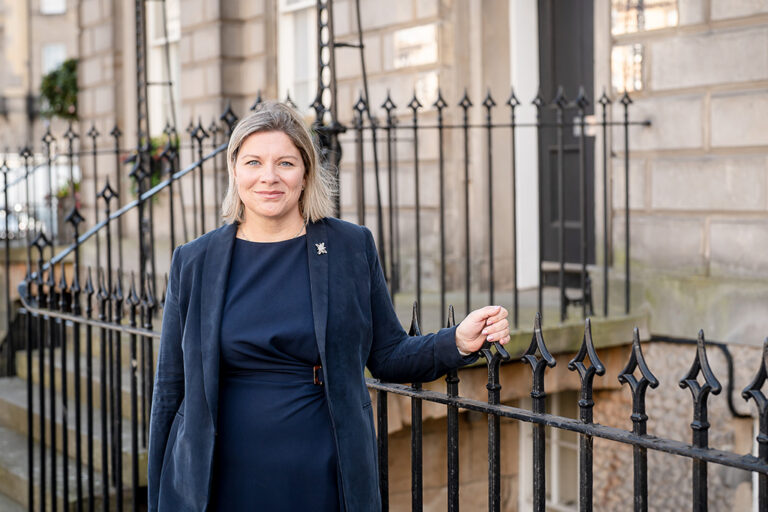
Christina McKelvie MSP Appointed Minister for Drugs and Alcohol Policy
This news story was published when the organisation was the Royal Pharmaceutical Society. Scottish government has announced that Christina McKelvie has been appointed Minister for Drugs and Alcohol policy, following the resignation of Elena Whitham MSP as Drug and Alcohol Minister. Royal Pharmaceutical Society would like to put on record our thanks to Ms Whitham for working with us during her time as Drug and Alcohol Minister, and particularly for her efforts to bring in a new national service to provide emergency access to supplies of naloxone. RPS Scotland has consistently called for naloxone to be available from every community pharmacy for supply to people who use drugs, family, healthcare professionals, and for it to be available in all clinical settings for use in emergencies. This new service across the community pharmacy network is a huge step forward in achieving this, and is recommendation number one from our policy on Pharmacy’s role in reducing harm and preventing drug deaths. We know there is so much more to do to reduce harm and prevent drug deaths across Scotland and look forward to working with Ms McKelvie to take many of our policies on this forward. We will be writing to Ms McKelvie to secure an introductory meeting with her as soon as possible. Commenting on the news, Laura Wilson, Director of RPS Scotland, said: “Pharmacy teams have a huge role to play in reducing harm and preventing drugs deaths across Scotland. We’re pleased with some of the policy steps which have been taken so far, most notably the national naloxone service brought in last year, which is extremely welcome. "There is still so much to do, and we look forward to working with Ms McKelvie, and Scottish government more widely, to implement additional policies to reduce harm and prevent drug deaths.” Read more RCPharm news stories.
-

Pharmacists warn of impact of prescription charges on patient care
This news story was published when the organisation was the Royal Pharmaceutical Society. Pharmacists have warned they are increasingly seeing patients in England declining to take vital medicines owing to the cost of prescription charges. Responding to a survey by the Pharmacists’ Defence Association and Royal Pharmaceutical Society, more than one-third of pharmacists (35%) said they have seen an increase in patients declining prescriptions in the past 12 months. The vast majority of respondents (97%) have seen cases where patients decline some of the medicines on a prescription owing to cost. More than one-quarter (26%) said they saw this often. The type of medicines being declined include those for blood pressure, inhalers, pain relief, statins and mental health. The warning adds to the voices of leading patient groups calling for reform to prescription charges. The Pharmacists’ Defence Association and the Royal Pharmaceutical Society are members of the Prescription Charges Coalition, a coalition of more than 50 organisations including leading patient groups, calling on the Government to scrap prescription charges for people with long-term conditions in England. Chair of the Royal Pharmaceutical Society in England Tase Oputu said: “These survey results show a worrying rise in people not taking up the medicines they have been prescribed. Amid an ongoing cost of living crisis, prescription charges risk widening health inequalities in England. “Nobody should face a financial barrier to accessing the medicines they need to stay well. Prescription charges are an unfair tax on health and increase the risk of avoidable hospital admissions, piling on pressure to the wider health service. “The prescription charges system is confusing for patients and creates unnecessary bureaucracy for pharmacy teams who want to focus their time on patient care. “In a general election year, I hope that political parties can commit to properly reviewing this complex and unjust system. It is high-time this stealth tax was abolished.” Read the survey results The call to scrap prescription charges in England is a vital issue in our general election manifesto. Find out how you can support the campaign at www.rpharms.com/manifesto You can also sign this petition calling on the government to freeze the annual prescription charge increase in 2024/2025

We are the Royal College of Pharmacy, the professional leadership body for pharmacists and pharmaceutical scientists. We exist to advance the safe and effective use of medicines, drive excellence in patient care and support pharmacists to deliver the highest standards of practice.
As the third largest workforce in healthcare, pharmacy plays a vital role in the health system, and as experts in medicines, pharmacists and their teams are central to patient care and public health. Our mission is to put pharmacy at the forefront of patient care, advancing the safe and effective use of medicines to the benefit of patients and the public.




Have any questions or comments on the new Royal College website?
Please visit our support page or email [email protected]

RCPharm Professional support
One-to-one support – every weekday, 9am until 5pm
Call 0207 572 2737 to speak to a member of our support team, or you can email us using the link below.
Our one-to-one support service is exclusively for RCPharm members.