Medicine shortages
Our work to highlight how medicine shortages affect patient care, the pressures on pharmacy teams, and recommendations to inform action.

World Patient Safety Day (WPSD) 2026
This year’s World Patient Safety Day theme focuses on safe and effective care for people living with noncommunicable diseases (NCDs), under the slogan ‘Safe care for life!’.

Our focus on education and credentialing
RCPharm President Tase Oputu reflects on a significant moment for pharmacy and the College’s focus on education, professional development and credentialing.

Enhanced curriculum and credentialing
Supporting newly qualified pharmacist prescribers to develop their prescribing practice, build professional capability and progress with confidence.

RCPharm annual conference 2026
Bringing together pharmacists and pharmaceutical scientists from across the UK and beyond, this will be our first Annual Conference as the new Royal College.

For newly qualified pharmacists
This resource hub provides real-time practical support to ensure you develop the capability, confidence and professional judgement you need to prescribe safely and effectively.

Celebrating Black History Month 2026
Join us in celebrating Black History Month throughout October, to recognise and celebrate the invaluable contributions of Black people to British society and pharmacy.
News
The latest news and updates from Royal College of Pharmacy.
-

Scottish Government must take further action to tackle drug deaths says the Royal College of Pharmacy
The Royal College of Pharmacy is calling for more to be done by the Scottish Government to tackle drug deaths after figures published by National Records for Scotland revealed an 11% increase in deaths compared to 2024. Responding to the latest national figures, the College re-stated its commitment to working with Scottish Government and partners to reduce harm from drugs and drug deaths. In 2021 the College published a report, ‘Pharmacy’s role in reducing harm and preventing drug deaths’, making 14 recommendations which have been partially implemented by Scottish Government. Key recommendations included that all pharmacists should have access to shared patient records to enhance patient safety and better management of patient transitions between care settings, which have not yet been addressed. Following the new figures, the College would welcome immediate discussions with Scottish Government and partners to consider what further national policy changes are required, and how they could be practically implemented on the ground to save lives. Laura Wilson, Director for Scotland at the Royal College of Pharmacy said: “Every death from drug misuse is a tragedy for the individual as well as family, friends, and their wider community. We are shocked to see such an increase in drug related deaths. “We are committed to working with Scottish government and partners to reverse this trend. “Nitazenes and other synthetic opioids being mixed with existing drugs are causing serious harm, and this could be a significant factor which explains the rise in drug deaths. “We stand ready to work with Scottish Government and all other partners to ensure that our recommendations are implemented in full.” Read more news.
-

College sets out new expectations for pharmacists working in aesthetics
The Royal College of Pharmacy (RCPharm) has published an updated position following a review of aesthetic practice, setting out professional expectations for pharmacists who provide non-surgical cosmetic procedures. As the industry grows and public demand for cosmetic procedures increases, the new statement makes clear that procedure-specific training alone is not sufficient for pharmacists to practise independently in this area. Safe and effective aesthetic practice also requires appropriate clinical experience, supervised practice and the necessary competence. The review was carried out in response to legislative changes and a growing number of enquiries to the College about aesthetic practice. In the statement, RCPharm strengthens the emphasis on the broader clinical responsibilities involved in delivering aesthetic treatments, recognising that pharmacists must be able to assess whether treatment is appropriate for an individual, consider psychological wellbeing, identify and manage risks, and respond effectively to complications. It also sets out expectations around the wider governance of aesthetic practice, including appropriate premises, product safety, record keeping, ongoing professional development and arrangements for emergency care. RCPharm recommends that pharmacists should not provide aesthetic procedures to people under 18. The change comes as the regulatory landscape for non-surgical cosmetic procedures continues to develop across the UK, including recent legislation in Scotland to strengthen safeguards in this area. As requirements differ across the four nations, pharmacists are responsible for ensuring their practice complies with the standards and legal obligations that apply where they work. Tase Oputu, RCPharm President, said: “Aesthetic practice is an evolving area and pharmacists working in this space need to be able to demonstrate that they have the right skills, experience and competence to provide safe, high-quality care. “This updated statement reinforces the importance of putting safety at the heart of aesthetic practice. Pharmacists need to have the experience and professional judgement to put the individual first, recognise when a treatment may not be appropriate and make sure the individual is properly supported if things don't go as planned.” Read the updated position statement. Read more news stories.
-

College supports APTUK intention to develop a UK-wide post-registration career development pathway
Commenting on the first day of APTUK’s consultation period on its proposals to develop a UK-wide post-registration career development pathway for pharmacy technicians, Louise Goldring, Director of Education at the Royal College of Pharmacy said: (Paul Stuart) “We support APTUK’s intention to create a UK-wide post-registration career development pathway for pharmacy technicians. We welcome the opportunity for the whole pharmacy community to comprehensively engage in the detail of APTUK's proposals and will actively consult with our members to ensure that their voices and opinions are heard. We have had initial, collaborative discussions with APTUK and look forward to building on this now that we have time to review the draft proposals in detail during the forthcoming consultation phase.” Read more news stories.
-

Royal College of Pharmacy supports pioneering initiative to improve inclusion in health research
The Royal College of Pharmacy has welcomed the launch of Northern Ireland's first Mobile Health Research Service, a new initiative aimed at improving participation in health research among underserved communities to help make it more accessible, representative and inclusive. The service, developed by the Western Health and Social Care Trust in partnership with the Centre for Research Equity at the Nuffield Department of Primary Care Health Sciences, University of Oxford, brings research opportunities directly to communities through a dedicated mobile unit, where people can learn about research studies, ask questions and make an informed choice about whether taking part is right for them. Procedures such as blood pressure monitoring, ECGs, height and weight measurements, blood sampling and other research-related health checks can also be carried out at the unit, helping to improve participation among people living in rural, remote and socioeconomically disadvantaged areas. The programme has been developed with support from Professor Mahendra Patel OBE, a Vice President of the College and Director of the Centre for Research Equity, Nuffield Department of Primary Care Health Sciences, University of Oxford. Professor Mahendra Patel OBE, Vice-President of the College, said: "Health research can only improve health outcomes if everyone has a fair opportunity to take part. Too often, the people who stand to benefit most from research face practical, cultural or social barriers to participation. "This initiative demonstrates how we can take research directly to communities, helping build trust, improve engagement and ensure the evidence that informs future healthcare better reflects the diversity of the population it serves. "By reaching people who have traditionally been underrepresented in research, we can help address health inequalities and create a stronger evidence base for the future." Tase Oputu, President of the College, said: "Reducing health inequalities requires innovation, collaboration and a commitment to ensuring every community has a voice in shaping healthcare. "The Royal College of Pharmacy supports efforts to improve inclusion, reduce health inequalities and strengthen public confidence in health research. We hope lessons learned from the initiative will help inform similar approaches across the UK." Read more news stories.
-
Royal Colleges call for review of propranolol safety information
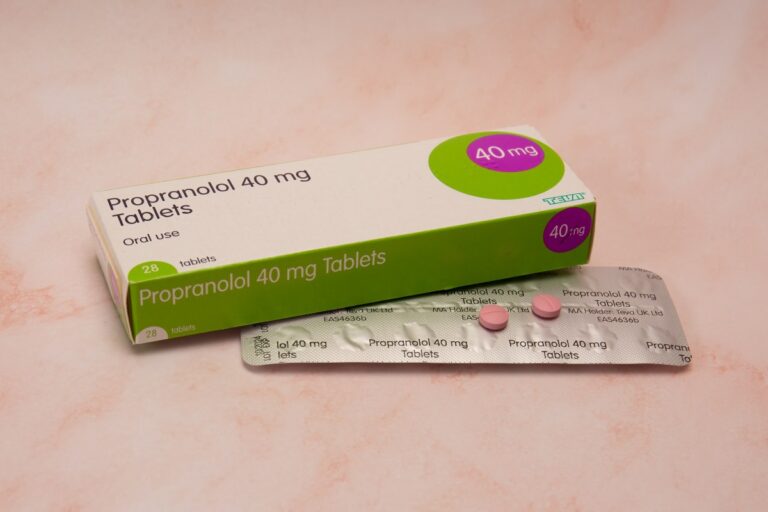
Patient safety concerns over use of the medicine propranolol for generalised anxiety have prompted leading experts to call for a review of the medicine's safety information, particularly around overdose, self-harm and suicide risk. The Royal College of Pharmacy and the Royal College of Physicians Medicines Safety Joint Working Group, in collaboration with the National Poisons Information Service, has written to the Medicines and Healthcare products Regulatory Agency (MHRA) requesting updates to the medicine’s Summary of Product Characteristics. The request is based on evidence and clinical experience which indicate that the current licensed indication for propranolol in generalised anxiety is problematic for a number of reasons: There is no proven evidence that propranolol is effective in the treatment of generalised anxiety disorder. Propranolol poisoning is life-threatening, difficult to treat and is associated with a significant number of deaths. Prescribing for propranolol in general practice is increasing*, partly because the medicine is perceived to be relatively safe. Patients at increased risk of overdose, including those taking antidepressants or with a history of overdose, continue to be prescribed propranolol. The letter to the MHRA is part of a wider programme of activity led by the Royal College of Pharmacy (RCPharm) and Royal College of Physicians (RCP) Medicines Safety Joint Working Group to improve understanding of medication-related risks and support safer prescribing across the healthcare system. Kate Ryan, Joint Chair of the RCP/RCPharm Medicines Safety Joint Working Group, said: "Patient safety is at the heart of this work. While propranolol remains an effective treatment for many patients, its use for anxiety presents challenges. We are concerned about the serious consequences of overdose, particularly for vulnerable individuals." Dr Zuzanna Sawicka, Joint Chair of the RCP/RCPharm Medicines Safety Joint Working Group, said: "We are asking the MHRA to review whether the current indication for generalised anxiety disorder and associated safety information remain appropriate. Strengthening awareness of these risks among healthcare professionals and patients could support safer prescribing decisions and help prevent avoidable harm." The joint Medicines Safety Group will also be supporting an NHS England Patient Safety Team short-life working group examining this issue, including consideration of non-pharmacological and supported self-care options for patients. Today is World Patient Safety Day; explore our resources to support patient safety. Read more news stories.
-

Royal College of Pharmacy updates guide for chief pharmacists to support pharmacy leaders
The Royal College of Pharmacy (RCPharm) has updated its guide for chief pharmacists, directors of pharmacy and senior pharmacy leaders. The new guide for chief pharmacists or equivalent is a practical reference and signposting resource that reflects the significant changes in healthcare policy, pharmacy legislation and service delivery since it was originally developed in 2017. It also provides updates on the evolving responsibilities of pharmacy leaders across England, Scotland and Wales. The refresh follows the General Pharmaceutical Council’s (GPhC) publication of its Standards for Chief Pharmacists (2025). The standards apply across England, Scotland and Wales and aim to strengthen pharmacy governance. RCPharm’s updated guide is designed to support chief pharmacists and directors of pharmacy in meeting the standards as part of their roles. Following consultation with national pharmacy networking groups, the guide covers artificial intelligence, genomics, cyber security, staff governance and wellbeing. It also provides greater information on specialist areas of pharmacy, including mental health and the independent sector. Emily Kennedy, Head of Professional Standards at the Royal College of Pharmacy, said: “The role of the chief pharmacist has changed significantly, and pharmacy leaders are now navigating increasingly complex professional, governance and service demands. This updated guide brings together practical, up-to-date information and resources to help them meet those demands and support safe, effective pharmacy services.” Explore the guide for chief pharmacists or equivalent. Read more news stories.

We are the Royal College of Pharmacy, the professional leadership body for pharmacists and pharmaceutical scientists. We exist to advance the safe and effective use of medicines, drive excellence in patient care and support pharmacists to deliver the highest standards of practice.
As the third largest workforce in healthcare, pharmacy plays a vital role in the health system, and as experts in medicines, pharmacists and their teams are central to patient care and public health. Our mission is to put pharmacy at the forefront of patient care, advancing the safe and effective use of medicines to the benefit of patients and the public.




Have any questions or comments on the new Royal College website?
Please visit our support page or email [email protected]

RCPharm Professional support
One-to-one support – every weekday, 9am until 5pm
Call 0207 572 2737 to speak to a member of our support team, or you can email us using the link below.
Our one-to-one support service is exclusively for RCPharm members.