Medicine shortages
Our work to highlight how medicine shortages affect patient care, the pressures on pharmacy teams, and recommendations to inform action.

World Patient Safety Day (WPSD) 2026
This year’s World Patient Safety Day theme focuses on safe and effective care for people living with noncommunicable diseases (NCDs), under the slogan ‘Safe care for life!’.

Our focus on education and credentialing
RCPharm President Tase Oputu reflects on a significant moment for pharmacy and the College’s focus on education, professional development and credentialing.

Enhanced curriculum and credentialing
Supporting newly qualified pharmacist prescribers to develop their prescribing practice, build professional capability and progress with confidence.

RCPharm annual conference 2026
Bringing together pharmacists and pharmaceutical scientists from across the UK and beyond, this will be our first Annual Conference as the new Royal College.

For newly qualified pharmacists
This resource hub provides real-time practical support to ensure you develop the capability, confidence and professional judgement you need to prescribe safely and effectively.

Celebrating Black History Month 2026
Join us in celebrating Black History Month throughout October, to recognise and celebrate the invaluable contributions of Black people to British society and pharmacy.
News
The latest news and updates from Royal College of Pharmacy.
-
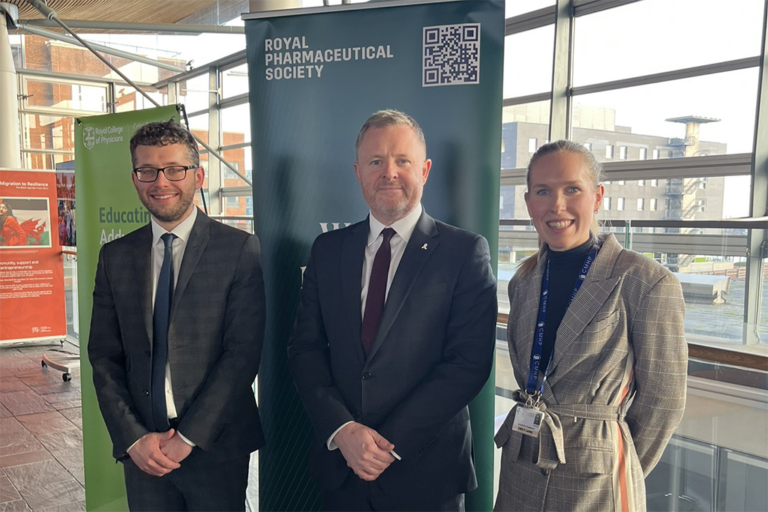
Pharmacists highlighted for key role in mental health support at the Senedd
This news story was published when the organisation was the Royal Pharmaceutical Society. The Royal Pharmaceutical Society in Wales recently showcased the important role pharmacists play in mental health care and support during a multi-professional briefing at the Welsh Parliament, Senedd. The event was co-hosted by members of the Royal College Mental Health Expert Advisory Group Wales, a collaborative that unites royal colleges and professional organisations to discuss mental health services and provide expert advice to the Welsh Government, NHS Wales and other stakeholders. Joining the RPS Wales team at the Senedd was Emily Laing, Principal Pharmacist for Mental Health at Cwm Taf Morgannwg University Health Board. Key messages were shared with politicians, emphasising the significant impact pharmacists have on mental health care. Some of our key messages included: Expertise in medicines: Pharmacists’ specialist knowledge ensures optimal medication regimens and avoids harmful polypharmacy for patients with mental health conditions, whether in hospitals or the community Workforce planning: Consistent workforce planning across Wales is essential to ensure every mental health multidisciplinary team includes a specialist pharmacist Prevention and early support: Pharmacists across all sectors play a vital role in prevention efforts, helping to identify and support individuals showing early signs of mental health decline. Commenting on the event, Elen Jones, director of RPS Wales, stated: “RPS Wales is delighted to represent the profession on the Royal College Mental Health Expert Advisory Group and collaborate with colleagues across professions to drive positive changes for mental healthcare. “I’m particularly grateful to Emily for her invaluable expertise at the event. She did a great job in bringing to life how pharmacists’ skills have a tangible impact on patients’ quality of life. “At RPS Wales, we look forward to continuing our active involvement with the Royal College Mental Health Expert Advisory Group, ensuring the crucial role of pharmacists is recognised and continues to develop within mental health service provision.” Emily Laing, principal pharmacist for mental health at Cwm Taf Morgannwg University Health Board, said: “It was great to be able to share my experience and explain in detail to the elected members the value our skills as pharmacists bring to our patients and to mental health multidisciplinary teams. Thanks to RPS for the opportunity.” Read more RCPharm news stories.
-

Our response to Guild of Healthcare Pharmacists open letter
This letter was published when the organisation was the Royal Pharmaceutical Society. Following the open letter sent to us by the Guild of Healthcare Pharmacists (GHP), we have responded to them and have set out our response below: Dear Rob, Thank you for your recent letter concerning our Constitution and Governance Review. The Royal Pharmaceutical Society (RPS) is currently engaged in a conversation with our members and the wider profession about our proposals for change and our ambition to become a Royal College. These proposals are being set out for pharmacists and pharmaceutical scientists (whether members or not) via a series of ‘roadshow’ engagement events across GB during October and November. A recurring focus of the conversations we are having at these events is our ambitions to integrate credentialing into the profession; some of the questions about credentialing are echoed in the Guild Council’s letter. We are happy to clarify the benefits we envisage will flow from the further embedding of credentialing and to address some of the other points raised by the Guild Council. The key purpose of RPS credentialing is to protect the public and the integrity of the pharmacy profession through assuring patient-focused pharmacists (i.e., roles that have a direct impact on individual patients and/or patient populations) working at advancing levels of post-registration practice. Defining and assuring post-registration professional standards is a fundamental activity for a royal college and thus fully aligned with our proposals for change. Credentialing provides considerable benefits for pharmacists and the system. For a pharmacist, credentialing can support a standard professional career structure which offers potential for advancement. Credentialing also engenders professional confidence and pride, increases professional cohesion and provides a mechanism by which the skills and capabilities of an individual are recognised. We have also heard from candidates about the benefits they have gained from successfully undertaking credentialing; including increased confidence, improved practice and greater integration within the wider multidisciplinary team. For the employer and wider system, credentialing provides an objective and validated assurance mechanism for employee capability within and across organisations which can inform fair and valid career progression and recruitment decisions, assure consistency across the system and improve workforce portability. It also provides a mechanism by which other health professionals and patients can recognise the level of practice of the pharmacy workforce. We have heard of pharmacists having to ‘re-prove’ their level of practice when they have moved employer, sector, or location, with some having to restart a training pathway from scratch to meet specific regional or national training requirements. This is not efficient or effective for the service, the employer or the pharmacist and is addressed by embedding credentialing in the profession. RPS, in collaboration with the pharmacy profession, has been developing our credentialing model over the last 4 to 5 years and we recognise there is much work ahead of us, in continued partnership with many others in the pharmacy ecosystem, to ensure the full value of credentialing can be realised to the benefit of pharmacists, patients and the public. The changes and opportunities that lie ahead for the pharmacy profession act as a call for action for this change. Medicines, and therefore pharmacy practice, are advancing and becoming more complex; this is mirrored by patients’ healthcare needs. In tandem, the role of the pharmacist in delivering healthcare services within the wider multidisciplinary team is evolving rapidly across community, primary, and secondary care settings, including the prescribing of medicines from point of registration from 2026. We recognise that collaboration is vital in order to enable the integration of credentialing, and we are committed to continued engagement with employers across GB during 2025 and beyond to highlight the value of credentialing for them and their employed pharmacists. We will continue working closely with the Chief Pharmaceutical Officers, Pharmacy Deans and other NHS leaders, and will collaborate with professional representative bodies and other stakeholders, to demonstrate the value credentialing brings to the profession, patients and the wider healthcare system. Introducing a formal progression model into the post-registration space will involve additional effort and cost but we believe that these will be proportionate to the benefit (to patients, pharmacists and the profession) they will bring. NHS education commissioners have already supported pharmacists to engage with credentialing by, for example, providing access to the RPS post-registration foundation e-Portfolio, supporting post-registration foundation candidates through credentialing via national training programmes and funding candidates through core advanced credentialing. We will continue to advocate for employer and system support for the further rollout of credentialing. Credentialing has already been integrated into NHS policy as a requirement to progress to consultant pharmacist roles, in all sectors, including the NHS managed sector, as articulated in the NHS Consultant Pharmacist Guidance. Integrating all levels of credentialing meaningfully into the profession will require collective action and support and achieving this will not be achieved by the RPS or any future royal college in isolation. To be fully woven into the profession, credentialing needs to be integrated into job descriptions, job plans and career progression (including remuneration). We continue to drive for this through our advocacy work. And of course, pharmacists need to be supported. We agree that ensuring pharmacists have the time, space and support to develop professional practice portfolios is essential to integrating credentialing meaningfully in the profession. We have advocated for this through our Protected Learning Time policy and we recognise the need for more effective job planning. RPS curricula describe the recommended level of commitment from employers required to support a pharmacist undergoing a credentialing pathway. We’d like to emphasise that RPS credentialing is not a micro credential in a specific area of clinical practice but the assurance of a level of practice. When credentialing at core advanced level, we are assuring clinical and non-clinical capabilities (for example leadership) which align to the multiprofessional definitions of advanced practice in other professions. Where there is a patient and system need for specific clinical definition and assurance, we will continue to collaboratively develop specialist curricula, as we have done recently in critical care with the UK Clinical Pharmacy Association (UKCPA) and mental health in collaboration with the College of Mental Health Pharmacy (CMHP). The requirements of the specialist curricula can be demonstrated at the same time as the core advanced credentialing process or separately, depending on the pharmacist’s career preferences. Moving away from the question of credentialing and considering the wider ambitions of our proposal for change, we must consider governance. Governance mechanisms exist to ensure appropriate decisions are made in line with the organisation’s ambitions. Our rigorous governance review aims to embed transparency in the way we work and ensure that the future Royal College remains led by the profession. Our intent to register as a charity further ensures that there are appropriate external frameworks and scrutiny in place so that we meet our intended objective of advancing the science and practice of pharmacy, with patient and public benefit at the forefront of our work. We look forward to constructive dialogue with the Guild Council over the coming months as we refine our proposals for change and prepare to set the final proposition before our membership for a vote in early 2025. Meanwhile we invite Guild members together with all pharmacists and pharmaceutical scientists to attend one of our roadshow events and/or to find out more about the proposals for change. Yours sincerely, Paul Bennett FRPharmS, Chief Executive, Royal Pharmaceutical Society
-
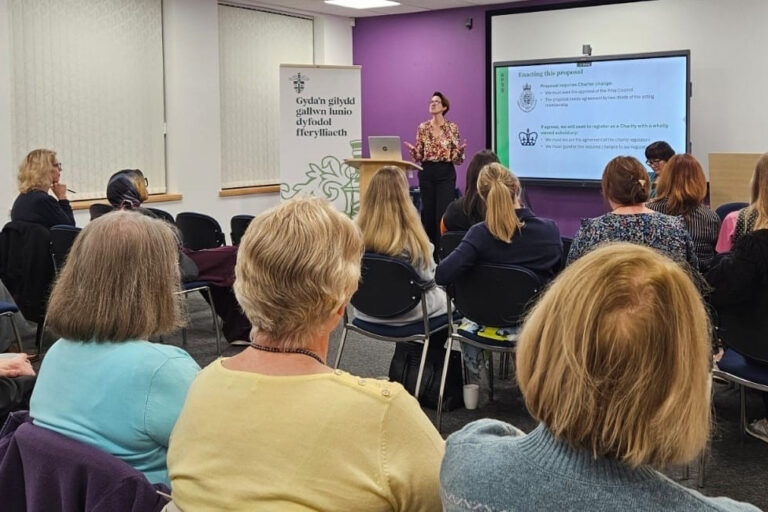
Open conversations, challenging questions and the case for change: roadshow reflections so far on seeking to become a royal college
This article was published when the organisation was the Royal Pharmaceutical Society. As you may know, we have recently announced our proposals for change and our ambition to become a royal college following an in-depth, 18-month review of our constitution and governance. Over the past few weeks, I've been out and about with the RPS team at our roadshow events across Great Britain meeting pharmacists and pharmaceutical scientists and setting out our proposals for change and our future ambitions. We’ve been delighted with the warm welcome we have had at our roadshow events so far, there have been challenging, insightful and intriguing questions at each event — as part of meaningful conversations and informed enquiry, and there has been a high level of interest and engagement in the detail we are sharing about our governance proposals. We’ve been calling this the ‘information and conversation’ stage of the process and it's really important to us that we are open and transparent about the journey we’ve been on to inform these proposed changes — and about what will happen next. So as we mark the halfway point in our series of roadshow events, I’d like to share my reflections so far. Firstly I’d like to thank everyone who has come along so far to meet with me, our Chief Executive Paul Bennett, Deputy Chief Executive Karen Baxter and Associate Director of Communications and Marketing Liz North. It’s essential we develop the final proposals, and our future strategy, with your concerns and questions in mind and we are committed to hearing your views and having an open conversation. We’ve had significant discussions about the principles that have guided our proposals and the particular areas of interest and concern that the proposals and our royal college ambitions have engendered. We welcome even challenging questions as they will help us ensure we take all points into consideration in the drafting of the final proposals we will put before our membership early in 2025. Your contributions are hugely important and we are capturing the questions and discussions at the roadshow events and will bring these together into a report which we’ll publish in December for our members and the wider pharmacy community. I’m convinced it’s time for pharmacy to take its rightful place alongside other health and medical professional leadership bodies and for RPS to seek to become a royal college — the Royal College of Pharmacy. As the professional leadership body, we need to be in a strong position to respond to change, to support the profession and to truly inhabit our leadership role for pharmacy, to the benefit of patients and the public. We believe that enacting these changes will enable us to better advocate and deliver our mission and vision, ensuring that pharmacy is always at the forefront of the safe and effective use of medicines. Enacting the proposed changes is dependent on a vote of support by our members, which we expect to take place in early 2025. Endorsement by a two-thirds majority of those members who vote will enable the changes to progress. We will set out the detail for consideration in good time before the vote and we want to we hope you will support the proposals and vote for the change. You can find out more about the proposals on our website. Catch up with our FAQs, which include what the new post-nominals are expected to be and who will be able to vote. You can also contact us at [email protected] with any questions, comments or concerns you have. In the meantime I really look forward to seeing you at one of our upcoming roadshow events, where you can find out more, have your say and together we can debate and discuss the future of pharmacy.
-

Pharmacists’ role in mental health highlighted at Plaid Cymru Conference
This news story was published when the organisation was the Royal Pharmaceutical Society. The crucial role pharmacists play in mental health care was discussed at the recent Plaid Cymru Autumn Conference. During a main stage panel hosted by the Royal College of Psychiatrists in Wales, RPS Wales Director Elen Jones emphasised how pharmacists across all sectors are supporting individuals with mental health challenges. The panel, chaired by Plaid Cymru’s Health Spokesperson, Mabon ap Gwynfor MS, also featured newly elected Ynys Môn MP Llinos Medi, Ollie John, National Manager of RCPsych in Wales, and Dr. Katie Fergus, Consultant Rehabilitation Psychiatrist at Cardiff & Vale University Health Board. Several important points on pharmacy’s role were made by Elen during the discussion, such as: The accessibility and strong relationships community pharmacy teams have with their patients, enabling them to identify potential signs of poor mental health and encourage patients to access further support. The vital role community pharmacies and primary care pharmacists play in providing mental health support, including bilingual posters created by RPS member Anna Mathews, which detail available mental health resources across Wales. The crucial role specialist mental health pharmacists play as a part of multidisciplinary mental health teams, ensuring patients can benefit from personalised, safe, and effective medication regimens. The need for a consistent approach across Wales for specialist mental health pharmacy, with more opportunities for pharmacy technicians and at consultant level for pharmacists, which are already in some Health Boards. The critical importance of offering mental health care in Welsh for those who speak it as their first language and the excellent opportunities being developed at undergraduate level for bilingual healthcare learning through the Coleg Cymraeg Cenedlaethol. After the session, Elen commented: “Pharmacists across Wales play a vital role in supporting mental health. It was a privilege to share this with politicians and delegates at the Plaid Cymru Conference, and to highlight that patients should benefit from pharmacists' medicines expertise consistently across the country.” “I’m grateful to the Royal College of Psychiatrists in Wales for inviting me to provide a pharmacy perspective on the panel. It’s always a pleasure working with Ollie, Katie and the team. We’re looking forward to an upcoming Senedd briefing in collaboration with them and other royal colleges/professional bodies in November, where we’ll discuss the diverse roles of the mental health multidisciplinary team.” Read more on the role of pharmacy in mental health and wellbeing. Read more RCPharm news stories.
-
Pharmacy pressures highlighted in Welsh Senedd
This news story was published when the organisation was the Royal Pharmaceutical Society. Members of the Senedd (MSs) have been hearing about the pressures community pharmacists and their teams are facing and the support required for the sector. In a joint event by the RPS and Community Pharmacy Wales (CPW), MSs gathered over Tuesday lunchtime for a briefing on the state of community pharmacy in Wales – touching on both the tireless and high-quality work of community pharmacy teams and the various pressure points that are affecting the sector at present. The discussions focused on the worrying trend of community pharmacy closures in Wales, with 26 shutting down since July 2020. This is coupled with feedback from both the RPS and CPW membership that pressures on the sector are also leading to both reduced opening and staffing hours. Other key issues raised included the need for protected learning time, challenges in securing vital medications, and the decline in real-time funding for the reimbursement of medicines. Commenting on the briefing event, RPS Wales Director Elen Jones said: “It was uplifting to hear strong support and appreciation from the politicians for community pharmacy, along with recognition of pharmacists’ expanding clinical and prescribing roles and the vital contribution this has made to the NHS in recent years. "In our discussions, we emphasised our support to sustain and expand the clinical and prescribing roles of community pharmacists as set out in 'Pharmacy; Delivering a Healthier Wales' and the contractual framework for community pharmacies in Wales; ‘Presgripsiwn Newydd/A New Prescription’. However, for this to occur, the concerns and pressures facing the sector must be heard and addressed. "I’d like to thank CPW for joining us for this event and hope their upcoming discussions with the Welsh Government result in increased support for the community pharmacy sector. At RPS Wales, we will continue to raise important issues for our members at the Senedd, with our next quarterly briefing event scheduled for December due to focus on our upcoming report on medicines shortages." Read more RCPharm news stories.
-

Celebrating East and Southeast Asian Heritage Month 2024
This news story was published when the organisation was the Royal Pharmaceutical Society. For the first time, we celebrated East and Southeast Asian Heritage Month, embracing this year’s theme “Changing Seasons” to acknowledge the evolving experiences, cultures and identities of individuals within the pharmacy profession. Throughout the month, we showcased inspiring stories on our social media platforms, highlighting how East and Southeast Asian heritage has shaped the careers of pharmacy professionals. Using the #ESEAHM and #RPSIandD, we encouraged you to share your diverse perspectives. Read all the stories here. (RCPharm) We also hosted our first ABCD meeting after the summer break. The meeting aimed to honour the invaluable contributions of the ESEA communities in the field of pharmacy. A panel of pharmacy professionals, including Brendon Jiang, RPS England Pharmacy Board Vice Chair and Helen Kilminster, Primary Care Pharmacy Association National Vice President, shared their personal experiences, shedding light on how their heritage and culture have influenced their careers. Plus, Brendon shared his reflections on East and Southeast Asian Heritage Month in his latest blog, delving into the profound impact of cultural heritage, identity, and representation within the pharmacy profession. We want to thank everyone who engaged and participated throughout the month. This is our first time celebrating ESEA Heritage Month, and we'd love to hear your ideas on how we can better support and celebrate this in the future. If you would like to share your ideas, please get in touch at [email protected]. See more of our Inclusion and Diversity work. Read more RCPharmacy news stories.

We are the Royal College of Pharmacy, the professional leadership body for pharmacists and pharmaceutical scientists. We exist to advance the safe and effective use of medicines, drive excellence in patient care and support pharmacists to deliver the highest standards of practice.
As the third largest workforce in healthcare, pharmacy plays a vital role in the health system, and as experts in medicines, pharmacists and their teams are central to patient care and public health. Our mission is to put pharmacy at the forefront of patient care, advancing the safe and effective use of medicines to the benefit of patients and the public.




Have any questions or comments on the new Royal College website?
Please visit our support page or email [email protected]

RCPharm Professional support
One-to-one support – every weekday, 9am until 5pm
Call 0207 572 2737 to speak to a member of our support team, or you can email us using the link below.
Our one-to-one support service is exclusively for RCPharm members.