Pharmacy: Delivering a Healthier Wales 2030 goals
Published: 1 April 2019
This was published when the organisation was the Royal Pharmaceutical Society.
Download PDF
Download the article in PDF format so that you can access anywhere
About the Welsh Pharmaceutical Committee
The Welsh Pharmaceutical Committee is the statutory advisory committee that advises the Welsh Government on matters relating to pharmacy and the pharmaceutical profession.
Foreword
In 2018, the minister for health and social services invited the Welsh Pharmaceutical Committee to ‘work with stakeholders to develop a plan describing the future roles of pharmacy professionals in Wales and the steps to be taken by all stakeholders to maximise their use’. Pharmacy: Delivering a Healthier Wales is the product of that work.
This report is the culmination of many months of significant discussion, engagement and effort of members of the Welsh Pharmaceutical Committee and of the Royal Pharmaceutical Society’s Welsh Directorate, without whose help it could not have been produced.
In preparing Pharmacy: Delivering a Healthier Wales all parts of the pharmacy profession have unified behind a consensus view of how, through the better use of the unique knowledge and skills of pharmacists and pharmacy technicians, it can make a greater contribution to improving the health and wellbeing of the citizens of Wales. The report represents the contributions of over four hundred pharmacists and pharmacy technicians from every part of Wales – the importance of which cannot be underestimated; the means of preparing the report has in many ways, been as valuable as the report itself.
Aligned to A Healthier Wales, the Welsh Government’s long-term vision for health and social care, Pharmacy: Delivering a Healthier Wales1 sets out long-term goals and principles, and short term actions required to transform the role and contribution of pharmacists, pharmacy technicians, pharmacy teams and pharmacy premises. A transformation which is required to maximise the health gain the citizens of Wales derive from their interactions with the pharmacy profession. Many have given their time to lead, contribute and shape the development of the report and the profession in Wales is indebted to them all.
– Andrew Evans FRPharmS, Chief pharmaceutical officer, Welsh Government
Our vision for the future
By 2030, pharmacy services will be designed around patient needs.
- Care will be delivered in local communities with pharmacy teams integrated with other services to improve the health and wellbeing of the population;
- Together, pharmacy teams will improve patient knowledge and use of their medicines, through co-production;
- Pharmacists will focus on optimising therapeutic outcomes using tools that include prescribing;
- Pharmacy technicians will improve management and use of medicines;
- Pharmacy services will support and drive innovation and equitable access to new medicines and related technologies, providing seamless care for the citizens of Wales.
The Welsh Government’s vision for health and social care, ‘A Healthier Wales’ offers new opportunities to drive the changes that will ensure the health and social care needs of current and future generations can be met. In this document, the Welsh Pharmaceutical Committee, outlines its vision for how the pharmacy workforce can develop and further contribute their expertise for patient care from now until 2030. This document builds upon the principles and recommendations made in ‘A Healthier Wales’. It is also cognisant of a number of other important documents and strategies including;
Prudent healthcare
Prudent healthcare
The prudent healthcare principles2 continue to be at the forefront of the pharmacy agenda, specifically; embracing co-production by giving patients and the public the tools and knowledge to make decisions about their own medicines and care. Caring for those with the greatest health need by mobilising the pharmacy workforce and working beyond traditional sectors and teams. Minimising all avoidable harm from medicines and ensuring equitable access to pharmacy services across Wales.
The Parliamentary Review of Health and Social Care in Wales
The Parliamentary Review of Health and Social Care in Wales3
We welcome the principles outlined in the parliamentary review, particularly those of the quadruple aim which includes a focus on the wellbeing of the workforce. With more than 77,000 staff employed directly by the NHS4 and tens of thousands more 4Pharmacy: Delivering a Healthier Wales contributing to the delivery of NHS services through independent contractors, we must look after those that look after others.
Wellbeing of Future Generations (Wales) Act 2015
Wellbeing of Future Generations (Wales) Act 2015
By looking at the future for pharmacy services through the prism of the Wellbeing of Future Generations (Wales) Act 20155, we will consider areas that we may not have focused on in the past including the obligation to improve social, cultural, environmental and economic wellbeing of the public.
Managing medicines in primary and secondary care
Managing medicines in primary and secondary care6
A key driver to this work was the Welsh Audit Office’s report on managing medicines in primary and secondary care. In order to improve medicines management and reduce safety risks and inefficiencies, the report emphasised the need for the clinical skills of pharmacists to be maximised across health and social care. It also highlighted that both pharmacy and medicines management should have a higher profile within health boards.
In producing this document, pharmacy professionals across Wales commit to working in partnership with Welsh Government, NHS Wales, local authorities and the citizens of Wales to drive radical change. It will provide the blueprint that will allow pharmacy to maximise its role in ensuring the sustainability of our healthcare system and to improve the health and wellbeing of the population.
Our vision has 14 principles which sit under four key themes. The four themes directly align to the key concepts outlined by the Future Generations Framework for service design7 (see Figure 1 below).
To deliver our vision for 2030 we have developed specific goals to be achieved within the next three years. These goals have been identified as the critical building blocks that will form the foundation of this vision. We recognise that the transformation necessary to deliver our vision will be challenging and many of these principles cannot be achieved by pharmacy alone.
We are calling on the Welsh Government to create and fund a Delivery Programme Board that will facilitate and coordinate the implementation of this vision using the goals for 2022 as a starting point.
Figure 1
Our 14 principles to transform pharmacy in Wales
Our focus will be on health, wellbeing and prevention and enabling the people of Wales to get the most from their medicines. This will be achieved by working toward 14 principles.
Enhancing patient experience
1. We will increase access to pharmacy expertise and services to drive safety and quality of medicines use.
2. We will ensure medicines are supplied through pharmacy in a way that meets the changing needs of citizens, whilst improving access to regular advice and expertise.
3. We will ensure that people with the greatest needs have increased access to care from the pharmacy team.
4. We will streamline patient pathways to ensure timely access to care through direct referral between pharmacy and appropriate health, social care and third-sector services.
5. We will increase our focus on health, wellbeing and prevention with all community pharmacies becoming health and wellbeing hubs, working collaboratively with the multidisciplinary team within the primary-care cluster.
Developing the workforce
6. We will create high quality training sites across Wales providing pre and post-registration placements for pharmacy professionals.
7. We will implement clear development pathways for pharmacists and pharmacy technicians from pre-foundation training through to advanced practice.
8. We will continue to provide and develop leadership in medicines use and services across Wales.
Seamless pharmaceutical care
9. We will support mobilisation of the workforce to embed greater collaboration across all sectors including social care to improve safety and patient experience.
10. We will shift the focus of hospital teams to respond to changes in the delivery of care and transform access to medicines.
11. We will ensure the development of the roles of specialised pharmacists and pharmacy technicians leading on centralised ‘Once for Wales’ medicines services.
Harnessing innovation and technology
12. We will completely digitise medicines prescribing and associated processes to increase efficiency and safety across all sectors.
13. We will use advances in technology to help people get the best health and medicines outcomes.
14. We will develop pharmacy teams that will work collaboratively with other disciplines to support the safe introduction and positive patient outcomes from new medicines, precision and personalised therapies.
Enhancing patient experience (principles 1-5)
1
We will increase access to pharmacy expertise and services to drive safety and quality of medicines use.
“Our future vision is of a single whole system approach in which services delivered by different providers are co-ordinated seamlessly for and around the individual.”
2030 goal: patients do not experience avoidable harm from medicines.
- Pharmacists will focus on prescribing and optimising therapeutic outcomes;
- Pharmacy technicians will focus on management and use of medicines, improving patient knowledge through co-production;
- There will be an independent prescriber (PIP) in every community pharmacy and an increased focus on prevention and early detection of illness.
Figure 2
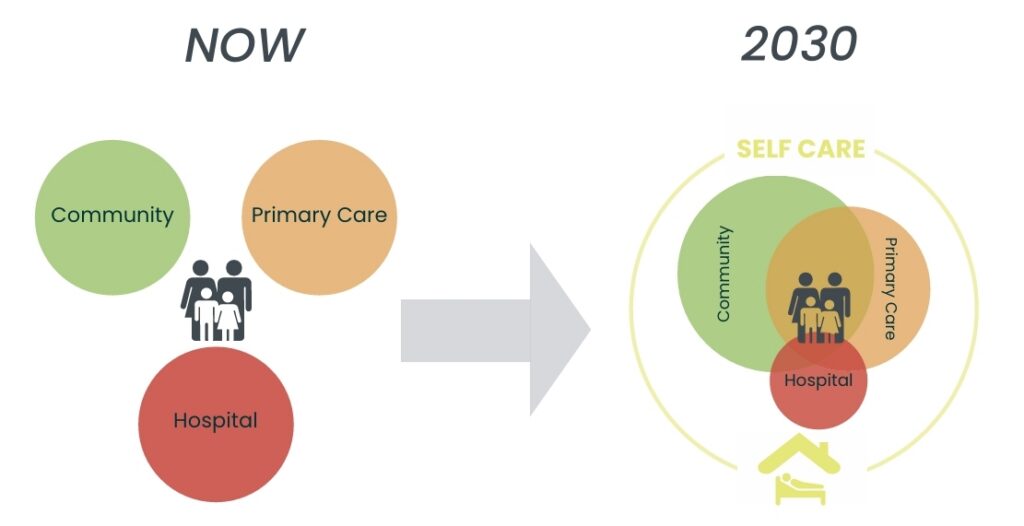
Figure 2: representation of how care is currently provided by pharmacy teams compared to our vision for 2030 which will ensure closer working between pharmacy teams across traditional sectors to ensure transition of care is seamless for patients.
People use medicines to maintain their health, prevent illness, manage conditions and cure disease. Despite these clear benefits, patients are not always getting the most from their medicines and in some cases are being harmed by them. Patient-facing medicines services help patients get the best outcomes from their medicines and improve medicines safety. Ultimately patients should not experience avoidable harm from medicines.
Whenever a patient requires a new medicine, they will have a conversation with a pharmacy professional. The pharmacy professional will use their skills and expertise to advise and help patients make decisions about their treatment. Pharmacy teams will work closely across sectors whilst ensuring patient centred care at all times, as illustrated in Figure 2.
Services provided will include:
Across all sectors
- Ensuring all medicines are safe and appropriate for patients;
- Ensuring all patients have the opportunity to take part in decisions about their treatment and receive tailored advice on medicines use.
Community pharmacy
- Support for self-care by providing an access point for advice and treatment for people with minor and acute conditions;
- All patients that have stable, well-controlled long-term conditions (LTCs) will be monitored and managed in their community pharmacy. This will ensure ease of access for patients to their regular medicines, with appropriate, tailored timescales between consultations depending on current stability of their health condition. It will also reduce pressures on other parts of the NHS, including general practice and urgent and emergency care. Currently, people with a LTC are twice as likely to be admitted to hospital as a patient without such a condition8.
Primary care
- Pharmacy teams at cluster or general practice level, integrated into multidisciplinary models, will provide medicines interventions for patients who are newly diagnosed or who have unstable or worsening LTCs.
Hospital
- Only those patients who require urgent, intensive or highly specialist care will require access to specialist pharmacists and their teams within the hospital setting. These specialist pharmacists will also be enabled to input into their patients’ care at a local level.
Fostering closer working relationships between pharmacy teams across all sectors will be crucial to ensure timely and seamless support for patients.
Pharmacist independent prescribers
The percentage of pharmacists in Wales qualified to prescribe has risen to almost 30%, with more pharmacists currently undergoing training. Of these prescribers, only 60% are routinely utilising this skill9. Often the services and structures are not available for PIPs to work within, particularly in community pharmacy.
The majority of PIPs who regularly use their qualification are working within hospitals and GP practices where they are embedded within multidisciplinary teams (MDTs). Ensuring all pharmacists in patient-facing roles in these sectors are qualified as PIPs within three years of the publication of this plan will create a consistent level of leadership in medicines prescribing from pharmacy for all hospitals and GP practice teams.
We will build on the investment made in training for community pharmacists to undertake the IP qualification over the last 12 months. PIPs in community pharmacy will unlock additional capacity in the system, delivering services in a more person centred way that will ensure better outcomes from medicines. We will ensure that by 2030 there is at least one qualified PIP in every community pharmacy so that enhanced services can be consistently commissioned and universally delivered throughout Wales.
The use of PIPs working in all community pharmacies, integrated with GP practices for access to patient records will further enable the pharmacy team to help patients manage acute conditions. A formalised extended common ailment service similar to the Llanidloes example (see Practice Example 1 below) will be available for patients in every community pharmacy by 2030.
Practice example 1: Harnessing the skills of PIPs
A PIP working in community pharmacy in Llanidloes, Powys has worked with his local GP practice to develop and implement an enhanced service that builds on the already commissioned Common Ailment Service (CAS)10.
Utilising the independent prescriber qualification ensures that patients are able to easily access support and treatment for a wider range of conditions than what is offered through the CAS. This is particularly important on Saturdays, when the GP surgery is closed.
The service has also helped to ensure that GPs are focusing on patients with more serious conditions. The pharmacy has secure access to the GP held patient records ensuring a robust process that enables safe prescribing and continuity of care.
2
We will supply medicines through pharmacy in a way that meets the changing needs of citizens, whilst improving access to regular advice and expertise.
“Proposed whole system values: co-ordinating health and social care services seamlessly, wrapped around the needs and preferences of the individual, so that it makes no difference who is providing individual services.”
The provision of care by a pharmacy team should be embedded throughout any medicines supply process. It must take into account a clinical check of the medication prescribed and ensure optimisation of the medicines regimen.
The supply of medicines provides a crucial touchpoint with patients. It enables a direct interaction to take place between the patient and the pharmacist. These interactions ensure that the patient is fully informed about their medication and is involved in decision-making about their health and wellbeing11. It is crucial that the adoption of new technologies in the pharmacy helps to encourage and facilitate this interaction whilst ensuring medicines are supplied in a way that reflects patients’ expectations in 2030.
We will harness the opportunities presented by changes to the legislative frameworks for the safe and effective supply of medicines to ensure citizens’ access to pharmacists and pharmaceutical care is maximised. This will, subject to changes to UK legislation, include the use of hub-and-spoke arrangements and changes to requirements for the supervision for the sale and supply of medicines. Technology will be utilised to enable more opportunity for discussion with the pharmacy team via telehealth technologies for example.
We will increase capacity within the pharmacy team by embracing technology and the use of automated systems for the dispensing of medicines. Importantly, pharmacists will no longer be tied to dispensing processes, and will be able to provide more patient-facing clinical activity.
This will be a key step change to meet our ambition of improving outcomes, increasing efficiency and reducing harm. Pharmacy teams will lead on the medicines aspects of hospital discharge and work with the patient’s nominated community pharmacy to ensure safe transfer of care. The system will utilise pharmacy technicians for medicines advice and adherence support. Close working between pharmacy teams across sectors will ensure continuity of care as patients transition from one care setting to another. This partnership working across sectors will be further aided by the exchange of crucial electronic patient information.
This hospital discharge model will also trigger appropriate accompanying pharmaceutical care and medicines supply from the patient’s nominated community pharmacy. The Discharge Medicines Review (DMR) Service12 is a good example of pharmacists working across sectors to increase medicines safety for patients as they transition from one care setting to another. This service ensures that the person’s medicines are maintained accurately (reconciled) during transfer of care and that no unintentional changes are made. As part of this service, the pharmacist will also check that the patient is getting the best use of their medicines. 81% of DMRs undertaken by community pharmacists successfully identified medicines errors that could then be rectified before patients received their medication13. By 2030, all patients that transfer from one care setting to another will receive a formal review of their medicines from the pharmacy team.
3
We will ensure that people with the greatest needs have increased access to care from the pharmacy team.
“Proactively supporting people throughout the whole of their lives, and through the whole of Wales, making an extra effort to reach those most in need to help reduce the health and wellbeing inequalities that exist.”
Addressing health inequalities
Addressing health inequalities
The concept of the Inverse Care Law, proposed thirty years ago by Julian Tudor Hart, describes a perverse relationship between the need for healthcare and its actual utilisation14. The network of more than 700 community pharmacies helps to buck the trend of the Inverse Care Law. It ensures that the people of Wales have access to healthcare and advice within their localities wherever they live, especially in the most deprived communities where access to healthcare is limited. Further enhancement of the services provided will ensure greater provision of care for those who need it most. Better integration of health and social care services will be essential so that care is well-coordinated and enables patients to remain healthy at home for as long as possible.
The accessibility of pharmacies at the heart of communities provides an opportunity to build upon the current health provision and to address the wider determinants of health and wellbeing. Pharmacy services must work in collaboration with wider health, social care and third-sector organisations, and act as a gateway for referral to appropriate services that address patients’ needs.
With 30% of children in Wales living in income poverty15, there must be a strong focus on embedding good habits from an early age to improve the health of future generations. Working with other health professionals, pharmacy teams will provide training for schools to help children gain the tools and knowledge to help them stay well and prevent illness.
Preventing admissions to hospital
Preventing admissions to hospital
Currently, many patients who require intensive support for specialist conditions are seen by pharmacists in a hospital setting and medicines are often supplied through home-care services which are not directly linked to the patient’s nominated community pharmacy. We will ensure going forward that the patient’s regular community pharmacy team will be actively engaged in the ongoing support that a patient needs. The pharmacy team will be better integrated with MDTs such as community resource teams (CRTs) to help deliver the whole package of support a patient requires when transitioning from one care setting to another.
CRTs are in place all over Wales, but a very limited number engage routinely with pharmacy. We will work towards better collaboration between pharmacy and CRTs throughout Wales and explore further opportunities through regional partnership boards to maximise the integration of pharmacy within health and social care models. By 2030 all CRTs must have routine access to a named pharmacy professional.
Practice example 2: pharmacy's role in supporting independence
The CRT in Bridgend is a multidisciplinary health and social care service, including two pharmacy technicians. The service offers health and social care assessments and will deliver short term interventions to people in their own home. The service is designed to help people get back on their feet following an illness, accident, or other event that has reduced their independence.
The pharmacy technicians are responsible for ensuring patients can manage their medication in their homes once discharged from hospital. The patients they see have usually had new medication prescribed or changes to an existing medication regimen during their hospital stay. The pharmacy technicians are able to access GP records to check medication histories and have access to the Welsh Clinical Portal to view blood-test results (etc). When the CRT needs input from a pharmacist the pharmacy technicians will contact either the patient’s community pharmacist or the relevant cluster pharmacist for support.
4
We will streamline patient pathways to ensure timely access to care through direct referral between pharmacy and appropriate health, social care and third-sector services.
As part of the ‘Quadruple Aim’, patients will receive: “better-quality and more accessible health and social care services.”
Direct referral from pharmacy
Direct referral from pharmacy
Empowering patients to take greater control of their health through co-production requires the professionals that they engage with to have the autonomy to facilitate meaningful actions. Seamless, coordinated referral pathways are key enablers to this aim.
Currently patients often need to see a GP for a referral that could be safely and appropriately managed by the pharmacy team. When the most appropriate referral is to the GP, these can be made more efficient by enabling pharmacists to request simple tests through an agreed patient pathway (e.g. full blood counts and urinalysis). This would save GP time and give patients quicker access to results, streamlining the whole process. Formal referral protocols must be in place for pharmacy teams to make direct referrals to other services.
Direct referral to pharmacy
Direct referral to pharmacy
Other health and social care professionals will directly refer patients to pharmacy services. This will require formal referral pathways and digital infrastructure. We will increase awareness among other professionals of the services that are offered by pharmacy. Increased opportunities to work within cluster arrangements and collaboration with CRTs will facilitate MDT working.
Most community pharmacies already offer services to support patients to self-care, including the common ailments service. In the short term, further development of this service, to include a wider range of conditions will give patients a greater range of support. By 2030 services will be maximised by ensuring a PIP in every community pharmacy, collaborating with GP practices within their localities. These services will be consistently commissioned and universally delivered for all patients in Wales.
Social prescribing
Social prescribing
All community pharmacy teams will be able to facilitate access to wider local health and wellbeing services through social prescribing and direct referral. In order to meet the ambitions of A Healthier Wales and ensure more people stay healthy and prevent illness, social prescribing and wider prevention services must become a core component of the community pharmacy contract.
Practice example 3: new pathways to increase access to care
The new NHS-funded Sore Throat Test & Treat (STTT) service16 is an extension of the Welsh CAS, piloted in two health boards since November. CAS and STTT are being supported by Choose Pharmacy, an IT platform for provision of services that is being rolled out to all of Wales. Approximately 600 consultations have been completed so far, with around 60% of patients having been referred by GPs or other healthcare professionals.
A total of 94% of patients reported that, they would have made an appointment with a GP had the service not been available. Importantly, less than one in five consultations have resulted in antibiotic supply so far, reinforcing the pivotal role that community pharmacists can play in antimicrobial stewardship. Initial results from a patient satisfaction survey are very positive; patients are satisfied with the service as a whole and also the way it is being delivered.
5
We will increase our focus on health, wellbeing and prevention with all community pharmacies becoming health and wellbeing hubs, collaboratively working with the multidisciplinary team within the primary-care cluster.
“We will have a greater emphasis on preventing illness, on supporting people to manage their own health and wellbeing, and on enabling people to live independently for as long as they can, supported by new technologies and by integrated health and social care services which are delivered closer to home.”
Prevention
Prevention
Helping people to avoid preventable illness and stay well is one of the most significant challenges faced by the health system. Community pharmacies are community health assets, physically located in the heart of local populations. An estimated 50,000 people a day visit a community pharmacy in Wales17. The community pharmacy network of over 700 premises are in a unique position to form part of local community hubs that deliver prevention and health improvement services.
Health and wellbeing ambassadors
Health and wellbeing ambassadors
All pharmacy teams already offer a range of health and wellbeing services as well as screening services for LTCs. However there is a lack of consistency in the availability of services across Wales which increases the risk of postcode lotteries in access to care. It is essential that all community pharmacies deliver a consistent core set of services so that individuals have equitable access to care and national advertising can be maximised to help patients make the best choices.
All pharmacies will become health and wellbeing hubs. All members of the pharmacy teams in patient-facing roles will become health and wellbeing ambassadors with skills in health coaching, health literacy, behaviour change and cultural awareness, including taking into account the patients language preference, so they are able to make every contact count for patients. We will also ensure that all pharmacy professionals become Dementia Friends by 2022.
Choosing well
Choosing well
People in Wales will actively use their community pharmacy as the first point of call for advice on self-care, to treat acute conditions, manage their stable LTCs and to keep well. Educating citizens about accessing appropriate care is the main aim of the NHS Wales programme, ‘Choose Well18’. The programme actively promotes the use of pharmacy for common ailments and we will build on this awareness raising to promote the whole range of pharmacy services.
Public awareness
Public awareness
Pharmacists and the organisations representing them, will work nationally and through their local networks to lead conversations with the public about the changing nature of pharmacy services. We will build on projects that are already proving successful such as ‘Your Medicines Your Health’ which is a public education programme initiated in Cwm Taf and rolled out across Wales19.
2022 goals
Community pharmacy teams will be the first point of contact for common ailments.
30% of community pharmacies with an independent prescriber actively providing services.
All pharmacy team members will be Dementia Friends.
All patient-facing pharmacists in the managed sector will be actively prescribing.
Pharmacy teams leading the medicines discharge from hospital with ongoing support from their community pharmacist.
Developing the workforce (principles 6-8)
2030 goal: the pharmacy workforce has the skills necessary to lead innovation in medical therapies.
- Education and training is embedded within multisectoral training sites and with multidisciplinary input.
6
We will create quality training sites across Wales providing pre and post-registration placements for pharmacy professionals.
“For the workforce they feel valued and supported at all stages of their career, supported by access to refocused education and training as well as ongoing development offers”.
We will work with other healthcare professions to deliver multidisciplinary training opportunities. These will foster professionally integrated ways of working and maximise the positives of training and working together.
Training academies will be designed to provide pharmacists, pharmacy technicians and other members of the MDT with quality-assured training that bring together the skills of practitioners within NHS organisations, community providers and local authorities.
Academies will facilitate high-level patient care in the heart of the community. They will enable those that are training to have practical experience and contribute to patient care on a daily basis. Practitioners who are providing training and mentorship to colleagues will be given time to keep up to date with their own education and training needs to ensure their practice is in line with the latest evidence base and medical techniques. We will foster a culture of mentoring and training with all pharmacy professionals embracing opportunities to help colleagues and future practitioners to learn from their experience and expertise.
Academies will ensure future workforce planning fit for their local communities. Consistency in funding for training will be necessary as well as robust quality-assurance processes. Ultimately by 2030 we will have multidisciplinary and multisector training for the pharmacy workforce.
Pharmacist training
Pharmacist training
Universities will reflect the changing demands of practice in undergraduate courses. This will include laying the foundations of skills in advanced person centred consultation and knowledge of new and emerging medicines and technologies.
Academies will host student placements, ensuring pharmacy students are exposed to real-life learning opportunities which complement their undergraduate training. Placements will be multidisciplinary in nature. Placement providers will be funded in line with the medical model to ensure quality placements and the exposure necessary to deliver on A Healthier Wales.
Pharmacy technician training
Pharmacy technician training
We will ensure opportunities for pharmacist technicians to gain multisector experiences as well as increased interaction with other professional groups, including social care. Increasing capability and opportunities for pharmacy technicians will strengthen the foundation for pharmacy practice across all sectors. There will be an established network of pharmacy technicians who will enable the release of capacity for pharmacists to deliver enhanced clinical care for patients. Pharmacy technicians will focus on management and use of medicines working with patients and the pharmacy team to improve outcomes from medicines.
Community pharmacies often offer job opportunities for people in the local community. Many will start as healthcare assistants, given apprenticeships and will be supported to undertake accredited courses and progress to becoming registered pharmacy technicians, giving citizens a gateway into employment and develop opportunities.
7
We will implement clear development pathways for pharmacists and pharmacy technicians from pre-foundation training through to advanced practice.
“To create the conditions for continuous innovation and improvement to drive up the quality and value of services, we will develop a new leadership competency framework and development programmes.”
Pharmacists and pharmacy technicians have complementary roles in improving medicines related outcomes for patients. Pharmacists will be primarily focused on the clinical and therapeutic interventions, whilst pharmacy technicians improve medicines outcomes with practical advice on the use and management of medicines. Working together they ensure optimisation of the patient’s medicines.
As managing the health of patients becomes more complex, with multiple LTCs and more complex medicines and therapies, the need for pharmacy input will increase. The pharmacy team must continually build on their competence in dealing with new and innovative therapies and constantly develop and advance their practice.
We must have equity across professions, with protected and funded learning time embedded within workforce planning. This is essential to enable practitioners to maintain and advance their practice.
The pharmacy team do not routinely receive protected time to undertake continuous professional development. Currently, workforce planning will rarely take into consideration the time and cost of education and training. Any training that is undertaken by pharmacy team members will put strain on other colleagues in the team, adding to work pressures. The establishment of Health Education and Improvement Wales (HEIW) offers new opportunities for multidisciplinary training which will add value to learning experiences and foster good working relationships. Learning should always be underpinned by professional and regulatory standards and guidance.
Pharmacist development pathways
Pharmacist development pathways
The RPS, as the professional leadership body for pharmacists, has developed a roadmap which outlines career pathways for pharmacists21. The roadmap takes account of changes in healthcare delivery to meet the needs and expectations of patients and the public.
The programmes support pharmacists from day one as a student through to retirement from the profession. This spans across all sectors, areas of expert practice, both specialist and generalist.
We will ensure that by 2022, all newly qualified pharmacists will undertake a foundation programme and be supported by competent tutors and mentors to further hone their skills in practice. We call upon HEIW to ensure consistent and appropriate funding structures for foundation training.
By 2030, all pharmacists in Wales will be on a recognised professional practice journey in order to evidence their level of practice. This will demonstrate the profession’s commitment to clinical and professional advancement. It will also ensure that the profession has a pool of advanced professionals who can evidence their practice and are ideally placed to progress to consultant pharmacist roles.
Pharmacy technician development pathways
Pharmacy technician development pathways
There will be a parallel, structured approach to career development and support from foundation through to advanced practice available for pharmacy technicians. The professional foundation framework for pharmacy technicians currently supports the delivery of pharmaceutical care, helping pharmacy technicians to identify their own learning needs and providing them with structured career progression.
The development of an advanced framework for pharmacy technicians will enable professionals to further demonstrate their competence and level of practice. Employers will support pharmacy technicians within their organisations to access and achieve the competencies in these frameworks.
Pharmacy support staff
Pharmacy support staff
Pharmacy support staff are important contributors to the delivery of pharmacy services and the efficient running of pharmacies. Roles are varied and include, but are not limited to, dispensing assistants, medicines counter assistants, delivery drivers, as well as some pharmacy managers. Support staff are not registered with the regulatory body, the GPhC. However, GPhC accredits some training courses for pharmacy support staff. “Pharmacy staff who are involved in supplying medicine to the public must be competent to a level equivalent to the relevant knowledge and skill of a nationally recognised Level 2 Qualification22.” This will assure the public and employers of their competence.
We will ensure that all pharmacy support staff are given appropriate training and development pathways in order to maximise their skills and competencies for patient benefit.
The road to 2030 – Delivering Capacity, Competence, Continuity, Collaboration and Community
8
We will continue to provide and develop leadership in medicines use and services across Wales.
“Proposed whole system values: driving transformative change through strong leadership and clear decision-making, adopting good practice and new models nationally, more open and confident engagement with external partners.”
Embedding leadership in practice
Embedding leadership in practice
Standard nine of the GPhC’s Standards for Pharmacy Professionals states that pharmacy professionals “must provide leadership to the people they work with and to others23.”
We will increase pharmacist leadership within cluster arrangements to focus on maximising the value of medicines. By 2030 pharmacists and pharmacy technicians will be embedded within all MDTs that deal with medicines, providing leadership for medicines optimisation.
The expectation and desire of pharmacists and pharmacy technicians to take on more responsibility must be realised and strategically led within all sectors. There must be leadership skills and training embedded throughout every step of the pharmacy career pathway, starting at undergraduate and preregistration levels.
Research leadership
Research leadership
Pharmacy teams routinely make evidence based decisions about the use of medicines. Pharmacists are also increasingly demonstrating leadership in research that underpins service development and creation of policy.
Research and evaluation activities undertaken by pharmacists reflect the breadth of knowledge and expertise of pharmacists ranging from the initial stages of drug discovery and development through to patient-facing medicines use and optimisation services. Research skills are embedded during the undergraduate course and developed through preregistration training, diploma and foundation training as well as in practice. As part of the community pharmacy contract, all pharmacists and pharmacy technicians have completed the Community Pharmacy Improving Quality Together bronze level e-learning package24. Research is also a core component of the RPS faculty portfolio. We will use these tools to embed a culture of quality improvement methodology in everything we do, ensuring we provide quality based services that are constantly improving for patients.
Consultant pharmacist roles
Consultant pharmacist roles
We will increase the number of consultant pharmacists working in the NHS. Wales will have consultant pharmacists based in the community, as well as in hospital and across primary-care clusters.
The need for, and area of practice of, consultant pharmacists, is determined locally. These post holders will have specialist therapeutic knowledge and can provide clear strategic direction and leadership for use of medicines, reducing harm and increasing value. They will be an expert point of contact for their speciality, working across all healthcare sectors. They will support delivery of Welsh Government priorities such as safer medicines management frail elderly care managing acute illness, and end-of-life care.
We will create more opportunities for pharmacists to become consultants through embedding the faculty framework into practice in Wales.
Strategic leadership
Strategic leadership
In line with the recommendations made in the Welsh Audit Office (WAO) report into the management of medicines in primary and secondary care, published in December 2016, prescribing and medicine management will have a higher profile within health bodies. Following on from the Trusted to Care Report25, the WAO noted its “concern that pharmacy is not well-represented at board committees and not all chief pharmacists report directly and regularly to an executive director”. In relation to pharmacy and medicines management’s profile within health organisations, it was recommended that:
- “Health bodies should ensure their chief pharmacist is, or reports directly to, an executive director.”
- “Health bodies should have an annual agenda item at the board to discuss an annual report covering pharmacy services, medicines management, primary-care prescribing, homecare medicines services and progress in addressing the issues identified in Trusted to Care.”
In order to fully maximise the input of pharmacy to strategic decision across the NHS, these recommendations will be fully implemented.
We will develop a continuum of strategic and clinical leadership opportunities for pharmacy professionals. HEIW offers new opportunities to develop MDT leadership training opportunities that we will embrace.
We also call for further resource and support for the office of the chief pharmaceutical officer (CPhO), with a number of clinical fellows supporting the CPhO to drive key priorities in medicines and health as well as the goals outlined in this document.
2022 goals
Network of funded training academies.
Consultant pharmacist roles in all sectors including community.
Foundation programme embedded for all pharmacy professionals.
Embedding structures that foster learning.
Seamless pharmaceutical care (principles 9-11)
2030 goal: pharmacy will manage all medicines as the experts in therapeutics, medicines usage and optimisation.
- Community Pharmacy contracts will complement other professional group contracts for the benefit of their cluster population.
9
We will lead the pharmaceutical care of patients across all including social care to improve safety and patient experience.
“Within a local area, clusters of GPs, nurses and other professionals in the community, such as dentists, community pharmacists and optometrists, will work closely with an expanded range of professionals, including physiotherapists, occupational therapists, paramedics, audiologists and social workers as a seamless health and wellbeing service focussed on prevention and early intervention.”
Working across sectors
Working across sectors
Whenever a patient is prescribed or has any issues with their medicines, they will expect to have an interaction with a member of the pharmacy team, irrespective of the setting in which they receive their care. Pharmacy teams will be present and working in all sectors, integrated into MDTs with their roles formalised within strategic national and local plans. Crucially, pharmacy teams will routinely work across sectors, gaining the flexibility to follow and support patients throughout their journey across all areas of health and social care, ensuring meaningful patient-centred care is achieved.
We will work with other healthcare professionals to promote a planned approach to the management of patients’ conditions, that includes pharmacists supporting all medicines aspects of their care package. Where there is a medicine, there will be interaction with the pharmacy team.
Care in the patient’s own home
Care in the patient’s own home
Many social care teams currently have to deal with complex medicines regimens for their patients. Some can only administer medicines if the pharmacy is able to provide a monitored dosage systems (MDS) for the medication. MDS are often ‘integrated into practice and service policy without giving due consideration to the alternatives available26. MDS aren’t always the preferred option for a patient. The integration of pharmacy expertise in social care environments will be critical in supporting both patients and carers to get the most from medicines.
With at least 370,000 carers in Wales27, 30,000 of which are under the age of 2528, the pharmacy team has a crucial role to play in supporting people to care for their loved ones. Medication regimens can be complex and overwhelming to deal with. Pharmacists can ensure medication regimens are optimised and clinically appropriate.
Pharmacy technicians will take on greater leadership roles and responsibility for technical medicines management and administration services29. This will ensure better utilisation of pharmacy technicians’ skills and that patients are supported by a skilled healthcare professional. Pharmacy technicians who can give the patient and family advice on storage and best use of their medicines as well as administration and help to manage their ordering of repeat medicines.
With increased collaboration between pharmacy and other health and social care services, pharmacy teams can play an even greater role in coordinating care to take the burden away from carers and speed up access to appropriate services.
Provision for care services
Provision for care services
For patients who live in a care home, it is vital that they are able to access the same level of health and social care support. It is also crucial that care home staff are supported by the pharmacy team to provide medicines expertise.
All residents should be encouraged to take part in their own medicines administration wherever possible. Residents may require assistance to do this. There are occasions where care home staff may be required to take over this element of care. It is essential that care home staff undertaking these duties receive accredited education and training for medicines administration and are supported by the pharmacy team for advice.
Every care home will have a named pharmacist and pharmacy technician to help ensure all residents and staff have regular access to medicines advice, providing continuity of care.
Unscheduled and out-of-hours services
Unscheduled and out-of-hours services
Pharmacy teams are already successfully embedded within NHS 111 out-of-hours services. They work alongside their medical and nursing colleagues and take Pharmacy: Delivering a Healthier Wales responsibility for full caseloads.
Community pharmacies are often open longer hours than GP practices in their areas and operate on weekends. Patients do regularly use pharmacy to help self-manage conditions and more recently to access the NHS Common Ailments Service. A community pharmacist with an IP qualification will take on further caseloads for conditions outside of the CAS formulary. Training more community pharmacists as IPs will enable the profession to provide increased care for their patients and help to ease pressure on A&E and GP out-of hours services.
Over recent years the pharmacy team has started to be more integrated into A&E teams. Pharmacists and pharmacy technicians will become a core component of the A&E team in all hospitals in Wales. Through effective triage, less serious health problems such as medicines related issues and minor ailments can be dealt with by pharmacists, ensuring that more serious cases can be quickly escalated to medical and surgical teams. Access to this advice will be available seven days a week in the accident and emergency service in order to ensure that the most appropriate medicines are given to the patient and that medical staff will have the pharmaceutical support they need when making decisions about medicines and treatment30.
Consistent pharmacy services must be available throughout Wales to help patients know how and where they can access appropriate care, helping patients to choose well.
Virtual wards
Virtual wards
Pharmacy teams need to be available to patients for face to face and virtual consultation. Virtual wards are MDTs which work together for the most sick and vulnerable patients in their localities. These patients may require intensive input from the primary-care team to avoid a hospital admission. Pharmacy services are an essential and integral part of such teams.
10
We will shift the focus of hospital teams to respond to changes in the delivery of care and transform access to medicines.
“Access to hospital, and most significantly at the specialist hospital level, will be provided when this exceeds the level of local support available and this will represent a shift over time in the system’s reliance on traditional hospital services.”
Hospitals in 2030
Hospitals in 2030
By 2030 hospitals will focus on providing emergency and critical care and become more specialised. Patients will only be cared for in a hospital when there are urgent or significant changes to their health conditions. Patients will expect their hospital stay to be as short as possible and their care to be seamlessly transferred back to their home and community as quickly as possible. Hospital pharmacy services will need to develop to respond to this change.
Pharmacists will be fully integrated into MDTs, with a 24/7 pharmacy operation, reflecting the needs of both patients and the wider multidisciplinary team. Pharmacy teams will lead on all aspects of medicines care from arrival, during in-patient stay, and through to discharge. Hospital pharmacy teams will work closely with primary-care services and will ensure medicines and care plans are in place on discharge and coordinated through the patient’s nominated community pharmacy team.
Specialised pharmacy teams in hospital will routinely work with community colleagues and provide ongoing input into care for their patients in the community. Traditionally many pharmacy specialist roles have been based within the hospital sector. The skills and knowledge of specialist pharmacists must also be accessible to patients in the community. We will ensure advanced practitioners are available to provide specialist service within the hospital and beyond the “walls” of the hospital, linking with cluster pharmacists, GPs, social care and community pharmacy.
Specialised hubs will be formed in hospitals with pharmacist prescribers and consultant pharmacists as professionally integrated frontline practitioners. A centralised service with local outreach will provide people with LTCs that require specialised care with direct and equitable access to specialised pharmacists and physicians, regardless of geography or levels of health literacy.
Hospital pharmacy services will enable and support innovation and new therapeutic technologies. This will require a pharmacy workforce with the appropriate cutting-edge knowledge. Adaptable supply, administration and medicines governance process will be essential in order to safely manage the introduction of new medicines and technologies.
11
We will ensure the development of the roles of specialised pharmacists and pharmacy technicians leading on centralised all-Wales medicines services.
“Our system structure and size gives us the opportunity to use purchasing and commissioning to drive greater value and to find substantial cost-saving efficiencies.”
Streamlining services
Streamlining services
Specialist, non-patient-facing pharmacy services, will be streamlined to avoid duplication and to maximise efficiencies across hospitals in Wales. Currently, each HB or trust provide their own support services, which may be more effectively provided at regional or national level.
We will initially prioritise two key areas; aseptically prepared medicines and quality-assurance provision. In order to improve safety, resilience and ensure equitable provision for all services and patients, we will take a once for Wales, national approach to the development of these services.
We call for initial investment in the development of these new structures to ensure services fit for Wales that meet all regulatory compliance challenges. By improving efficiencies in the system, we envisage opportunities to buck the trend of ever increasing medicines spend.
As well as integrating the pharmacy workforce into clinical teams, the skills of specialist technical service pharmacists will be developed across Wales. This will ensure a resilient medicines supply chain with local expertise that work routinely with the centralised services.
The long-term procurement, prescribing and supply of highly specialised and often expensive medication will be optimised by skilled pharmacy professionals. Effective communication and utilisation of the latest technologies will reduce inappropriate and potentially harmful prescribing. Local or regional units will adopt national policies and practices to avoid unnecessary variation.
2022 goals
Pharmacy services formally integrated into cluster networks.
Transform access to medicines across secondary care to improve quality, sustainability and value.
New community pharmacy contract increases focus on medicines optimisation, health and wellbeing.
Harnessing innovation and technology (principles 12-14)
2030 goal: patient’s central electronic medical records are accessed and updated by practitioners involved in their care, including the pharmacy team.
- Supply of medicines is automated and supported by AI.
12
We will completely digitise medicines prescribing and associated processes to increase efficiency and safety across all sectors.
“Making better use of digital, data, and communication technologies will help us to raise the quality and value of health and social care services, so that they are cost-effective and sustainable and also bring our offer in line with increasing expectations of technology in people’s day-to-day lives.”
Modernising systems
Modernising systems
Current medicines and healthcare systems are heavily reliant on the transfer and sharing of paper. In the community, patients are familiar with having to tick the medication they need each month on a repeat prescription and subsequently be handed their paper prescription to take to their community pharmacy. The use of hand written medical notes and medication charts in hospitals throughout Wales is outdated practice which can lead to errors. These systems are in urgent need of modernisation to reduce the risk of harm to patients.
Electronic prescribing
Electronic prescribing
We will fully utilise an electronic prescribing system across all pharmacy sectors, creating a streamlined process that eliminates the risk of transcribing errors and safeguards timely transfer of information.
A cloud-based electronic prescription system will send prescriptions electronically from a prescriber to the patients nominated community pharmacy. Such a system that is connected across all sectors will also enable prescriptions to be generated in hospital and supplied in the community. We call upon the Welsh Government, through its NWIS programme to develop or procure a system for Wales that goes further than simply transferring the prescription, enabling pharmacists to manage the ongoing medicines supply.
Electronic medicines administration
Electronic medicines administration
Electronic prescribing and medicines administration (EPMA) systems must be introduced into Welsh hospitals. The system must be integrated with other IT systems to provide intelligence on workload, alerts and allow prioritisation of patient review (e.g. patients who have frequent admissions such as those who are at risk of frailty and older). The system must also allow communication of medicines information to a patient’s nominated community and primary-care providers.
An integrated EPMA system with the ability for pharmacists to access medicines records at remote locations would also enable provision of care for patients across different settings, for example in a patient’s own home. It will also facilitate interoperability with other digital systems to link prescribing with patient outcome and experience measures. The advances in this technology will help pharmacy to realise the ambitions outlined in principle three of this document, to ensure that people with the greatest needs have increased access to care from the pharmacy team.
Central patient electronic health record
Central patient electronic health record
We will have the digital connectivity necessary to input into and work with a central patient electronic health record which is also accessible to the patient.
Pharmacy teams in all sectors will be able to better support patients who choose to share their health record. Diagnosis and other essential information about the patient’s condition will allow the pharmacy team to provide increased and tailored medicines information and support for patients.
We will increase capacity of the services provided by the pharmacy team by enabling pharmacy technicians to undertake more patient-facing services in the community. Access to electronic records will be necessary to provide these services safely.
13
We will use advances in technology to help people get the best health and medicines outcomes.
“As we look ahead ten years, many of these technologies and practices are unknown fully and still emerging, so we need to provide a system that can respond with urgency and agility to these new opportunities.”
The rapid advancement in technology brings new opportunities for the management of people’s conditions.
Patient’s access to their own health records
Patient’s access to their own health records
People will have more control over their own health, including access to their own health records.
Services such as My Health Online have started to give patients more control, enabling them to book and cancel appointments, request repeat prescriptions and update personal information. Patients can access the service via mobile phone, tablet or computer.
All patients must be empowered and given the tools and opportunities to take control of their conditions, with support from the pharmacy and wider healthcare team. We will maximise the use of technology to aid medicines use for patients.
Access to advice when and where needed
Access to advice when and where needed
It is likely that the number of people who routinely access medical information via the internet will increase year on year. While the accessibility to information is important, the reliability of the information can be questionable. The health system must provide services in a convenient way that reflects the way people go about their daily lives. AI systems must be better utilised in healthcare for example through online consultations and quality-assured online triage systems.
Pharmacy teams will be involved in the development of quality-assured AI technologies that focus on medicines support, ensuring systems are underpinned and kept up to date with the most current evidence based information. Such AI technology should be routinely available and promoted as a key touch point with the health system for patient.
Practice example 4: empowering patients through technology to deliver better health outcomes
The pharmacy team who lead on the provision of care at the renal unit in Morriston hospital is an example of a team that are embracing advances in technology to put their patients in control of their condition. They are utilising a technology application which gives patients direct access to their latest test results in real time, letters and medicines information, plus information about diagnosis and treatment31.
Patients are able to set up alerts, monitor symptoms and download records. The pharmacy team help patients to fully understand their own condition and what test results are ‘normal’ for them, reducing anxiety for patients who historically would have had to wait for a call from the team to update them on their results.
Personal monitoring devices
Personal monitoring devices
Many people regularly monitor and improve their health and fitness through the use of wearable devices and may benefit from integrating some of these types of results with their health records.
Pharmacists will play an essential role in the management and use of data collected from the majority of clinical interactions. Data will also be gathered about the wider lifestyle choices made by patients from purchases in shops or online and personal fitness trackers for example, creating a health and wellbeing profile for patients. By sharing results and progress with their pharmacy team, co-production can start at the point of wellbeing and prevention services, not just when managing medicines and health conditions.
Assistive technology
Assistive technology
Various home monitoring devices can be used to help people stay well and safe in their homes. Patients living with Alzheimer’s and their loved ones for example, may benefit from having their homes fitted with movement sensors to show an online chart of daily living activity. Location-tracking devices in their shoes can also be used to track movements outside of the home and electrical appliance use monitors will alert caregivers if their commonly used appliances have not been turned on or off.
Big data
Big data
A wealth of data is routinely gathered through the provision of pharmacy services. This data can be evaluated and used to increase efficiencies, continually improving the services and experience offered to people in Wales. As new IT systems are introduced into pharmacy services, their ability to be interoperable with other systems and facilitate the gathering of big data is important for continually improving outcomes for patients. It is also crucial that whilst benefiting from improved data collection, all systems maintain and safeguard patient confidentiality.
There will be opportunities to link datasets to understand the epidemiology of disease and to use this information to improve patient care. The use of big data has the potential to inform drug development and service innovation, with pharmacists and pharmaceutical scientists at the forefront of healthcare.
Practice example 5: quality-assured AI technologies to improve patient access
Velindre Cancer Centre provides specialist cancer services to over 1.5-million people in South East Wales and beyond32. In order to increase patient access to advice but also reduce staff workload, the centre is embracing technology and introducing a ‘chatbot’ service that is capable of answering many of the questions their patients have from logistics about how to get to the centre, through to more clinical questions related to their medicines and treatment.
14
We will develop pharmacy teams that will support the safe introduction and positive patient outcomes from new medicines, precision and personalised therapies.
“New specialised treatments will be made possible, through developments in science and medicine.”
Developing pharmacy teams
Developing pharmacy teams
We will continue to ensure that the unique expertise of pharmacists are built on a strong foundation of science, combined with clinical knowledge and skills which reflect the fast-paced developments in healthcare.
Advancements in healthcare technology and complexity of medicines will continue to grow and develop at pace over the next ten years. Specialist pharmacists are needed to procure, prescribe and advise on the clinical use of these agents. Advanced roles for pharmacy technicians to work with pharmacists in the provision of specialised clinical services will also be essential.
Pharmacy teams will need to collaborate and embed their skills within MDTs that may include professions that we haven’t traditionally worked with in clinical practice, for example data scientists, engineers and bioinformaticians33.
Advanced therapies
Advanced therapies
Advanced therapy refers to new medical products that use gene therapy, cell therapy, and tissue engineering. They offer new opportunities to develop medicines for diseases such as Alzheimer’s and cancer. The impact of advanced medicines changes fundamentally how care for specific diseases will be delivered. Pharmacy must be involved in shaping these revised delivery models and will play an essential role in key areas from governance and safety procedures through to ensuring patients fully understand their treatment.
Precision medicines
Precision medicines
The number of precision medicines has increased steadily since 197734. Since its publication in 2003, the growing understanding of the human genome has opened up new areas for diagnostics, treatment and management of complex and serious diseases.
New genetic diagnostics will help to detect cancer much earlier, probably from a simple blood test, and to identify specific cancer types, which can be matched to the most effective treatment. This could lead to simpler, routine screening for cancers to ensure early detection and prevention. In the future, this could be undertaken conveniently for patients from a community pharmacy. Close working between the community pharmacy team and advanced specialist in precision medicine within hospital and research units will be essential.
Pharmacogenomics
Pharmacogenomics
We will work towards community pharmacy being able to provide pharmacogenomic testing to ensure that patients receive the most appropriate medicines tailored to their genetic makeup. This will lead to improved outcomes, decreased side effects and more efficient use of medicines for the NHS.
Pharmacists’ unique training in science and clinical practice make them an ideal health professional to interpret and then convey information to patients to ensure understanding and best use of subsequent treatment options. We will ensure the safe introduction of new therapies to maximise value and patient benefit.
2022 goals
Central electronic patient health record.
Consultations facilitated by telehealth.
E-medicines management systems, integrated across
all sectors.
How we will deliver change – the creation of a Programme Delivery Board
We have identified a number of goals that we believe can be delivered by 2022, which we have called out throughout the document.
Like any systems change, the delivery of our vision will be challenging and will require a concerted effort from a range of stakeholders from across pharmacy and the wider health and social care system. That is why we are asking the Welsh Government to create and fund a delivery programme board with a focus on implementation.
We propose that in its first cycle of work the programme board will develop implementation plans for each of the 2022 goals and engage with all stakeholders to drive the necessary change. The second cycle of work from the project board will be to assess progress toward 2022 goals and develop the next set which will enable delivery of the 2030 vision.
How this document was produced
Key project roles
Key project roles
- Project sponsor: Paul Harris (Chair, Welsh Pharmaceutical Committee).
- Project manager: Elen Jones, (Practice and policy lead, Royal Pharmaceutical Society Wales).
- Steering group:
- Margaret Allen (Health Education and Improvement Wales, pharmacy dean) Darrell Baker (Chief Pharmacist Group, vice-chair)
- Mair Davies (Royal Pharmaceutical Society Wales, director)
- Marc Donovan (community pharmacy representative of the WPhC)
- Russell Goodway (Community Pharmacy Wales, chief executive)
- Mark Griffiths (Community Pharmacy Wales, chair)
- Mark Gumbleton (Welsh School of Pharmacy and Pharmaceutical Science, head of school)
- Susanne Scott-Thomas (Royal Pharmaceutical Society Wales, board chair)
- Jonathan Simms (Welsh Pharmaceutical Committee, vice-chair)
- Sarah Wilcox (Association of Pharmacy Technicians UK)
- Judith Vincent (Chief Pharmacist Group, chair)
- Steering group:
Project support
Project support
Royal Pharmaceutical Society Wales
The Welsh Pharmaceutical Committee in producing this document has not only taken on board the opinions of committee members themselves but have undertaken an extensive engagement plan facilitated by the Royal Pharmaceutical Society, including;
Four pharmacy working groups established
Each of the groups included pharmacists and pharmacy technicians with different expertise, from across different localities. Each group was aligned to strategic directions in A Healthier Wales;
Wider pharmacy engagement
Wider pharmacy engagement
- Eight pharmacy focus groups have been held across Wales, to gain insight from pharmacy teams;
- Four community pharmacy Wales contractor events across Wales included opportunities to gain insight into the project and to offer opinion through a facilitated workshop.
Contributions (external) to the pharmacy profession
Contributions (external) to the pharmacy profession
- Multidisciplinary focus group to gain insight from other professional groups, including royal colleges, third-sector organisations and other healthcare professionals;
- Public and patient engagement to test some of the visionary principles and ensure that we really understand the public perspective on our services;
- A series on one-to-one interviews with strategic leaders in Wales.
We would like to thank all the individuals and organisations who have taken the time to attend focus groups, workshops and comment on the drafts of this document. In all, more than 400 individuals have engaged and provided input into this process.
Glossary of terms
Glossary of terms
- Acute conditions: illnesses that only last a short duration, normally a few days.
- Advanced clinical practitioners: healthcare professionals educated to masters level who have developed the skills and knowledge to enable them to take on expanded roles and scope of practice when caring for patients.
- Chief pharmacist: the most senior pharmacist within a local health board or trust, providing strategic and operational leadership on pharmaceutical care and medicines management within that organisation.
- Common ailments: these are short term, non-severe ailments which can often be treated through self-management and over-the-counter medicines.
- Electronic prescribing: the utilisation of computer systems to facilitate and enhance the communication of a
- prescription or medicine order, aiding the choice, administration and supply of a medicine through knowledge and decision support and providing a robust audit trail for the entire medicines use process.
- Formulary: a medicines formulary is a list of medicines approved for use. It is used alongside other resources to ensure the safe and appropriate prescribing of medicines for patients.
- Foundation practice: the knowledge, skills and behaviours that collectively form the building blocks of professional practice for pharmacy professionals across all sectors. A foundation programme will guide and facilitate this development for professionals.
- Hub-and-spoke: in a hub-and-spoke system, prescriptions are sent from a patient’s local pharmacy (spoke), to a site that is dedicated to the assembly of medicines (hub pharmacy). The assembled prescriptions are delivered back to the spoke, where the pharmacy team can handover the medication to the patient along with any necessary advice. A clinical check by the patient’s regular pharmacist is still an essential step of the process.
- Long-term conditions: long-term conditions, also referred to as chronic conditions, encompass a broad range of conditions such as diabetes, asthma and dementia, which are usually lifelong and cannot currently be cured. Their effects and progression can however often be effectively managed given the right support.
- Medicines adherence: the extent to which the medication a person is taking corresponds with agreed recommendations from a healthcare provider.
- Multidisciplinary team: a group of people who are members of different disciplines or professions, each inputting their expertise for patient benefit.
- Pharmaceutical care: the use of drug therapy to achieve definite outcomes that improve a patient’s quality of life.
- Pharmacist independent prescriber: a pharmacist independent prescriber may prescribe autonomously for any condition within their clinical competence. This currently excludes three controlled drugs for the treatment of addiction.
- Pharmacogenomics: the branch of genetics concerned with determining the likely response of an individual to therapeutic drugs.
- Pharmacy team: this includes pharmacists, pharmacy technicians and support staff who all work collaboratively to deliver medicines services to patients and colleagues.
- Pharmacy technician: registered professionals who undertake the technical aspects of medicines management. Pharmacy technicians, along with pharmacy support staff, work under the supervision of the pharmacist. Pharmacy technicians are registered professionals, who are responsible and accountable for their own accurate and safe practice.
- Polypharmacy: the concurrent use of multiple medications by one individual.
- Precision medicines: an emerging approach for disease treatment and prevention that takes into account individual variability in genes, environment, and lifestyle for each person.
- Preregistration: the preregistration period is a core part of a pharmacist and pharmacy technician’s training which enables trainees to apply their academic knowledge in a real-life situation. The aim is to develop and demonstrate the skills, knowledge and behaviours need to practise to the standards expected of a registered pharmacy professional, in a way that delivers the best outcome for patients and members of the public.
- Telehealth: telehealth, often referred to as digital health, is the remote exchange of data between patients and clinicians.
References
References
- Welsh Government. 2018. A Healthier Wales. [No longer available] https://gov.wales/docs/dhss/publications/180608healthier-wales-mainen.pdf
- Welsh Government. 2014. Making prudent healthcare happen. Available at: http://www.prudenthealthcare.org.uk/
- Hussey, R. 2018. The Parliamentary Review of Health and Social Care in Wales – A Revolution from Within: Transforming Health and Care in Wales. Available at: https://beta.gov.wales/sites/default/files/publications/2018-01/Review-health-social-care-report-final.pdf
- Stats Wales. 2019. NHS staff by staff group and year. Available at: https://statswales.gov.wales/Catalogue/Health-and-Social-Care/NHS-Staff/NHS-Staff-Summary/nhsstaff-by-staffgroup-year
- Wellbeing of Future Generations (Wales) Act 2015. Available at: https://futuregenerations.wales/wp-content/uploads/2017/01/WFGAct-English.pdf
- Welsh Audit Office. 2016. Managing medicines in primary and secondary care. [No longer available] https://www.audit.wales/system/files/publications/Medicines-management-2016-english.pdf
- Future Generations Commissioner for Wales. 2018. Future Generations Framework for Service Design. Available at: https://www.gov.wales/sites/default/files/publications/2019-02/future-generations-framework-for-service-design.pdf
- Health and Social Care Information Centre. 2014. Hospital Episode Statistics Accident and Emergency Attendances in England – 2012 – 2013. [No longer available] https://content.digital.nhs.uk/catalogue/PUB13464/acci-emer-atte-eng-2012-2013-rep.pdf [Last accessed: October 2016]
- NHS Wales Benchmarking Network. 2018. Pharmacy and Medicines Optimisation Project 2018.
- Welsh Government. Community Pharmacy Common Ailment Service – Service Specification. [No longer available] https://www.wales.nhs.uk/sites3/documents/498/CAS%20Service%20Specification.pdf
- Royal Pharmaceutical Society. 2014. Access to Medicines. Now available at: https://www.rcpharm.org/campaigns/access-to-medicines/ [Last accessed: October 2026]
- Community Pharmacy Wales. 2011. Overview – The Discharge Medicines Review Service. [No longer available] https://www.cpwales.org.uk/Contract-support-and-IT/Advanced-Services/Discharge-Medicines-Review-(DMR)/Overview-of-the-DMR-Service.aspx
- Hodson et al. 2014. Evaluation of the Discharge Medicines Review Service. [No longer available] https://www.cpwales.org.uk/Contract-support-and-IT/Advanced-Services/Discharge-Medicines-Review-(DMR)/Evaluation-of-the-DMR-Service/Evaluation-of-the-DMR-service.aspx
- Appleby, J. and Deeming, C. 2001. Inverse care law. [No longer available] https://www.kingsfund.org.uk/publications/articles/inverse-care-law
- The Future Generations Commissioner for Wales. 2018. Megatrends.
- NHS Wales. 2019. New sore throat test and treat service available from local pharmacists thanks to new pilot scheme. [No longer available] https://www.wales.nhs.uk/news/50310
- NHS Wales. 2015. National campaign urges Parkinson’s patients to talk to their community pharmacy team about their medication. [No longer available] https://www.wales.nhs.uk/sitesplus/888/news/37626
- NHS Wales. Choose Well – Choosing the right NHS Wales service if you become ill or are injured. Available at: https://111.wales.nhs.uk/choosewell/
- Cwm Taf UHB. 2019. Your Medicines Your Health. [No longer available] https://cwmtaf.wales/services/pharmacy-medicines-management/medicines-health-ymyh/
- British Medical Association. 2019. Model contract for salaried GPs – Minimum terms and conditions. [No longer available] https://www.bma.org.uk/advice/employment/contracts/sessional-and-locum-gp-contracts/salaried-gp-model-contract/minimum-terms-and-conditions
- Royal Pharmaceutical Society. 2016. The RPS Roadmap to Advanced Practice. Available at: https://www.rcpharm.org/wp-content/uploads/2026/10/the-rps-roadmap-to-advanced-practice.pdf
- General Pharmaceutical Council. 2019. Unregistered pharmacy staff and pharmacy support staff. Available at: https://www.pharmacyregulation.org/education/education-and-training-requirements-pharmacy-team/unregistered-staff-support-staff
- General Pharmaceutical Council. 2017. Standards for pharmacy professionals. [No longer available] https://www.pharmacyregulation.org/sites/default/files/standards_for_pharmacy_professionals_may_2017.pdf
- Community Pharmacy Wales. 2018. Community Pharmacy Contractual Framework Quality Scheme. [No longer available] https://www.cpwales.org.uk/getattachment/Services-and-commissioning/Quality-Scheme/20180116-Contractor-News-Quality-scheme-(1).pdf.aspx?lang=en-GB
- Andrews, J. and Butler, M. 2014. Trusted to Care – An independent Review of the Princess of Wales Hospital and Neath Port Talbot Hospital at Abertawe Bro Morgannwg University Health Board. [No longer available] https://gov.wales/docs/dhss/publications/140512trustedtocareen.pdf
- Royal Pharmaceutical Society. 2013. Improving patient outcomes. Available at: https://www.rcpharm.org/wp-content/uploads/2026/09/RCPharm-Improving-patient-outcomes.pdf
- Carers Trust Wales. 2019. About. Available at: https://carers.org/country/carers-trust-wales-cymru
- Social Care Wales. 2014. Working with carers. Available at: https://socialcare.wales/hub/hub-resource-sub-categories/young-carers-and-young-adult-carers
- Carers Trust. 2017. A Carers Guide to Managing Medicines. [No longer available] https://professionals.carers.org/sites/default/files/a_carers_guide_to_managing_medicines.pdf
- Patientview. 2019. Available at: https://www.patientview.org/#/
- Bevan Commission. 2018. VR and AI technologies enable patients to shape their own cancer treatment. [No longer available] https://www.bevancommission.org/en/case-studies?id=2
- Topol, E. 2019. Preparing the healthcare workforce to deliver the digital future. [No longer available] https://topol.hee.nhs.uk/wp-content/uploads/HEE-Topol-Review-2019.pdf
- The European Commission. Advanced therapies. Available at: https://ec.europa.eu/health/human-use/advanced-therapies_en
- IQVIA. 2017. Upholding the Clinical Promise of Precision Medicine – Current Position and Outlook. Available at: https://www.iqvia.com/institute/reports/upholding-the-clinical-promise-of-precision-medicine-current-position-and-outlook