UKPPLAB
UK Pharmacy Professional Leadership Advisory Board Annual Report 2024–2025
This is the first Annual Report of the UK Pharmacy Professional Leadership Advisory Board (‘the Board’). It covers the period April 2024 to March 2025. The Board generally meets quarterly although it met five times during its first year. The report captures the progress and achievements that have taken place to advance the development of pharmacy professional leadership (PPL) across the UK.
Foreword
Welcome to the first annual report of the UK Pharmacy Professional Leadership Advisory Board.
This first year has been one of collaborative energy, ambition and listening. Our journey began with the establishment of the Board, bringing together a diverse group of leaders dedicated to strengthening professional leadership for pharmacists and pharmacy technicians across the UK following publication of the report of the UK Commission on Pharmacy Professional Leadership.
The central theme of our work has been collaborative leadership in action: to support and steer the transition to a sustainable and effective future model of PPL across the UK that will benefit pharmacists and pharmacy technicians in practice. We aim to overcome the current fragmentation and build a new professional leadership culture grounded in collaboration, inclusion and transparency.
Acknowledging professional challenges such as the ageing population, rising demand for health services, and ongoing advances in medicines and technology, and the challenges for professional leadership organisations, we were clear that a unified approach from key pharmacy professional leadership bodies (PLBs) and specialist professional groups (SPGs) would provide a catalyst to meaningful progress on future PPL.
Key to success was the establishment of parity of esteem – PLB and SPG members are all equally represented on the Board and this foundation has enabled the fostering of close and equitable relationships between those involved. The agreement of joint statements after each Board meeting, and the single voice on the proposals for a Royal College of Pharmacy, have demonstrated the ability to build the necessary trust among members which has in turn engendered confidence among stakeholders.
From the very beginning, achieving clarity of vision and purpose for PPL was a key objective. The exercise to develop a collaborative vision and common purpose for future PPL, led by the Communications and Engagement Sub-Committee, provided the opportunity for all eight PLBs and SPGs to work together, supported by the Independent Expert Members (IEMs), and with involvement from patients and the public and wider stakeholders. Throughout the engagement exercise, Board members demonstrated collaboration in action, with leaders speaking from the same platform in webinars and conferences, visibly working in partnership. The exercise helped to foster togetherness and improved visibility of the Board, demonstrating the impact of a coordinated voice.
Listening to pharmacists and pharmacy technicians and patient representatives has been a cornerstone of the year. The Pharmacy Stakeholder Forum (PSF) and Patient and Public Reference Group (PPRG) provided invaluable contributions and considered challenges to the work – and we believe this engagement is crucial for the future model of PPL. Stakeholders also began to access the PLBs and SPGs through the Board, in recognition of its status as a focal point for PPL.
The Board’s Programme Sub-Committee was set up to make progress on three areas of work, generated by the recommendations made by the UK Commission. These are professional and regulatory standards – looking at how we can strengthen clinical practice and support professionals to achieve their potential; education and training, where the PLBs and SPGs have a crucial role, especially in the post-registration career phase; and scopes of practice for pharmacists and pharmacy technicians, creating the conditions for both pharmacy professions to maximise their potential.
As we move forward, the reflections shared by Board members and their commitment to making these aspirations a reality give me confidence in a positive future for PPL. Challenges remain of course – we have built trust and overcome barriers, but there is further to go to encourage greater transparency, develop leadership capability, and support a confident leadership culture and approach. It is still imperative that we develop the professional leadership that people rightfully feel they deserve and to which they will contribute their energies and support – and that we embed the collaboration so the Board can complete its transitional role.
Meanwhile the Board will continue to champion excellence, collaboration and inclusion, ensuring that pharmacists and pharmacy technicians remain vital and respected professions and that together we better elevate the profile of pharmacy practice as a national asset.
I would like to thank Board members, our stakeholders, patient and public representatives, and the wider pharmacy community for their insights, contributions and constructive challenges.
Sir Hugh Taylor
Independent Chair
Background
1. The overall purpose of professional leadership is to influence, promote, and support the delivery of the highest possible standards of professional practice to continually drive up the quality of patient care.
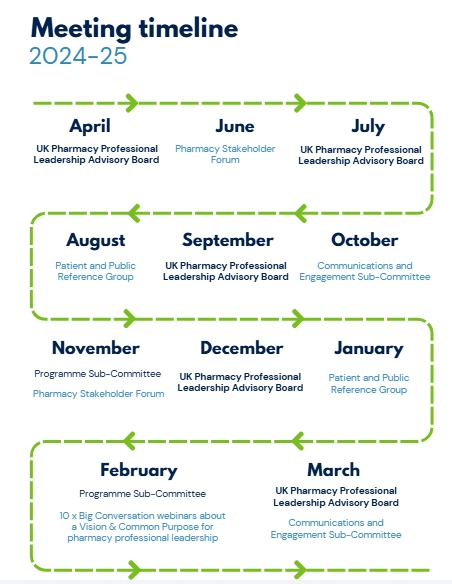
2. The Board was established by the UK Chief Pharmaceutical Officers (CPhOs) as the vehicle for greater collaboration across the UK pharmacy PLBs and SPGs, following the recommendations in the report of the UK Commission on PPL, published in February 2023.
About the Board
3. Setting up the Board is an important initiative that will further enable and empower the PLBs and SPGs to shape and lead the future for pharmacists and pharmacy technicians and deliver on the core purpose of professional leadership.
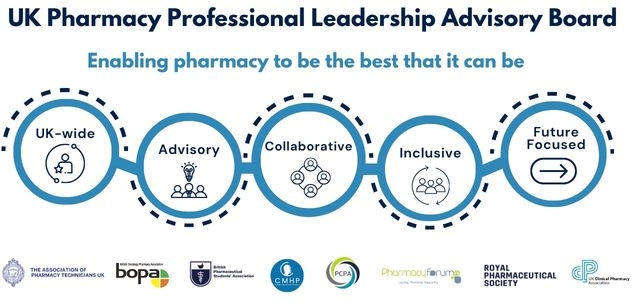
4. Purpose: The Board has two key tasks:
A. To develop and oversee a three-to-five-year work programme to implement the five key recommendations of the UK Commission.
B. To support and steer the transition to a sustainable and effective future model of PPL across the UK.
5. Status and Accountability: The Board is established as a Public Body, in keeping with Cabinet Office Guidance, as a Non-Administratively Classified Government Entity akin to an expert committee. The advice provided is to be impartial and apolitical.
6. The Board is independent of but established by a government department without separate legal personality. As such, ultimately formal accountability for the Board to parliament is through ministers, exercised in practice by a reporting line through the Independent Chair to the four UK CPhOs and on to their respective government departments.
7. Working within its remit, the Board sets its own agendas and provides independent advice to the PLBs and SPGs which are its constituent members. It has been established initially for a period of three years, with the option to extend this period to five years to deliver the Board’s remit.
8. The Board’s Terms of Reference are published on the website.
9. Membership: The Board comprises an Independent Chair, 10 Ex-Officio Members (EOMs) and 10 Independent Expert Members (IEMs). EOMs were invited to join the Board by the UK CPhOs and the IEMs were engaged through an open recruitment process and appointed by the CPhOs.
10. The EOMs comprise the 8 Presidents or equivalents of the PLBs and SPGs, plus the Chair of the Academy of Medical Royal Colleges (AoMRC), and the Chair of the PPRG.
11. IEMs help to ensure the Board is broad, balanced and comprised of appropriate diversity. Crucially, to ensure independence, IEMs are not on a board or governing body, or an executive, of one of the PLBs and SPGs that has an EOM on the Board.
12. All Board members are people with a wide range of expertise and experience who are enthusiastic about professional leadership and have a great deal of ambition for representing all pharmacists and pharmacy technicians, and making PPL the most effective it can be.
13. They are not on the Board to represent a sector or specialism but represent all pharmacists and pharmacy technicians – fully aware that it is important to avoid narrow and divisive approaches when it comes to professional leadership.
14. The list of current Board members is published on the website. For 2024-25, the following leaders were represented on the Board during their respective terms of office:
- British Pharmaceutical Students’ Association (BPSA) – Nonyelum Okonkwo and Emeka Onwudiwe
- UK Clinical Pharmacy Association (UKCPA) – Mohamed Rahman.
15. A Register of Interests has been published and kept up to date.
16. Advisors and observers: The UK CPhOs – Andrew Evans, Wales, Cathy Harrison, Northern Ireland, Alison Strath, Scotland and David Webb, England – and the Senior Professional Advisor for Pharmacy Technician Practice at NHS England, Liz Fidler, are advisors to the Board and David Webb, Liz Fidler and Cathy Harrison attend its formal meetings.
17. The CPhOs for England, Scotland and Wales work on an annual rotation and Andrew Evans was advisor to the Board from April to December 2024.
18. The Board has three observers who attend for the informal and formal meetings: the chief executives of the pharmacy regulators – Duncan Rudkin, General Pharmaceutical Council (GPhC), and Canice Ward, Pharmaceutical Society of Northern Ireland (PSNI); and a policy representative from the Department of Health and Social Care (DHSC), Matt Morfey.
19. Ways of Working: The Board meets quarterly in London. It holds informal discussions in the morning and a formal, minuted Board meeting in the afternoon.
20. To support its work, the Board has established the following sub-committees and engagement forums:
- Programme Sub-Committee – chaired by Sir Hugh Taylor.
- Communications and Engagement Sub-Committee – chaired by Professor Mahendra Patel OBE.
- Pharmacy Stakeholder Forum – chaired by Sir Hugh Taylor.
- Patient and Public Reference Group – chaired by Joan Saddler OBE .
Details of these groups and committees are available on the UKPPLAB website.
21. Secretariat: The Board is supported by a small, part-time Secretariat. The Secretariat facilitates the Board’s activities, including the sub-committees, working groups and engagement events.
22. Funding: The Board is jointly-funded on an annual basis by the UK CPhOs and the PLBs and SPGs. The Board would like to record its appreciation for the hospitality of the Royal Pharmaceutical Society (RPS) in providing a venue and catering for the meetings
Meeting timeline 2024-25
What we have achieved – year one
Board meetings
April 2024
Agrees the Terms of Reference which guides the work. Members highlight the way in which the Board conducts its business, adopting and modelling good leadership behaviours as Board members, are as important as what the Board does to further enable and empower the PLBs and SPGs to collaborate to lead the future for the pharmacist and pharmacy technician professions.
Members also agree honesty, integrity, transparency and credibility really matter for leaders – whether they are engaging with their fellow professionals or other stakeholders such as the public, regulators or the Government.
Agrees to establish a work programme, with the priorities of professional standards, professional education and training and scope of practice for pharmacists and pharmacy technicians, underpinned by communications and engagement.
Agrees to set up a Pharmacy Stakeholder Forum and Patient and Public Reference Group to consider and include the perspectives of patients, the public, and wider pharmacy stakeholders.
An overarching theme is the central importance of collaboration. For the Board’s work to be a success, and to really benefit patients, the public and pharmacy professionals, a close working relationship between the different PLBs and SPGs is essential. These organisations are much stronger together and this combined voice reflects the richness and diversity of PPL.
Professor Claire Anderson
President, Royal Pharmaceutical Society
“As RPS transitions to become the Royal College of Pharmacy, the role of the UKPPLAB Board is vital in helping to ensure a strong, influential and collaborative future for pharmacy to the benefit of patients and the public.”
Raymond Anderson
Independent Expert Member
“It has been a privilege to work with colleagues over the year, supporting the development of a leadership body focused on inclusivity, collaboration, advocacy and driving the professions forward.”
Laura Angus
Independent Expert Member
“The Board – working in partnership with the emerging Royal College of Pharmacy – is pivotal in strengthening leadership across all sectors and career stages, ensuring pharmacy’s voice is heard and its potential realised.”
Rebecca Chamberlain
Independent Expert Member
“The work of the UK Pharmacy Professional Leadership Board is crucial in providing the leadership and support needed to unite and strengthen professional leadership across the UK.”
July 2024
Agrees a Statement on Leadership Behaviours:
The Board’s remit concerns professional leadership. It is right that in conducting its business, Board members model the behaviours expected of leaders.
The Board has chosen to build on the conduct expectations in its Terms of Reference and to bring them further to life in terms of the way people are expected to behave, interact and act externally in respect to activities of the Board.
The Board has agreed that all members of the Board, and any groups set up under its auspices, are expected to adopt the following behaviours:
- To put the patient and the public at the centre of our work.
- To model inclusive leadership and encourage inclusive practice.
- To lead, not blame.
- To work together, not undermine each other.
- To speak well of each other inside and outside meetings.
- To involve each other as much and as early as possible.
- To look for answers, not give excuses.
Discusses the development of professional standards and agrees there is the need for greater facilitation of governance linking the pharmacy regulators with professional bodies. The role of the Board is to support these organisations in helping to ensure that professional standards reflect and keep pace with the ongoing changes in pharmacy practice and the needs of health services and patients.
On professional education and training. PLBs and SPGs play a crucial role in education and training – agrees the Board needs to focus on the post-registration development of pharmacy technicians and supporting the introduction of independent prescribing for all newly qualified pharmacists, from 2026.
On the scopes of practice for pharmacists and pharmacy technicians, agrees there is a desire to be aspirational – supporting pharmacists and pharmacy technicians to practice safely and confidently to their full potential and giving more confidence to patients and the public about what pharmacy professionals can do, working closely with the pharmacy regulators to support new developments in practice.
Agrees to develop a paper about a Programme Sub-Committee which would take forward all three elements. This would enable closer collaboration between the PLBs and SPGs, and with the pharmacy regulators, and other key stakeholders (such as the statutory education bodies).
Agrees to set up a Communications and Engagement Sub-Committee to support the PLBs and SPGs in engaging more proactively to promote the importance of PPL and the organisations that support it. It is important that this collaborative work is visible to pharmacists and pharmacy technicians which will help to increase confidence that pharmacy PPL is moving in the right direction.
Receives a report from the first meeting of the PSF. There is a great deal of support for collaborative working on PPL.
Dr Jeanette Dickson
Chair, Academy of Medical Royal Colleges
“The Board plays a key role in uniting and empowering the professions, fostering a sense of collaboration and shared purpose, ensuring pharmacy teams feel equipped for the future.”
Professor Christine Gilmour
Independent Expert Member
“The work of the Board is vital as pharmacist and pharmacy technician roles undergo radical transformation. We must ensure that pharmacy professional leadership is equipped to drive change and shape policy to meet patient and service needs.”
Mildred Johnson
Independent Expert Member
“The Board is appropriately positioned to deliver strategic advice and support the continuing and substantial transformation of the pharmacy professions across all four nations of the UK.”
Sheelin McKeagney
Chair, Pharmacy Forum Northern Ireland
“The Board is ready to tackle the challenges ahead in a cohesive and effective manner ensuring all voices from the pharmacy sector are heard and empowered.”
September 2024
Agrees to establish formally a Programme Sub-Committee to deliver the next steps for increased collaboration on professional standards, professional education and training and scopes of practice. The Sub-Committee’s remit would be to:
- Provide a forum for the PLBs, SPGs and pharmacy regulators (drawing in other key stakeholders such as the statutory education bodies as necessary) to collectively address, at working level, the Board’s priorities, with an immediate focus on post-registration education and training for pharmacy technicians and newly qualified pharmacists with prescribing rights.
- Provide a mechanism for exploration and delivery of proposals relating to scopes of practice emerging from the Board’s further work.
- Take on other tasks remitted to it by the Board in future – for example, professional standards.
Discusses presentations from the RPS, UKCPA and College of Mental Health Pharmacy on collaborative activity to develop the consultant pharmacist and respective advanced pharmacist practice frameworks, and the Association of Pharmacy Technicians UK (APTUK) on the Health Education and Improvement Wales commissioned project on post-registration practice development for pharmacy technicians, and considers the learnings for future collaborations.
The key messages are that collaboration in formal and less formal models works and that it takes trust and courage to overcome the many challenges that arise.
Begins discussions about creating an effective and sustainable future model for PPL. The RPS outlines its intention to become a Royal College of Pharmacy, which requires a change to its current constitution and governance. The proposals include becoming a charity with independent trustees on the Board, increasing the focus on patients and the public, providing greater equity to the devolved nations, strengthening and increasing the flexibility of governance arrangements, as well as enhancing pharmacy’s authority through royal college status.
APTUK presents its dynamic vision for the future – highlighting the drive for parity of esteem between pharmacy technicians and pharmacists, an approach that equally values the skills, expertise and contribution of all pharmacy professionals and the wider pharmacy team. The future shape of PPL must recognise the central importance of equality and equity – being invited to the table is important, but people must also be able to meaningfully participate.
Hears from Dr Jeanette Dickson, Chair of the AoMRC, on the varied models of professional leadership among medical royal colleges.
Discusses a report from the first meeting of the PPRG and accepts the next steps to involve PPRG members in the work of the Board in relation to education and training, professional standards and scopes of practice, and in formal groups such as sub-committees.
Considers a paper about a draft collaborative vision and common purpose for PPL and agrees to establish a UK-wide engagement exercise to develop and co-produce the vision and common purpose for publication in Summer 2025.
Emeka Onwudiwe
President, British Pharmaceutical Students’ Association
“Pharmacy students have a unique perspective that can help to shape a stronger, more unified leadership that will benefit patients and everyone working in pharmacy now and in the future.”
Dr Berwyn Owen
Independent Expert Member
“Pharmacy needs a single unified voice that drives the vision of all pharmacy professionals across all sectors. The UKPPLAB supports a strong, inclusive voice that reinforces the importance of pharmacy’s unique contribution.”
Professor Mahendra Patel, OBE
Independent Expert Member
“I’m here to help drive much-needed change in pharmacy professional leadership. The Board has been just the spark needed, providing a credible and robust platform to shape meaningful leadership for all, not just the few.”
Mohamed Rahmen
Chair, UK Clinical Pharmacy Association
“The future of UK healthcare is dependent on collaborative and multi-professional working. The Board offers an opportunity to bring everyone together, with a unified direction and renewed purpose.”
December 2024
Discusses a report from the second meeting of the PSF and agrees to incorporate the views expressed on the draft vision and common purpose.
Considers the report from the first Programme Sub-Committee which outlines that the GPhC tabled a draft Layers of Regulation document, which provides a useful context. The PLBs and SPGs agree to collaborate with the GPhC to further develop the document. A framing paper on scopes of practice is commissioned from the Secretariat.
Discusses the proposals for a Royal College of Pharmacy – recognising them as a potentially important step in the direction towards future collaboration: by enabling the RPS to create, as a minimum, a more flexible, adaptable, outward-looking governance model that facilitates future UK-wide collaboration. Agrees the prospect of a Royal College that seeks to represent wider pharmacy is clearly an opportunity to be bigger, bolder and more all-embracing in the approach to collective pharmacy leadership in the future. Agrees co-creation of such a model is a condition of success. It requires clarity on process; opportunity for all parties to engage, contribute and agree an inclusive way forward that works for everyone; sensitivity to different national and professional interests; and the meaningful engagement of patients and the public. The RPS confirms its openness to work with the Board and its members on this basis.
Hears a report from the Board’s first Communication and Engagement Sub-Committee meeting which highlights the need for proactive engagement to promote the importance of PPL and to sustain the organisations that support it. The Board approves the plan for the national engagement exercise on the draft vision and common purpose for PPL, grounded in collaboration and aimed at setting the tone for wider change.
Joan Saddler, OBE
Chair, Public and Patient Reference Group
“It is important that a collective and diverse pharmacy leadership organisation speaks with one voice, ensuring that the needs of patients, carers and the public are foremost.”
Shilpa Shah
Independent Expert Member
“I feel that as we are increasing clinical services in community pharmacy, professional leadership is more important than ever. I wanted to be part of this journey so that community pharmacy is recognised and has a voice.”
Karen Shuker
President, College of Mental Health Pharmacy
“Pharmacy professional leadership is essential because it gives our professions a strong, unified voice – one that can influence policy and shape healthcare systems to help recognise the full value of pharmacy.”
Panayiotis Sphikas
Independent Expert Member
“The Board brings one pharmacy voice together, stronger and united, to drive change and improve patient care. Together, we can empower pharmacy professionals and strengthen the impact we have on patients’ lives.”
March 2025
The Board hears the reaction to its joint statement of 6th March 2025: Royal College to catalyse collaboration across pharmacy professional leadership and strengthen the voice of pharmacy. This includes support for a Royal College to fulfil the professional aspirations of both pharmacists and pharmacy technicians.
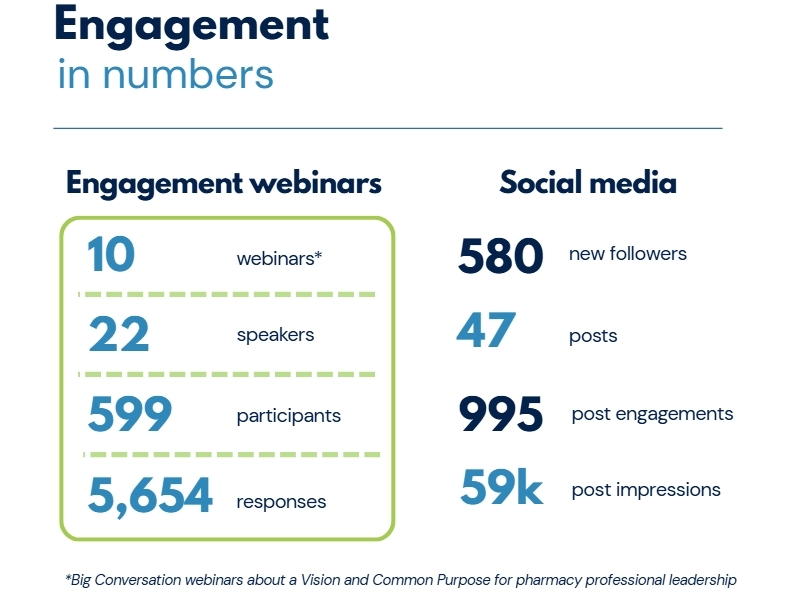
Also hears the results from the 10 ‘Big Conversation’ webinars on the draft vision and common purpose for PPL held throughout February 2025. The feedback involves more than 5,600 responses from 599 pharmacists, pharmacy technicians, patients, the public and the wider UK pharmacy team on what should be included. Having considered and discussed the feedback, the Board agrees to incorporate it and prepare to launch the final version of the document, and the PLBs and SPGs agree to adopt the commitments formally as a framework for ongoing collaborative PPL across the UK. (See the final Vision and Common Purpose on Page 23).
The Board is encouraged by the openness and thoughtfulness of the conversations across all 10 webinar events, and the obvious appetite for a more cohesive, ambitious and collaborative way of working in future.
Participants across the UK told Board members what is important to them:
- There is significant support for a stronger and more unified leadership voice for pharmacy; a call to ensure that leadership is inclusive and representative of the whole pharmacy team; and a desire for a values-led approach to be adopted emphasising credibility, openness, transparency and fairness.
- On collaboration, they want aligned objectives, shared resources and a reduction in duplication to drive improvements to patient care and outcomes.
- On advocacy and public awareness, they highlight the need for professional leadership organisations to focus on working with the public to educate about the breadth of pharmacy team roles, and to achieve greater influence with Government, regulators, employers and other stakeholders.
- On advancements in practice, they want their professional leadership to become leaders in improving equitable care for patients, as well as access to opportunities for professional fulfilment to enable future proofing for their careers.
- On education, innovation and research, they ask for more support – career frameworks, guidance, training, funding – and they want education and research to be incorporated into their roles as part of their practice to help make pharmacy careers more attractive.
There is widespread recognition of the challenges – and opportunities – that lie ahead; and the need for adequate training and support to embrace these changes. And what comes across very strongly is the immense pride in the standard and reach of pharmacy in the UK, and the commitment to providing the best possible care for patients. It comes through loud and clear in all the feedback, that what pharmacy teams do matters because it benefits patients and communities.
The Board has a positive discussion about another key piece of work – a conversation about supporting pharmacists and pharmacy technicians in developing their professional practice to its full potential through developing scopes of practice. As a next step it agrees to set up a working group and to collate real-world case studies to inform further development.
A vision and common purpose for collaborative UK Pharmacy Professional Leadership
Enabling pharmacy to be the best it can be
Co-creating Unified, Effective and Inclusive Leadership
We will lead by example, working together to deliver a clear, unified and inspiring vision to represent the whole pharmacy team, achieving a stronger voice and greater recognition for our professions.
Collaborating to Achieve Shared Objectives
To improve healthcare, we will build strong and trusting relationships with patients, communities, the whole pharmacy team, other healthcare professions and other countries, co-producing objectives, and sharing our learning and resources.
Enhancing Advocacy and Public Awareness
We will educate people about the breadth of pharmacy’s vital role in patient care and advocate for our professions with employers, government and the public, to achieve greater benefits, influence and credibility.To improve healthcare, we will build strong and trusting relationships with patients, communities, the whole pharmacy team, other healthcare professions and other countries, co-producing objectives, and sharing our learning and resources.
Prioritising Education, Innovation and Research
We will build the way for the professions of the future, developing career pathways, educational frameworks and guidance that harness research and evidence to improve health outcomes, providing greater support and striving to ensure time for learning is part of everyone’s practice.We will lead the safe development of pharmacy professional practice to improve healthcare for patients and communities and support professionals to access new career opportunities, enabling professional fulfilment and equipping us all for the digital future.
Nicola Stockmann
President, Association of Pharmacy Technicians UK
“APTUK are delighted to be collaborating with other professional leadership organisations and will continue to lead on behalf of pharmacy technicians, ensuring parity of esteem in future strategy.”
Graham Stretch
President, Primary Care Pharmacy Association
“Pharmacy is entering a period of extraordinary change, bringing challenge and opportunity. Strong, collective leadership is vital to champion our professions, amplify our voices and drive innovation.”
Ellen Williams
Independent Expert Member
“Strong professional leadership ensures that every voice in pharmacy is heard. As a UKPPLAB member, I am proud to champion pharmacy technicians and to help shape a collaborative, inclusive and progressive future.”
Joseph Williams
Chair, British Oncology Pharmacy Association
“Professional leadership unites and empowers pharmacy teams to adapt, grow and deliver high-quality care. It ensures our professions are supported, future-ready and focused on improving patient outcomes.”
Engagement in numbers
Next steps
23. It’s been a productive first year and the proposals to establish a Royal College of Pharmacy, which received a positive endorsement in the RPS’s member vote of 26th March 2025, were a tangible result from the Board’s collective endeavours and support.
24. There’s still much to do to foster collaboration and inclusivity among the wide number of PPL bodies, and wider stakeholders with an interest in PPL, and to engage pharmacists and pharmacy technicians in the importance of the future model of PPL, in order to gain their support and develop traction for a step change in leadership quality.
25. Likewise, to stimulate greater patient and public involvement in PPL and set up effective arrangements for the future. We know there is a great desire for PLBs and SPGs to improve professional leadership engagement with busy frontline colleagues and this features strongly in our Board discussions alongside the acknowledgement that most PLBs and SPGs on the Board are administered and run by volunteers.
26. The Board gained momentum in its first year and made progress via its regular meetings and the establishment of sub-committees to focus on specific areas like education and training, professional standards, and scopes of practice. These underscore the complexity of PPL and therefore the necessity for a unified approach, with one voice on professional matters.
27. Any future Royal College of Pharmacy will need to find a collective way to address the question of membership for pharmacy technicians and the Board is poised to support these developments.
28. The Board will continue to seek assurance from PLBs, SPGs and pharmacy regulators that there is a collective overview of pharmacy professional and regulatory standards that meet the needs of the evolving professions. And will continue to provide a framework for collaborative leadership of PLBs, SPGs, statutory education bodies and pharmacy regulators on the development of education and training which meets the evolving needs of the professions in delivering the highest quality care for patients, and provides professional fulfilment
29. It will also work to develop a collective understanding of and commitment to the continuous articulation and development of the evolving scopes of practice of pharmacists and pharmacy technicians which meet population needs now and in the future.
30. At the heart of its next steps will be the commitment to nurture the trusted relationships within the Board with transparency and continued commitment to the shared goals set out in the vision and common purpose. Within that collaboration lies a strong platform to build the future PPL landscape.