
Welcome to the Royal College of Pharmacy
We’ve changed. You may know us as the Royal Pharmaceutical Society — on 15 April 2026, we became the Royal College of Pharmacy.


We are the Royal College of Pharmacy, the professional leadership body for pharmacists and pharmaceutical scientists. We exist to advance the safe and effective use of medicines, drive excellence in patient care and support pharmacists to deliver the highest standards of practice.
As the third largest workforce in healthcare, pharmacy plays a vital role in the health system, and as experts in medicines, pharmacists and their teams are central to patient care and public health. Our mission is to put pharmacy at the forefront of patient care, advancing the safe and effective use of medicines to the benefit of patients and the public.


Have any questions or comments on the new Royal College website?
Please visit our support page or email [email protected]
News
The latest news and updates from Royal College of Pharmacy
-

Call for evidence on facilitated self-selection of P medicines
This news story was published when the organisation was the Royal Pharmaceutical Society. We've published a call for evidence on the facilitated self-selection of P medicines following changes made by the regulator, the General Pharmaceutical Council (GPhC), enabling more pharmacies to adopt this practice. The call for evidence is open for eight weeks from 12 July – 06 September 2024 and is the outcome of the national Pharmacy Boards meeting in June, which discussed the current RPS position that "Pharmacy medicines must not be accessible to the public by self-selection", as stated in our guide Medicines, Ethics and Practice. The Call asks for submission of evidence of the benefits and harms of a facilitated self-selection model for P medicines in relation to patient care, and any evidence gaps with an explanation of areas where further research is required. RPS CEO Paul Bennett said: "Following changes brought by the GPhC focusing on an outcomes approach to standards, they have confirmed they no longer prohibit facilitated self-selection of P medicines. As a result, there are pharmacies that are now adopting a more flexible interpretation to providing this group of medicines. "The GPhC have stated that sale and supply of a P medicine must still take place in a registered pharmacy premises under the supervision of a pharmacist, and that appropritae measures should be in place to ensure that supervision continues. "The evidence base gathered through this exercise will inform a report by RPS Science and Research to enable us to consider our current position. As the professional body, we are committed to patient safety and the safe development of innovative practice to meet the needs of patients now and for the future. Please share the call for evidence with your networks." To inform the review, we want to hear from a wide range of pharmacists and pharmacy team members, patient representative bodies, employers, academics, think tanks, pharmacy representative bodies, regulators and other stakeholders and researchers. Please read and respond to the call for evidence.
-

Government must turn to priorities for patients and pharmacy
This news story was published when the organisation was the Royal Pharmaceutical Society. The health service has been one of the key issues throughout the election campaign and there are clear priorities for patients and pharmacy which must now be addressed. Following the general election result, the RPS is already engaging with new Ministers and MPs to highlight key issues from our manifesto for the coming Parliament, including addressing the growing challenge of medicines shortages, fair funding to maintain patient access to a resilient community pharmacy network, student access to the learning support fund, and investment in hospital pharmacy and aseptic pharmacy services. We’ll also continue working with partners, patient groups and coalitions on campaign issues such as self-care, prescription charges, women’s health and health inequalities. Tase Oputu, chair of the RPS in England, said: “Our joint report with The King’s Fund highlighted how pharmacists across healthcare will be central to reducing health inequalities, managing the growing cost of long-term conditions, and delivering best value from medicines for patients and the NHS. “There are some key enablers to make this a success, including workforce planning to ensure a pipeline of pharmacists to meet demand, commissioning new pharmacist prescribing services, and much-needed investment in electronic prescribing and interoperable patient records. These were recognised by the Health Select Committee Inquiry into pharmacy, and we are urging the new government to consider the inquiry’s recommendations closely. “Pharmacy teams and the whole of the workforce are under continued pressure and it is crucial that a re-energised NHS Long-Term Workforce Plan is backed by much-needed investment, alongside steps to improve retention. “I look forward to working with the government on how we can support pharmacists and pharmacy teams to help build an NHS fit for the future.” Find out more about the RPS general election manifesto and how you can support our campaigns. Read more RCPharm news stories.
-
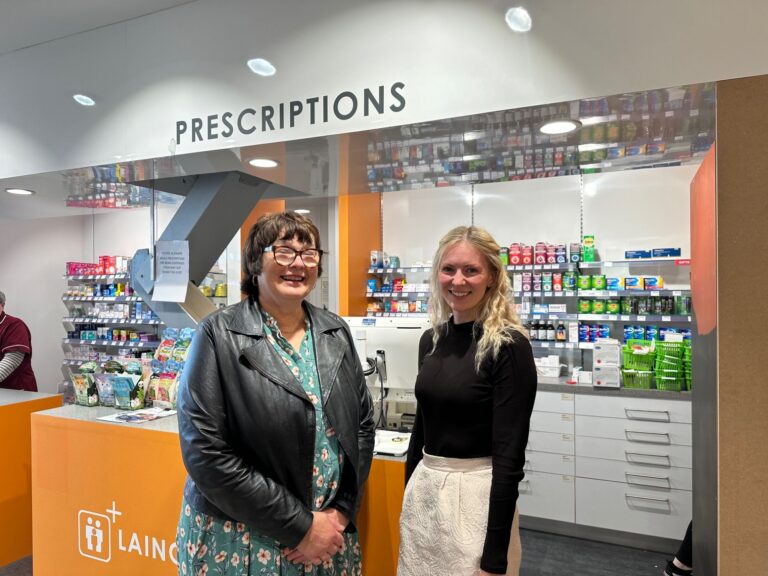
Implementing Pharmacy 2030 in Shetland
This news story was published when the organisation was the Royal Pharmaceutical Society. In June 2024, Claire Anderson, president of the Royal Pharmaceutical Society (RPS), visited pharmacy teams across Shetland, to witness their innovative practice and implementation of RPS’s vision for the future of pharmacy, Pharmacy 2030, across a remote island community. During the two-day visit, Anderson, accompanied by Anthony McDavitt, director of pharmacy, NHS Shetland and Interim Deputy Chief Officer, Shetland Community Health and Social Care Partnership, visited two community pharmacies, Laings Pharmacy in Lerwick and Brae Pharmacy. Both pharmacies have independent prescribing pharmacists providing a vital first point of contact healthcare service for their communities; independent prescribing being a cornerstone of our vision. Anderson also met with the hospital pharmacy team at Gilbert Bain Hospital and had the opportunity to present on our vision for hospital pharmacy, which includes releasing pharmacists to patient facing roles and advancing clinical practice including caseload management. It was fantastic to hear that the team had already done some focused work based on the vision. On the Wednesday, Anderson visited pharmacists working in primary care, in one of the Scottish government 'Primary care improvement plan' pharmacotherapy demonstrator sites. Alongside visitors from Healthcare Improvement Scotland’s Primary Care Phased Investment Programme, Anderson was able to present on the RPS vision for general practice pharmacy, with our central focus on improving skill-mix across pharmacy teams so better use can be made of pharmacists’ knowledge, skills and experience to support patients. Speaking about the visit, Anderson said: “Thank you so much to pharmacy teams across Shetland for welcoming me, and for being so generous with your time to demonstrate the fantastic work which every pharmacist in Shetland is involved in on behalf of the island community. “I am so proud to witness the implementation of our vision for the future of pharmacy, Pharmacy 2030, and learn about the innovative approaches taking place to implement this in a remote and rural setting. “Due to unforeseen circumstances, a member of the RPS Scotland team was unable to join this time and we look forward to our next visit to understand how this work is progressing, so that ultimately, patients receive the very best care possible from their pharmacy teams.” Speaking about the visit, McDavitt said: “It was fantastic to showcase the great work of our pharmacy teams across Shetland with Claire from RPS. We have a lot going on in Shetland and it was great to cover the breadth of the service in a couple of days. “Our pharmacy teams are busy innovating across community, hospital and primary care, and are implementing Pharmacy 2030, RPS’s vision for the future of pharmacy, to improve patient care, and experience. I’m glad we had the opportunity to have Claire with us during our workshop for the Primary Care Phased Investment Programme we have in Shetland through Scottish government funding. It’s essential to have professional body input into the development of pharmacy services and the changing of pharmacy roles in Scotland. “Thank you to Claire for making the trip to Shetland and we look forward to demonstrating our impactful work again to RPS colleagues at a future visit.” Read more RCPharm news stories.