Pharmacy initiative increases sustainable disposal of inhalers
Published: 12 August 2024

This news story was published when the organisation was the Royal Pharmaceutical Society.
A pharmacy initiative in NHS Lothian has resulted in a 300% increase in the number of inhalers being returned to community pharmacies for sustainable disposal.
The simple initiative involved stickers being added to dispensing bags, encouraging patients to return inhalers to the pharmacy.
Five pharmacies in and around the Edinburgh area took part in the sustainability project between February and May 2024 and returned data.
The results demonstrated a 300% increase in inhalers being returned to community pharmacies after use of the stickers for 10 weeks, with 20 inhalers being returned in the two weeks before the stickers were in place and 80 being returned in the two weeks once the project was complete.
One of the community pharmacies who took part in the project was Fleming Pharmacy in Liberton, South Edinburgh.
Speaking about their involvement in the project, Simon Gemmell of Fleming Pharmacy, said: “As pharmacists we are aware of the impact of medicines on the environment and understand that if we are to reach net zero, we all need to play our part including by reducing medicines waste.
“This project demonstrates that through small initiatives which aren’t time consuming or costly to implement, huge results can be achieved.
“A key part of this initiative was reminding people that inhalers can’t be recycled in the same way as other plastics and need to be returned, like all medicines, to a community pharmacy for safe disposal, and it’s really pleasing that this message landed so well.
“The ongoing ability of community pharmacies to support initiatives such as these is dependent on having the appropriate resources to aid delivery.”
Katie Johnston, respiratory lead primary care pharmacist from NHS Lothian commented: “Lots of people use inhalers and often do not think about the environmental impact these can have.
“Community pharmacies are ideally positioned and essential to support improved respiratory care and help reduce the environmental impact of all medicines.”
Related news
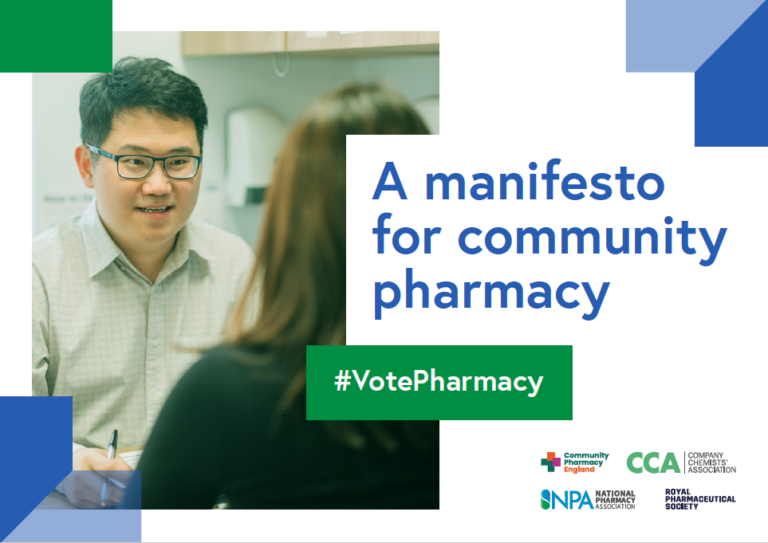
Pharmacy bodies launch community pharmacy manifesto
This news story was published when the organisation was the Royal Pharmaceutical Society. Community Pharmacy England, the Company Chemists’ Association, the National Pharmacy Association and the Royal Pharmaceutical Society have today published a joint manifesto for community pharmacy, ahead of the next general election. Pharmacy teams can use the manifesto to engage with political parties and candidates in the run-up to the election. The #VotePharmacy manifesto and other resources can be accessed from a new online general election hub, www.votepharmacy.org. The hub includes advice about engaging with candidates. Election candidates will be asked to show their support and back a six-point plan to “unleash the potential of community pharmacy”: Fill the funding gap, and commit to long-term sustainable funding, so pharmacies can deliver more of the NHS care patients need. Support and enhance the community pharmacy workforce to ensure that pharmacists and their teams can continue to meet the needs of patients now and in the future. Ensure that patients can access the medicines they need, including an end-to-end review of the medicines supply chain. Rollout an enhanced Pharmacy First service for England, mirroring the highly successful approaches taken in Scotland and Wales. Empower community pharmacists to do more, with an ambitious roadmap for independent prescribing. Make pharmacies centres for public health, prevention and reducing health inequalities. Tase Oputu, Chair of the Royal Pharmaceutical Society in England, said: “Community pharmacy plays a central role in the care of millions of patients each year, boosting vaccine uptake, tackling health inequalities and ensuring vital access to medicines. “But the system is also under pressure, and sustainable funding and support for the workforce will be crucial. “As more pharmacists become prescribers, it is vital the next government makes the most of this opportunity to transform patient care and ensure a positive future for community pharmacy at the heart of the nation’s health service.” All of these issues are highlighted in the RPS general election manifesto. Read more RCPharm news stories.
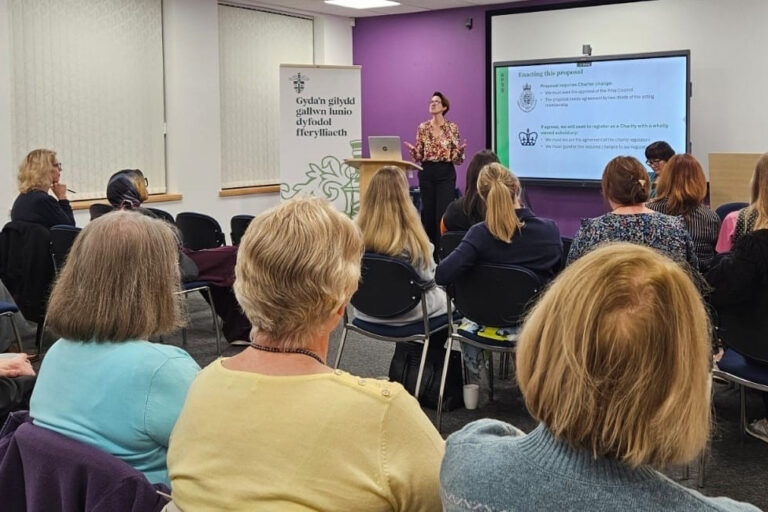
Open conversations, challenging questions and the case for change: roadshow reflections so far on seeking to become a royal college
This article was published when the organisation was the Royal Pharmaceutical Society. As you may know, we have recently announced our proposals for change and our ambition to become a royal college following an in-depth, 18-month review of our constitution and governance. Over the past few weeks, I've been out and about with the RPS team at our roadshow events across Great Britain meeting pharmacists and pharmaceutical scientists and setting out our proposals for change and our future ambitions. We’ve been delighted with the warm welcome we have had at our roadshow events so far, there have been challenging, insightful and intriguing questions at each event — as part of meaningful conversations and informed enquiry, and there has been a high level of interest and engagement in the detail we are sharing about our governance proposals. We’ve been calling this the ‘information and conversation’ stage of the process and it's really important to us that we are open and transparent about the journey we’ve been on to inform these proposed changes — and about what will happen next. So as we mark the halfway point in our series of roadshow events, I’d like to share my reflections so far. Firstly I’d like to thank everyone who has come along so far to meet with me, our Chief Executive Paul Bennett, Deputy Chief Executive Karen Baxter and Associate Director of Communications and Marketing Liz North. It’s essential we develop the final proposals, and our future strategy, with your concerns and questions in mind and we are committed to hearing your views and having an open conversation. We’ve had significant discussions about the principles that have guided our proposals and the particular areas of interest and concern that the proposals and our royal college ambitions have engendered. We welcome even challenging questions as they will help us ensure we take all points into consideration in the drafting of the final proposals we will put before our membership early in 2025. Your contributions are hugely important and we are capturing the questions and discussions at the roadshow events and will bring these together into a report which we’ll publish in December for our members and the wider pharmacy community. I’m convinced it’s time for pharmacy to take its rightful place alongside other health and medical professional leadership bodies and for RPS to seek to become a royal college — the Royal College of Pharmacy. As the professional leadership body, we need to be in a strong position to respond to change, to support the profession and to truly inhabit our leadership role for pharmacy, to the benefit of patients and the public. We believe that enacting these changes will enable us to better advocate and deliver our mission and vision, ensuring that pharmacy is always at the forefront of the safe and effective use of medicines. Enacting the proposed changes is dependent on a vote of support by our members, which we expect to take place in early 2025. Endorsement by a two-thirds majority of those members who vote will enable the changes to progress. We will set out the detail for consideration in good time before the vote and we want to we hope you will support the proposals and vote for the change. You can find out more about the proposals on our website. Catch up with our FAQs, which include what the new post-nominals are expected to be and who will be able to vote. You can also contact us at [email protected] with any questions, comments or concerns you have. In the meantime I really look forward to seeing you at one of our upcoming roadshow events, where you can find out more, have your say and together we can debate and discuss the future of pharmacy.